
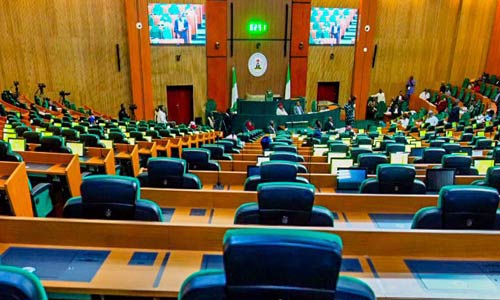
Nigerian Reps Investigate Judicial Intimidation, Bolster Protections
Summary
- The House of Representatives has initiated steps to strengthen safeguards against intimidation and harassment of judicial officers.
- The House urged Nigerians, media organizations, and legal practitioners to distinguish between legitimate criticism of court judgments and attempts to undermine judicial independence.
- The legislative body also called upon the National Judicial Council in its efforts to protect judicial officers.
- These actions aim to protect judicial officers from personal attacks and ensure the integrity of the judiciary.
Legislative Action on Judicial Protection
Legal practitioners and media organizations in Nigeria should be acutely aware of the distinction between legitimate criticism of court judgments and actions that could be construed as intimidation or harassment of judicial officers, as the House of Representatives' investigation signals a heightened focus on protecting judicial independence and may lead to stricter scrutiny of public commentary.
The Nigerian House of Representatives recently initiated measures aimed at bolstering the safeguards surrounding judicial officers in the country. These preliminary steps, taken on a Thursday, are specifically designed to counteract various forms of undue pressure, including intimidation, harassment, and personal attacks directed at members of the judiciary. The legislative body's proactive stance underscores a commitment to maintaining the integrity and independence of the judicial system.
This move by the House of Reps signals a heightened focus on protecting judicial independence and the individuals who uphold the law. The objective is to create an environment where judges can perform their duties without fear of reprisal or undue influence, thereby ensuring fair and impartial justice. Such actions are critical for the stability of the rule of law within Nigeria.
Distinguishing Criticism from Undermining Independence
In conjunction with these protective measures, the House of Representatives issued a clear directive to the public. It specifically urged Nigerians, media organizations, and legal practitioners to carefully differentiate between what constitutes legitimate criticism of court judgments and actions that are intended to undermine judicial independence. This distinction is crucial for fostering a healthy public discourse while simultaneously preserving the judiciary's ability to function without undue external pressure.
The legislative body emphasized that while scrutiny of judicial decisions is a vital component of a democratic society, any attempts to harass or intimidate judicial officers cross a line into unacceptable territory. The call highlights the fine balance required to ensure accountability without compromising the judiciary's autonomy, which is fundamental to justice delivery. Legal practitioners and media organizations in Nigeria should be acutely aware of this distinction.
Institutional Engagement and Oversight
As part of its comprehensive approach, the House also directed a call to the National Judicial Council (NJC), the Nigerian body responsible for the appointment, discipline, and oversight of judicial officers. While the specific nature of this call was not fully detailed in the report, its inclusion signifies the House's intent to involve key institutional stakeholders in the broader effort to enhance judicial officer protection Nigeria.
The National Judicial Council plays a pivotal role in maintaining the standards and independence of the judiciary. Its involvement in addressing issues of judge harassment Nigeria would be consistent with its mandate to ensure that judicial officers can perform their duties free from external pressures, thereby reinforcing the integrity of the judicial process across the nation.
Implications for Public Commentary
The recent actions by the Nigerian Reps investigate judicial intimidation and harassment, sending a strong message about the seriousness with which the legislature views threats to judicial independence. This development suggests that there may be stricter scrutiny of public commentary and actions directed at judges moving forward. For legal professionals and media outlets, this necessitates a careful review of how court judgments are discussed and reported.
Understanding the boundary between legitimate criticism court judgments and actions that could be construed as intimidation or harassment of judicial officers is now more critical than ever. The House's intervention underscores the importance of responsible engagement with the judiciary, ensuring that public discourse contributes to, rather than detracts from, the administration of justice.
Practical Implications
Legal practitioners and media organizations in Nigeria should be acutely aware of the distinction between legitimate criticism of court judgments and actions that could be construed as intimidation or harassment of judicial officers, as the House of Representatives' investigation signals a heightened focus on protecting judicial independence and may lead to stricter scrutiny of public commentary.
Source
How does this affect you?
Get an AI analysis of this article grounded in your jurisdictions, practice areas, and any policy documents you've uploaded to Wansom.
Finish Reading the Full Story and the Expert Analysis.
Get the latest legal & regulatory intelligence in Nigeria
Wansom is AI and can make mistakes.