
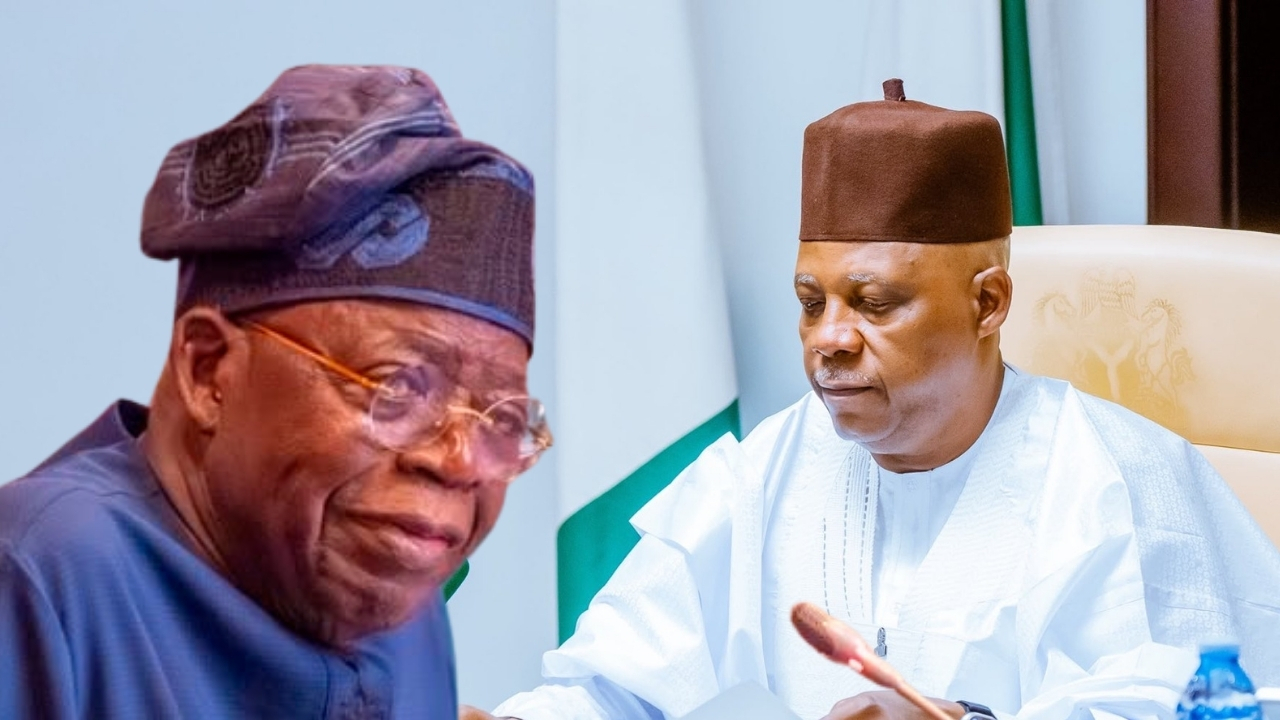
Nigeria: Tinubu Power Transfer Legal Basis During Annual Leave
Summary
- President Bola Tinubu departed Abuja on Sunday for London to begin his annual leave.
- Vice President Kashim Shettima was simultaneously in Luanda, Angola, representing the President at an African Union summit.
- These events highlight the established protocols for presidential absence and the continued functioning of government.
- Clarity on the legal basis for presidential power delegation during such periods is crucial for governmental stability.
Presidential Absence and Vice Presidential Engagement
The seamless management of presidential absence and the clear delegation of authority are fundamental to the stability and credibility of any democratic government.
President Bola Tinubu recently commenced his annual leave, departing from Nigeria's capital, Abuja, on a Sunday. His itinerary placed him in London for this period of personal respite from official duties, initiating a temporary shift in the immediate operational leadership within the executive branch.
Simultaneously, Vice President Kashim Shettima was actively engaged in representing the nation on the international stage. Mr. Shettima was present in Luanda, Angola, where he participated in an African Union summit, fulfilling a crucial diplomatic role on behalf of President Tinubu. This dual activity, with the President on annual leave and the Vice President undertaking international representation, exemplifies the dynamic nature of high-level governance and the established protocols for presidential absence.
Legal Framework for Power Delegation
The concurrent absence of President Tinubu on annual leave and Vice President Shettima's international engagement naturally brings into focus the legal framework governing presidential power delegation in Nigeria. While the specific provisions invoked for this particular instance are not detailed, the Nigerian Constitution typically outlines the procedures for presidential absence and the assumption of presidential duties. Ensuring clarity on the Tinubu annual leave legal basis is paramount for maintaining governmental stability and public confidence.
Questions frequently arise regarding the precise legal basis for such transfers, particularly concerning the extent of powers delegated when the President is on annual leave. The constitutional provisions are designed to prevent any vacuum in leadership, stipulating how the Vice President assumes the role of acting president Nigeria law, thereby guaranteeing uninterrupted executive authority. This framework is crucial for lawyers advising on constitutional matters or government dealings, as it ensures legal certainty regarding executive authority during periods when the President is not physically present in the country or is otherwise indisposed.
Implications for Governance and Stability
The seamless management of presidential absence and the clear delegation of authority are fundamental to the stability and credibility of any democratic government. For Nigeria, the proper application of the legal framework for presidential power delegation during periods such as President Tinubu's annual leave holds significant implications, reassuring both domestic and international observers that the machinery of government continues to operate effectively, even when the head of state is away.
This clarity is vital for maintaining investor confidence, ensuring the continuity of policy implementation, and upholding the nation's standing on the global stage. The Vice President's active role, as seen with Mr. Shettima representing the President at the African Union summit, demonstrates the operational readiness of the executive branch. Such arrangements underscore the importance of robust constitutional provisions that govern presidential absence and the temporary transfer of power, ensuring that national interests are consistently protected and advanced. The principle of presidential power delegation Nigeria is not merely an administrative detail but a cornerstone of constitutional governance, impacting everything from daily administration to critical national security decisions.
Practical Implications
This development clarifies the legal framework for presidential power delegation in Nigeria during periods of absence, which is crucial for lawyers advising on constitutional matters or government dealings to ensure legal certainty regarding executive authority.
Source
How does this affect you?
Get an AI analysis of this article grounded in your jurisdictions, practice areas, and any policy documents you've uploaded to Wansom.
Finish Reading the Full Story and the Expert Analysis.
Wansom is AI and can make mistakes.