
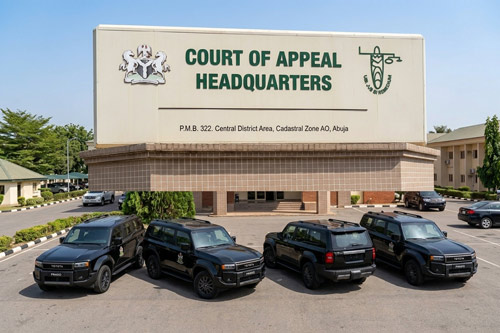
Nigerian Court of Appeal: Vehicle Contract Investigation Reveals Irregularities
Summary
- An investigation into the Nigerian Court of Appeal's vehicle procurement, valued at nearly ₦4.8 billion, has had its findings published, raising significant questions.
- The inquiry is scrutinizing the bidding process for various alleged irregularities.
- Specific concerns include individuals representing multiple companies and the exclusion of a participating bidder.
- Changes in vehicle specifications and an alleged ₦3.9 billion payment request on the day a major contract was finalized are also under investigation.
- This probe highlights increased scrutiny on public and judicial procurement practices in Nigeria.
Investigation into High-Value Vehicle Contracts
The heightened Nigerian judicial procurement scrutiny underscores the critical necessity for robust oversight mechanisms, strict adherence to legal frameworks, and ethical conduct to prevent conflicts of interest and ensure a level playing field for all participants.
An extensive inquiry concerning the Nigerian Court of Appeal’s acquisition of vehicles, a procurement effort valued at approximately ₦4.8 billion, has had its findings published, raising significant questions. This Nigerian Court of Appeal vehicle contract investigation is meticulously examining the entire bidding process, which has drawn scrutiny due to several alleged irregularities. The substantial financial commitment, specifically the Court of Appeal ₦4.8bn vehicle procurement, places a significant emphasis on ensuring the utmost transparency and adherence to established public procurement guidelines.
The published findings of the inquiry have brought to light questions regarding the integrity and fairness of the procedures followed from the initial tender issuance through to the final contract awards. Questions have been formally raised regarding the equitable nature of the process and whether all regulatory frameworks were strictly observed during this major governmental expenditure. This detailed scrutiny is indicative of a broader commitment to upholding accountability in public sector contracts, particularly when significant public funds are involved, aiming to prevent any potential for malfeasance.
Specific Irregularities Identified
Among the most prominent issues identified by the investigation are claims of individuals simultaneously representing multiple companies during the competitive bidding phase. This practice, known as multiple company representation bidding, fundamentally challenges the principle of fair competition and raises concerns about potential collusion among bidders. Further complicating the process, the inquiry is also scrutinizing the reported exclusion of a bidder who had actively participated in the procurement, suggesting a possible arbitrary removal from consideration without due cause.
Moreover, the investigation has highlighted concerns regarding changes made to the specifications of the vehicles after the bidding process was already underway, which could have unfairly influenced the outcome or favored specific vendors. Adding to these issues, an alleged request for a substantial payment of nearly ₦3.9 billion was reportedly made on the very day a major contract related to this procurement was finalized. These collective points strongly suggest the presence of Nigeria public procurement irregularities and potential instances of bidding process fraud Nigeria, necessitating a thorough and impartial review.
Broader Implications for Public Contracts
The published findings of this inquiry into the Court of Appeal's vehicle contracts contribute to an intensified focus on the integrity and transparency of public procurement practices throughout Nigeria. Should these allegations be substantiated, such incidents have the potential to severely undermine public confidence in governmental institutions and their financial management. The heightened Nigerian judicial procurement scrutiny underscores the critical necessity for robust oversight mechanisms, strict adherence to legal frameworks, and ethical conduct to prevent conflicts of interest and ensure a level playing field for all participants.
This investigation serves as a significant cautionary tale for all entities engaged in public contracting, emphasizing the paramount importance of transparency, accountability, and strict compliance with procurement laws. It clearly signals that any deviations from established protocols, particularly in contracts involving substantial public funds, will inevitably attract rigorous examination and potential legal repercussions. The ultimate resolution of this inquiry is expected to establish important benchmarks for future public sector procurements, reinforcing the high standards of conduct and integrity expected from all government agencies.
Practical Implications
Lawyers advising clients on public procurement in Nigeria should note the heightened scrutiny on bidding processes and contract awards, particularly concerning potential conflicts of interest and transparency issues highlighted by this investigation into the Court of Appeal's vehicle contracts. Compliance officers must review their internal bidding procedures to mitigate risks of similar irregularities and ensure adherence to procurement laws.
Source
How does this affect you?
Get an AI analysis of this article grounded in your jurisdictions, practice areas, and any policy documents you've uploaded to Wansom.
Finish Reading the Full Story and the Expert Analysis.
Get the latest legal & regulatory intelligence in Nigeria
Wansom is AI and can make mistakes.