
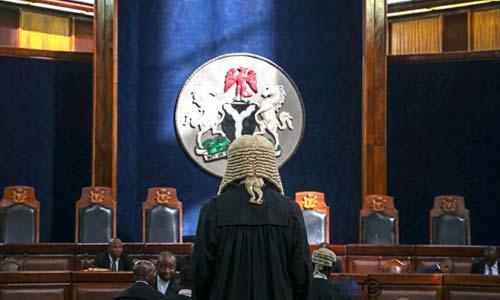
Nigeria Supreme Court: LPDC Direct Appeals Lack Jurisdiction
Summary
- The Supreme Court of Nigeria has ruled that it lacks jurisdiction to hear direct appeals from the Legal Practitioners Disciplinary Committee (LPDC).
- This decision was reached by a 5-2 majority of the Apex Court.
- Section 12(7) of the Legal Practitioners Act was declared unconstitutional to the extent that it permitted direct appeals from the LPDC.
- The ruling clarifies that direct appeals from LPDC decisions cannot be brought before the Supreme Court.
- This judgment establishes a mandatory intermediate appellate process for challenging lawyer disciplinary outcomes before reaching the Supreme Court.
Supreme Court Clarifies Appellate Route for Lawyer Discipline
The unequivocal declaration that "Direct Appeals From LPDC Cannot Lie To Supreme Court" means that legal practitioners facing disciplinary actions, or those appealing on their behalf, must now navigate the full appellate hierarchy.
Nigeria's highest judicial body, the Supreme Court, has issued a definitive ruling regarding the proper appellate pathway for disciplinary actions originating from the Legal Practitioners Disciplinary Committee (LPDC). In a significant 5-2 majority decision, the Apex Court declared that it lacks the requisite jurisdiction to directly entertain appeals stemming from directions issued by the LPDC. This judgment effectively redefines the procedural steps for challenging disciplinary outcomes against legal practitioners in the country.
The ruling underscores a critical clarification in the judicial hierarchy concerning professional misconduct cases. Previously, the route for challenging LPDC decisions was subject to interpretation, but this latest pronouncement from the Nigeria Supreme Court LPDC direct appeals ruling establishes a clear boundary. The court's stance means that any party seeking to contest a determination by the Legal Practitioners Disciplinary Committee must now adhere to an intermediate appellate process before potentially reaching the Supreme Court.
This decision is poised to streamline the appellate system for Nigerian lawyer discipline appeals, ensuring that cases follow a structured progression through the judicial system. By asserting its lack of direct jurisdiction, the Supreme Court reinforces the principle of judicial review through established channels, rather than allowing immediate recourse to the nation's highest court for these specific disciplinary matters. The implication is a more orderly and predictable appeals process for all stakeholders involved in professional legal conduct cases.
Section 12(7) of Legal Practitioners Act Declared Unconstitutional
Central to the Supreme Court's landmark decision was its declaration that Section 12(7) of the Legal Practitioners Act is unconstitutional. This specific provision of the Act was deemed unconstitutional precisely "to the extent that it allows direct LPDC appeals" to the Supreme Court. The court's finding highlights a perceived conflict between the statutory provision and the constitutional framework governing judicial jurisdiction and appellate procedures.
The unconstitutionality ruling on Section 12(7) of the Legal Practitioners Act is a pivotal aspect of the judgment. It signifies that the legislative intent, as expressed in that particular section, was found to be inconsistent with the broader constitutional principles that delineate the powers and limitations of the Supreme Court. This judicial review effectively nullifies the part of the statute that previously facilitated a direct bypass of intermediate courts for appeals against LPDC decisions.
By striking down this aspect of the Legal Practitioners Act, the Supreme Court has reasserted its role in interpreting and upholding the constitutionality of laws. This action clarifies the Supreme Court jurisdiction LPDC matters, ensuring that the legislative framework aligns with the constitutional design for the judiciary. The ruling serves as a crucial precedent for future interpretations of statutory provisions that may appear to grant direct access to the Apex Court outside of established constitutional appellate routes.
Implications for Lawyer Discipline Appeals
The Supreme Court's 5-2 majority decision has significant implications for the landscape of Nigerian lawyer discipline appeals. The unequivocal declaration that "Direct Appeals From LPDC Cannot Lie To Supreme Court" means that legal practitioners facing disciplinary actions, or those appealing on their behalf, must now navigate the full appellate hierarchy. This ruling eliminates what was previously understood by some as a direct path to the nation's highest court for challenging decisions made by the Legal Practitioners Disciplinary Committee.
This clarification on Apex Court LPDC appeals will necessitate a re-evaluation of legal strategies for disciplinary cases. Lawyers and compliance officers must now understand that the proper appellate route involves first appealing to an intermediate court, such as the Court of Appeal, before any potential further appeal to the Supreme Court. This structured approach is intended to ensure that all legal arguments and factual findings are thoroughly reviewed at multiple judicial levels.
The ruling reinforces the principle that the Supreme Court primarily functions as a final court of appeal, typically reviewing decisions from lower appellate courts, rather than acting as a court of first instance for specialized disciplinary tribunals. This judicial pronouncement provides much-needed certainty regarding the jurisdictional boundaries and the correct procedural steps for challenging professional disciplinary outcomes within the Nigerian legal system.
Practical Implications
Lawyers and compliance officers must note that direct appeals from the Legal Practitioners Disciplinary Committee (LPDC) to the Supreme Court are no longer permissible. This ruling clarifies the proper appellate route for disciplinary matters, requiring adherence to established intermediate appellate processes before reaching the Apex Court.
Source
How does this affect you?
Get an AI analysis of this article grounded in your jurisdictions, practice areas, and any policy documents you've uploaded to Wansom.
Finish Reading the Full Story and the Expert Analysis.
Get the latest legal & regulatory intelligence in Nigeria
Wansom is AI and can make mistakes.