
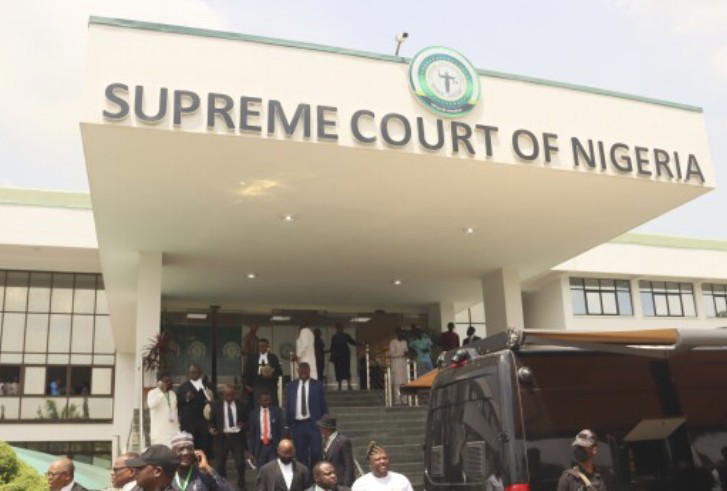
Nigeria Supreme Court: Electoral Act 2026 Nominations Provisions Restored
Summary
- Nigeria's Supreme Court restored key provisions of the Electoral Act 2026.
- This ruling creates a new legal challenge concerning candidate nominations.
- The Peoples Democratic Party (PDP) and other opposition parties are particularly affected.
- Nominations for the 2027 elections are now under intense scrutiny due to the restored provisions.
What Happened
The immediate aftermath of the Supreme Court's decision has created considerable uncertainty for the Peoples Democratic Party (PDP) and other opposition factions.
The Supreme Court of Nigeria recently issued a significant ruling concerning the Electoral Act 2026. This judicial intervention saw the reinstatement of several crucial provisions within the Act, a move that has immediately generated a new area of legal contention. This development particularly impacts political parties and their prospective candidates as they prepare for future electoral contests.
This judicial action directly affects the nomination processes for various political entities, specifically targeting the Peoples Democratic Party (PDP) and other opposition groups. The implications of this restoration are already being felt across the political landscape as parties gear up for upcoming electoral cycles, introducing a fresh layer of complexity to their preparations.
Legal Context
The Supreme Court's judgment specifically reinstated key sections of the Electoral Act 2026, which had previously been subject to legal challenges or amendments. While the precise details of the provisions are not explicitly outlined, their restoration fundamentally alters the legal framework governing candidate eligibility and nomination procedures. This judicial action underscores the dynamic nature of electoral law in Nigeria and the judiciary's pivotal role in shaping the country's electoral process.
The re-establishment of these Electoral Act 2026 provisions means that political parties must now adhere strictly to specific criteria and timelines that may have been previously overlooked or deemed inapplicable. This necessitates a thorough re-evaluation of all candidate nominations already made or those in progress, ensuring full compliance with the now-restored legal requirements. The ruling effectively tightens the legal scrutiny around who can contest elections, potentially leading to significant shifts in party strategies.
Implications for 2027 Elections
The immediate aftermath of the Supreme Court's decision has created considerable uncertainty for the Peoples Democratic Party (PDP) and other opposition factions. Their current candidate nominations, particularly those being prepared for the 2027 general elections, are now under intense legal review. This situation introduces a fresh wave of potential Nigeria election legal challenges, as the eligibility of certain nominated individuals may now be questioned based on the reinstated provisions of the Electoral Act 2026.
Political strategists and legal teams within these parties are now tasked with navigating this complex landscape. The ruling could lead to internal party disputes, disqualifications, or even necessitate fresh nomination exercises to align with the Supreme Court's directive. The prospect of Nigerian opposition candidate eligibility being challenged in court looms large, potentially reshaping the field of contenders well before the 2027 polls. This judicial pronouncement ensures that the path to the 2027 elections will be fraught with legal battles over candidate legitimacy, demanding urgent attention to PDP 2027 election candidate nominations.
Practical Implications
Lawyers advising political parties or candidates must immediately review the restored provisions of the Electoral Act 2026 to assess the eligibility of their nominated candidates and prepare for potential legal challenges ahead of the 2027 elections. This creates a need for urgent legal counsel on candidate screening and litigation strategy.
Source
How does this affect you?
Get an AI analysis of this article grounded in your jurisdictions, practice areas, and any policy documents you've uploaded to Wansom.
Finish Reading the Full Story and the Expert Analysis.
Get the latest legal & regulatory intelligence in Nigeria
Wansom is AI and can make mistakes.