
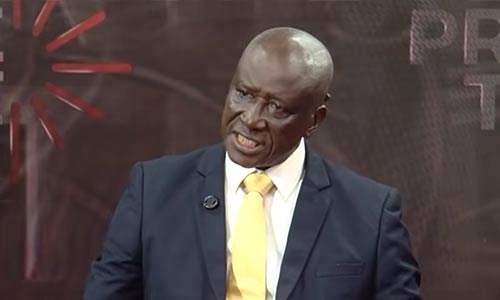
Nigeria Supreme Court: Maduabuchi On Electoral Act 2026 & INEC Powers Affirmed
Summary
- Senior lawyer Dr. Oba Maduabuchi stated that the Supreme Court restored membership register and nomination provisions of the Electoral Act 2026.
- Maduabuchi clarified that this restoration aligns with the constitutional powers of the Independent National Electoral Commission (INEC).
- He emphasized that the Supreme Court's role is to declare the law as it stands, not to determine its retrospective or prospective application, which is a legislative function.
- Maduabuchi indicated that he could not confirm if "Chinda" would be on the ballot without reviewing party registers.
Supreme Court's Stance on Electoral Law
The Supreme Court, in this particular instance, is seen as interpreting the Electoral Act 2026 nomination rules and its membership register provisions based on their original intent and current standing, without venturing into policy-making or defining the temporal scope of legal application, which are clearly legislative domains.
Senior Nigerian legal expert, Dr. Oba Maduabuchi, a distinguished Senior Advocate of Nigeria (SAN), has offered critical insights into the recent pronouncements by the Nigeria Supreme Court concerning the Electoral Act 2026. According to Maduabuchi, the apex court's definitive decision to reinstate specific provisions related to the membership register and nomination processes within the Electoral Act 2026 is a direct and unequivocal affirmation of the constitutional authority vested in the Independent National Electoral Commission (INEC). This interpretation by Oba Maduabuchi SAN underscores the judiciary's pivotal role in upholding the foundational principles governing electoral conduct and administration across the nation.
The Supreme Court's action, as articulated by Maduabuchi, effectively restores crucial aspects of the Electoral Act 2026 that dictate how political parties must manage their membership records and, subsequently, nominate candidates for various elective positions. This move is presented as a reinforcement of INEC's mandate to comprehensively oversee and regulate the electoral landscape, ensuring strict adherence to established legal frameworks. The commentary from Maduabuchi provides an essential perspective on the intricate interplay between judicial interpretation and the operational powers of Nigeria's primary electoral body.
Legal Interpretation and Legislative Role
Dr. Maduabuchi further clarified the fundamental nature of the Supreme Court's intervention, emphasizing that the court's inherent function is solely to declare the law as it stands, rather than to engage in complex questions of retrospective or prospective application. He firmly stated that the determination of whether a law applies backward or forward in time, affecting past or future actions, is a prerogative that belongs exclusively to the legislature. This crucial distinction highlights the constitutional separation of powers and delineates the specific roles of the judiciary and the legislative arm within Nigeria's robust legal system.
This perspective on Nigeria election law interpretation is paramount for understanding the precise boundaries of judicial activism versus legislative enactment. The Supreme Court, in this particular instance, is seen as interpreting the Electoral Act 2026 nomination rules and its membership register provisions based on their original intent and current standing, without venturing into policy-making or defining the temporal scope of legal application, which are clearly legislative domains. Maduabuchi's remarks thus reinforce the enduring principle that courts interpret existing laws, while legislatures are responsible for creating and defining the temporal applicability of those laws.
Implications for Electoral Processes
The Supreme Court's restoration of the membership register and nomination provisions carries significant and far-reaching implications for political parties and the integrity of future elections conducted under the Electoral Act 2026. Maduabuchi's commentary strongly suggests that these provisions are now firmly established and require strict compliance from all electoral stakeholders. The renewed emphasis on "Supreme Court membership register provisions" means that the accuracy, transparency, and integrity of party registers will be of paramount importance, directly impacting the eligibility and validity of nominated candidates.
In a specific illustrative example, Maduabuchi noted that he could not definitively state whether an individual named Chinda would be excluded from the ballot without first meticulously examining their respective political party's membership registers. This statement profoundly underscores the practical importance of these restored provisions and highlights the critical need for parties to maintain transparent, verifiable, and legally compliant membership records. The alignment of these provisions with INEC constitutional powers Nigeria ensures that the electoral body possesses the necessary legal backing and authority to effectively enforce these rules, thereby safeguarding the fairness, credibility, and overall integrity of the nation's electoral process.
Practical Implications
Lawyers advising political parties or candidates must understand the Supreme Court's interpretation of the Electoral Act 2026 regarding membership registers and nomination provisions, as articulated by Maduabuchi SAN, to ensure compliance with INEC's constitutional powers and avoid potential electoral disputes.
Source
How does this affect you?
Get an AI analysis of this article grounded in your jurisdictions, practice areas, and any policy documents you've uploaded to Wansom.
Finish Reading the Full Story and the Expert Analysis.
Get the latest legal & regulatory intelligence in Nigeria
Wansom is AI and can make mistakes.