
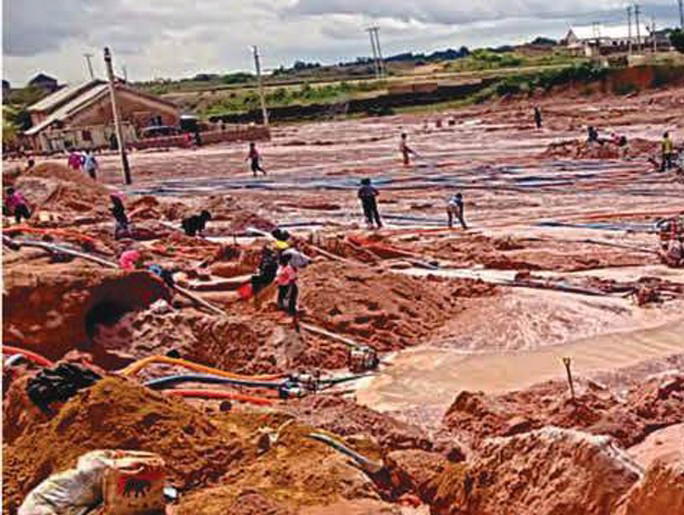
Nigeria: N13.7trn Illicit Mining Loss Undermines Economy
Summary
- Nigeria is reportedly losing an estimated N13.7 trillion annually due to illicit mining and illegal trade in solid minerals.
- Stakeholders have issued a warning about this substantial financial drain and are calling for immediate action.
- The continued exploitation and movement of valuable minerals outside regulatory frameworks are depriving the government of crucial revenue.
- There is a strong demand for enhanced enforcement, regulation, and monitoring within Nigeria's solid minerals sector.
- The N13.7 trillion loss highlights significant gaps in governance and oversight of the nation's natural resources.
Escalating Concerns Over Illicit Mineral Activities
The scale of the Nigeria N13.7trn illicit mining loss indicates a systemic issue that extends beyond isolated incidents, pointing to a significant portion of the solid minerals sector operating outside official oversight.
Nigeria is grappling with an alarming annual financial drain, with stakeholders highlighting an estimated N13.7 trillion mining revenue loss Nigeria suffers due to widespread illicit mining and the unregulated trade of solid minerals. This substantial sum represents a critical challenge to the nation's economic stability and resource management.
The warning from various stakeholders underscores the pervasive nature of these illegal operations across the country's mineral-rich regions. The scale of the Nigeria N13.7trn illicit mining loss indicates a systemic issue that extends beyond isolated incidents, pointing to a significant portion of the solid minerals sector operating outside official oversight.
These illicit activities not only deplete valuable natural resources but also divert potential revenue streams that could otherwise be invested in national development. The estimated N13.7 trillion figure serves as a stark reminder of the economic consequences stemming from unchecked exploitation and illegal commerce within the solid minerals industry.
Calls for Enhanced Regulatory Framework and Enforcement
In response to the substantial financial hemorrhage, stakeholders are advocating for a robust overhaul of the existing regulatory and enforcement mechanisms governing the solid minerals sector. There is a pressing demand for stronger regulation, more rigorous monitoring, and enhanced enforcement capabilities to curb the Nigerian illegal solid minerals trade.
The current environment, characterized by the continued exploitation and movement of valuable minerals without adherence to established legal frameworks, necessitates immediate and decisive action. Experts emphasize that strengthening solid minerals regulation Nigeria is paramount to reclaiming control over the nation's natural assets and ensuring sustainable development.
This push for improved governance aims to create a more transparent and accountable sector, where all operations comply with national laws and international best practices. The objective is to dismantle the networks facilitating illegal trade and ensure that the benefits of mineral extraction accrue to the state and its citizens, rather than illicit actors. The call for a stronger Nigeria mining sector enforcement reflects a recognition that current measures are insufficient to tackle the scale of the problem.
Profound Economic and Governance Implications
The unchecked proliferation of illicit mining and illegal trade in solid minerals has profound implications for Nigeria's economy and governance. The primary consequence is the significant deprivation of government revenue, which directly impacts the nation's ability to fund essential public services and infrastructure projects. The N13.7 trillion mining revenue loss Nigeria faces annually represents a massive opportunity cost.
Beyond the immediate financial losses, the unregulated nature of these activities fosters an environment conducive to corruption, environmental degradation, and social instability in affected communities. The absence of effective solid minerals regulation Nigeria also undermines investor confidence and hinders the development of a legitimate, formalized mining sector that could contribute significantly to the national GDP.
Addressing this challenge requires a concerted effort to not only enforce existing laws but also to develop comprehensive strategies that formalize artisanal mining, improve data collection on mineral resources, and enhance collaboration between government agencies and local communities. The long-term prosperity and stability of Nigeria are intrinsically linked to its capacity to effectively manage and derive legitimate value from its abundant solid mineral resources.
Practical Implications
Lawyers advising clients in Nigeria's solid minerals sector should anticipate heightened regulatory scrutiny and enforcement actions following warnings of N13.7 trillion losses from illicit mining. Compliance officers must review and strengthen internal controls to mitigate risks associated with illegal trade and ensure adherence to evolving sector regulations.
Source
How does this affect you?
Get an AI analysis of this article grounded in your jurisdictions, practice areas, and any policy documents you've uploaded to Wansom.
Finish Reading the Full Story and the Expert Analysis.
Get the latest legal & regulatory intelligence in Nigeria
Wansom is AI and can make mistakes.