
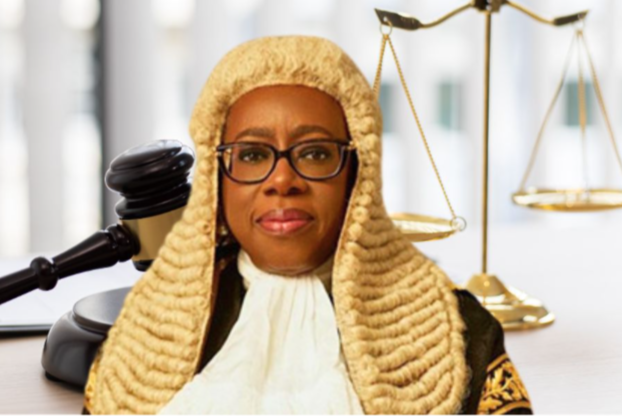
Nigeria Independence: 16 Men, 2 Women Led Judiciary Since 1960
Summary
- Justice Kudirat Kekere-Ekun is scheduled to be sworn in as Nigeria's 23rd judicial leader on September 30, 2024.
- She will be only the second woman to lead the Nigerian judiciary since the nation gained independence.
- Over the 66 years since independence, the judiciary has been led by 21 men and 2 women.
What Happened
Justice Kudirat Kekere-Ekun's impending assumption of office therefore places her in a particularly prominent and select group, as she will become only the second woman to lead the Nigerian judiciary since the country gained its independence.
Justice Kudirat Kekere-Ekun is set to make history within Nigeria's legal system, with her official swearing-in ceremony scheduled for September 30, 2024. This momentous occasion will see her assume the distinguished position as the 23rd individual to lead Nigeria’s Judiciary since the nation achieved its independence. Her upcoming appointment signifies a continuation of the critical judicial stewardship that has been a cornerstone of the country's governance throughout its post-colonial journey, guiding the legal framework for over six decades.
This forthcoming transition at the apex of the judicial branch underscores the enduring structure and succession planning within Nigeria's legal institutions. The formal ceremony later this year will officially place her within a significant lineage of legal luminaries who have been instrumental in shaping the interpretation and application of laws across the entire federation. The consistent succession of leadership, spanning from the very inception of self-governance, reflects the fundamental importance attributed to a stable, authoritative, and independent judiciary within the Nigerian constitutional architecture.
A Legacy of Leadership
The comprehensive history of Nigeria's judiciary, tracing its origins from the moment of national independence up to the present day, spans a considerable period of 66 years. Throughout this extensive timeframe, the nation's highest judicial office has been entrusted to a total of twenty-three distinct individuals. This numerical progression not only illustrates the consistent evolution and necessary renewal of judicial authority but also reflects the various eras, legal reforms, and societal challenges that have shaped the Nigerian state since its sovereign birth.
A notable aspect of this leadership succession is its gender composition. Out of the twenty-three distinguished individuals who have held this esteemed position, a significant majority, specifically twenty-one, have been men. Justice Kudirat Kekere-Ekun's impending assumption of office therefore places her in a particularly prominent and select group, as she will become only the second woman to lead the Nigerian judiciary since the country gained its independence. This statistic offers a clear and factual perspective on the historical gender representation within the most senior ranks of the legal profession in Nigeria over more than six decades of self-rule.
The Judiciary's Enduring Role
The consistent succession of twenty-three leaders over the 66 years since Nigeria's independence profoundly underscores the judiciary's unwavering and indispensable function in the nation's governance. Each individual who has held this paramount position, including the forthcoming Justice Kudirat Kekere-Ekun, has played a vital role in the ongoing development, interpretation, and enforcement of legal principles that form the bedrock of the nation's social and political order. This long-standing institutional continuity serves as a powerful testament to the judiciary's foundational commitment to upholding the rule of law and ensuring stability across a multitude of diverse administrations and political landscapes.
The appointment of Justice Kekere-Ekun as the twenty-third individual to hold this supremely significant position, and notably as one of only two women in this extensive historical line, highlights both the enduring nature of the institution itself and the gradual, albeit slow, shifts occurring within its leadership demographics. Her scheduled swearing-in on September 30, 2024, will undoubtedly mark another pivotal chapter in this rich and extensive history, further reinforcing the judiciary's steadfast commitment to its constitutional mandate and its continuous adaptation to the evolving legal and societal needs of the Nigerian populace since the nation's birth as an independent entity.
Source
How does this affect you?
Get an AI analysis of this article grounded in your jurisdictions, practice areas, and any policy documents you've uploaded to Wansom.
Finish Reading the Full Story and the Expert Analysis.
Get the latest legal & regulatory intelligence in Nigeria
Wansom is AI and can make mistakes.