
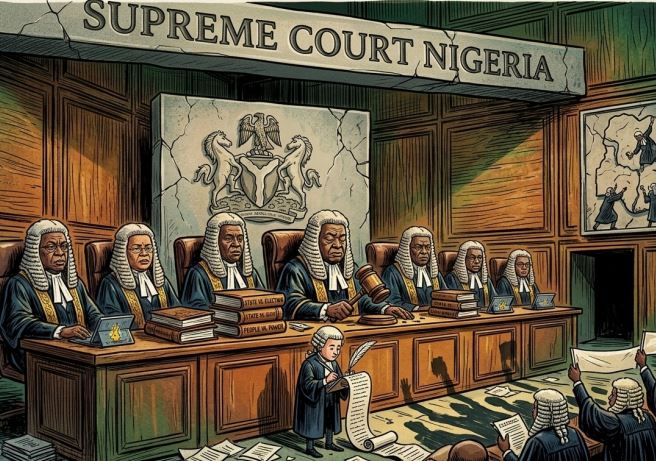
Nigeria Election Petition Statistics: 2023 Sets Record 1,996 Petitions
Summary
- Nigeria recorded 1,996 election petitions in 2023, marking the highest number in its democratic history.
- Since 1999, a cumulative total of 6,840 election petitions have been filed across various tribunals and courts.
- The volume of election petitions has dramatically increased from just two in 1999 to nearly 2,000 in the most recent election cycle.
- Significant spikes in petition filings were observed in 2007 (1,290), 2019 (1,697), and 2023 (1,996).
- This escalating trend places a substantial and growing burden on the Nigerian judiciary's capacity and efficiency.
Overview of Electoral Disputes
The escalating volume of election petitions carries profound implications for the Nigerian judiciary, placing an immense and growing burden on its capacity and efficiency.
Nigeria's electoral landscape has consistently generated a substantial volume of legal challenges, culminating in a record number of petitions following the 2023 general elections. A staggering 1,996 election petitions were filed across various tribunals and courts in 2023, representing the highest single-election cycle total recorded in the nation's democratic history. This significant figure contributes to an alarming cumulative total of 6,840 election petitions that have been formally lodged since the return to democratic rule in 1999.
These Nigeria election petition statistics underscore the persistent and growing reliance on judicial intervention to resolve electoral disputes, reflecting a deeply litigious post-election environment. The sheer scale of these challenges places considerable demands on the country's legal infrastructure, requiring extensive judicial resources to adjudicate the numerous claims of irregularities and malpractices. The consistent increase in electoral litigation highlights a fundamental aspect of Nigeria's democratic process, where the outcomes of elections are frequently subjected to rigorous judicial scrutiny.
Historical Trends in Petition Volume
An examination of historical Nigerian election petitions volume reveals a dramatic escalation in electoral disputes over the past two decades. In the nascent stages of Nigeria's Fourth Republic, only two election petitions were recorded in 1999, a figure that quickly surged to 560 by the 2003 election cycle. The trend continued its upward trajectory, reaching an unprecedented 1,290 petitions in 2007.
While there was a notable dip to 732 in 2011 and a return to 560 in 2015, the subsequent election cycles witnessed a renewed and intensified increase. The 2019 elections generated 1,697 petitions, setting a new benchmark that was then surpassed by the 1,996 petitions filed in 2023. This comprehensive Nigeria electoral dispute data illustrates a clear pattern of increasing judicial engagement in post-election processes, with the volume of Election tribunal petitions Nigeria demonstrating a near-continuous rise, particularly in recent years. The historical trajectory suggests that challenging election outcomes through legal means has become an entrenched feature of the Nigerian political system, with the number of challenges growing exponentially since the turn of the millennium.
Implications for the Judiciary
The escalating volume of election petitions carries profound implications for the Nigerian judiciary, placing an immense and growing burden on its capacity and efficiency. With a cumulative total of 6,840 petitions filed since 1999, and nearly 2,000 in the most recent cycle alone, the judicial system is consistently tasked with adjudicating a vast array of complex electoral disputes within strict timelines. This high frequency of Election tribunal petitions Nigeria diverts significant judicial resources, including judges' time, court staff, and infrastructure, away from other critical legal matters.
The sheer scale of these challenges can strain the judicial system, potentially impacting the speed and thoroughness with which cases are processed. The consistent rise in Nigeria election petition statistics highlights a systemic challenge, where the resolution of electoral grievances increasingly relies on judicial intervention, thereby underscoring the critical role and immense pressure faced by the courts in upholding democratic processes. This trend necessitates careful consideration of the long-term sustainability and resilience of the judicial framework under such sustained pressure, as the judiciary remains a pivotal arbiter in the nation's democratic governance.
Practical Implications
This data highlights the increasing litigation burden on the Nigerian judiciary concerning election disputes. Lawyers should be aware of this trend when advising clients on electoral processes and potential challenges, and consider the implications for the efficiency and capacity of the judicial system.
Source
How does this affect you?
Get an AI analysis of this article grounded in your jurisdictions, practice areas, and any policy documents you've uploaded to Wansom.
Finish Reading the Full Story and the Expert Analysis.
Get the latest legal & regulatory intelligence in Nigeria
Wansom is AI and can make mistakes.