
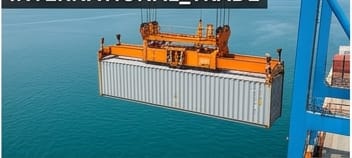
Nigeria Customs Modernization and Digital AfCFTA Journey Explored
For decades, the Nigeria Customs Service was largely associated with physical cargo examination, revenue collection, seizures, border enforcement and the paperwork that accompanied international trade. That model is changing. The transformation taking place within the Nigeria Customs Service is not simply about replacing files with computers or manual procedures with digital platforms. It is increasingly about changing how the institution operates, how its officers make decisions and how Nigeria manages its position within an evolving global and African trading environment. At the centre of this transformation are three closely connected elements: modernisation, human-capital development and digital trade. Keep up with the latest headlines on WhatsApp | LinkedIn The emergence of B'Odogwu, the Nigeria Customs Service's indigenous Unified Customs Management System, is perhaps the most visible expression of the change. But the more important story lies behind the technology -- in the effort to equip Customs personnel with the skills required to operate in an environment increasingly driven by data, risk management, intelligence and automation. This is particularly relevant to President Bola Tinubu's Renewed Hope economic agenda, which places emphasis on expanding production, improving the business environment, increasing non-oil exports and enabling Nigeria to take greater advantage of the African Continental Free Trade Area. Customs sits at the intersection of many of these objectives. It collects revenue, protects the economy against prohibited and dangerous goods, combats smuggling and commercial fraud, facilitates legitimate trade and plays an increasingly important role in supporting Nigeria's participation in international and continental markets. The effectiveness of these responsibilities ultimately depends on the people discharging them. For much of its history, Customs operations depended heavily on paperwork, physical inspection and the individual experience of officers. But international trade has become considerably more complex. Supply chains are more sophisticated, trade documentation is increasingly digital, and attempts to evade duties and border controls have become more difficult to detect through conventional methods alone. The modern Customs officer therefore requires a broader range of competencies. Knowledge of tariffs and import procedures must increasingly be complemented by expertise in risk management, valuation, classification, post-clearance audit, data analysis, intelligence gathering and digital systems. This makes human-capital development one of the most important components of Customs reform. Technology can process information, but officers must understand what that information means and determine what action is appropriate. A risk-management system, for example, may flag a transaction, but it is the officer's professional judgment that determines whether the consignment requires intervention. That is changing the meaning of productivity within Customs. The most effective officer is not necessarily the one who examines the greatest number of containers. It is the officer who can identify the consignments that genuinely require examination while allowing compliant cargo to move with minimum intervention. Modernisation, therefore, should enable Customs personnel to work smarter, more selectively and more efficiently, rather than simply process more transactions. This is where the reforms under Comptroller-General of Customs Adewale Adeniyi become relevant. Since assuming office, Adeniyi has accelerated efforts around technology deployment, trade facilitation, institutional collaboration, professional development and intelligence-led enforcement. The broader direction has been to make Customs less dependent on physical processes and more capable of using information before, during and after the clearance of goods. Post-clearance audit provides a good example. Instead of attempting to resolve every i
How does this affect you?
Get an AI analysis of this article grounded in your jurisdictions, practice areas, and any policy documents you've uploaded to Wansom.
Finish Reading the Full Story and the Expert Analysis.
Get the latest legal & regulatory intelligence in Nigeria
Wansom is AI and can make mistakes.