
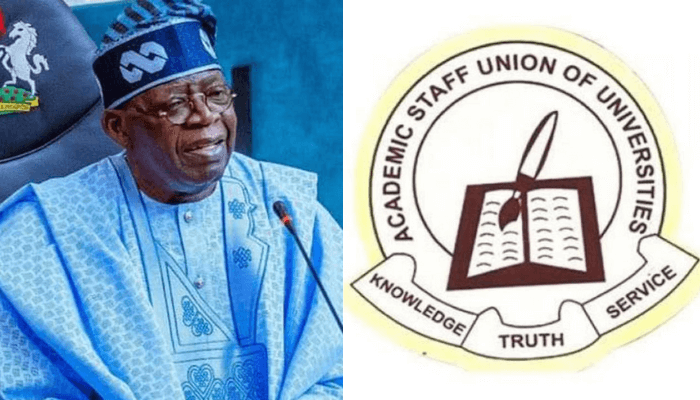
ASUU Nigeria: Condemns Withheld Salaries, 2025 Agreement Implementation
Summary
- The Academic Staff Union of Universities (ASUU) has criticized both federal and state governments.
- ASUU's grievances include the non-payment of three-and-a-half months' withheld salaries for university lecturers.
- The union also faults the uneven implementation of a December 2025 agreement.
- This dispute highlights ongoing challenges in Nigeria's public sector labour relations and education.
What Happened
The ongoing friction between ASUU and the Nigerian government, particularly concerning the Nigeria ASUU withheld salaries 2025 agreement, carries significant implications for the nation's educational landscape.
The Academic Staff Union of Universities (ASUU) has recently voiced strong disapproval regarding the actions of both the Federal and state governments in Nigeria. The union's primary grievances stem from two critical issues impacting its members, who are university lecturers across the nation. Firstly, ASUU highlights the persistent non-payment of salaries that were withheld from these educators for a period of three-and-a-half months.
This protracted dispute over ASUU unpaid lecturers salaries Nigeria represents a significant point of contention in the ongoing labour relations within the country's higher education sector. The non-payment affects a substantial portion of the academic workforce, creating financial hardship and fueling dissatisfaction among university staff. The union's public criticism underscores the severity of this issue and its perceived lack of resolution by governmental authorities.
Core of the Dispute
Beyond the immediate issue of withheld remuneration, ASUU's condemnation also targets the inconsistent and partial execution of a crucial agreement reached in December 2025. This FG ASUU agreement implementation, or rather its uneven application, forms the second major pillar of the union's current dispute with the government. The Academic Staff Union of Universities dispute thus encompasses both historical grievances related to unpaid wages and contemporary concerns about the sanctity of collective bargaining outcomes.
The December 2025 agreement is understood to be a landmark accord intended to address various aspects of Nigerian university staff remuneration and working conditions. However, ASUU's assertion of "uneven implementation" suggests that the terms agreed upon are not being uniformly applied across all federal and state institutions, or that certain provisions are being selectively ignored. This situation raises fundamental questions about the reliability of government commitments in Nigeria public sector labour law and the enforcement mechanisms for such agreements.
Implications for Education and Labour
The ongoing friction between ASUU and the Nigerian government, particularly concerning the Nigeria ASUU withheld salaries 2025 agreement, carries significant implications for the nation's educational landscape. The continued non-payment of three-and-a-half months' salaries to university lecturers not only affects the morale and welfare of these essential workers but also threatens the stability of academic calendars and the quality of instruction. Such disputes often lead to industrial actions, which can severely disrupt university operations and impact students' academic progress.
Furthermore, the perceived failure to fully implement the December 2025 agreement could erode trust between labour unions and government entities, setting a challenging precedent for future negotiations. Effective labour relations in Nigeria education depend heavily on the government's commitment to honouring agreements and addressing legitimate grievances promptly. The current situation signals a persistent challenge in ensuring fair remuneration and adherence to collective bargaining outcomes for Nigerian university staff.
Practical Implications
Lawyers advising public sector entities or labour unions in Nigeria should monitor the resolution of this dispute for precedents on collective agreement enforcement and government obligations regarding withheld salaries. This signals ongoing labour relations challenges in the Nigerian public education sector that could lead to further industrial action or legal proceedings.
Source
How does this affect you?
Get an AI analysis of this article grounded in your jurisdictions, practice areas, and any policy documents you've uploaded to Wansom.
Finish Reading the Full Story and the Expert Analysis.
Get the latest legal & regulatory intelligence in Nigeria
Wansom is AI and can make mistakes.