
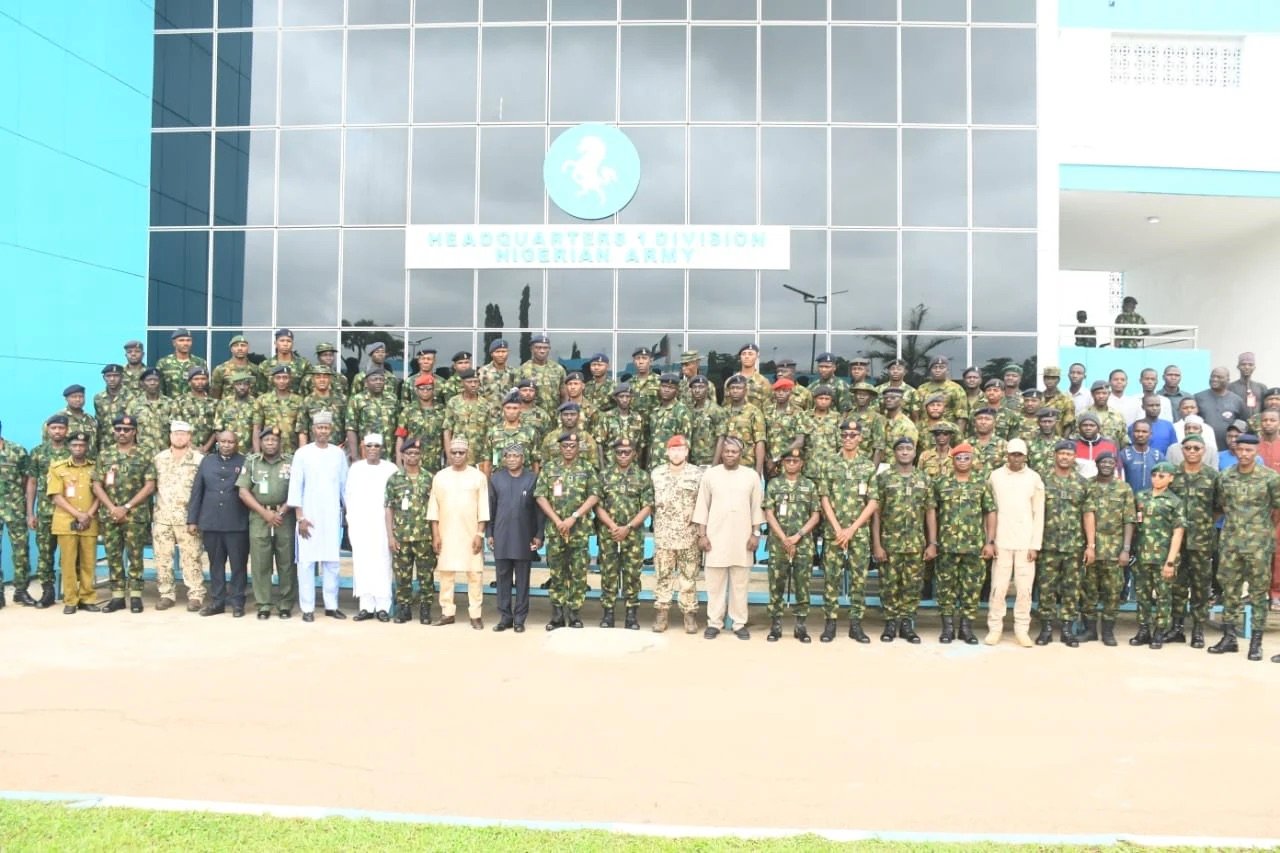
Nigeria Army trains engineers to tackle growing Bomb disposal threats
KADUNA — In response to the escalating tactical use of Improvised Explosive Devices (IEDs) by non-state armed groups across northern operational theaters, the Nigerian Army Corps of Engineers has concluded a specialized training program to expand its frontline bomb disposal capabilities.
Organized by the 41 Engineer Brigade under the 1 Division Nigerian Army, the specialized seminar and graduation of the Explosive Ordnance Disposal (EOD) X2 Course 126 in Kaduna marks a strategic shift toward institutionalizing counter-IED (C-IED) operations within standard military engineering doctrines.
The initiative directly addresses operational bottlenecks encountered during joint counter-terrorism missions, notably within Operation FANSAN YAMMA and ongoing operations in the North-East and North-West geopolitical zones.
Statutory Framework and Military Legal Authorities
The expansion of the Nigerian Army's EOD and C-IED operational mandate is grounded in statutory authorities governing national defense, counter-terrorism, and internal security deployments:
1. Constitutional and Statutory Mandates
Section 217(2)(c) of the 1999 Constitution (as amended): Authorizes the Armed Forces of the Federal Republic of Nigeria to act in aid of civil authorities to suppress insurrection and restore public order upon executive direction.
Terrorism (Prevention and Prohibition) Act, 2022: Provides the primary legal framework criminalizing the manufacture, possession, transport, and deployment of improvised explosive devices, weaponized chemical elements, and illicit explosive precursors by non-state actors.
Armed Forces Act (Cap A20, LFN 2004): Governs the operational deployment, rules of engagement, and command responsibility of military personnel executing specialized engineering and EOD assignments in active conflict zones.
Key Operational Directives and Executive Statements
Speaking on behalf of the Commander of the Corps of Engineers, Major General S.T. Shafaru, Major General Josiah Attah emphasized that asymmetric explosive threats have become one of the most significant operational hazards facing troops and civilian populations in conflict areas:
Closing the Specialist Deficit in Counter-Insurgency
Bridging Capacity Gaps: The EOD Course 126 was specifically structured to bridge the deficit of certified bomb disposal experts across tactical units, enabling rapid route clearance, hazard identification, and ordnance disposal without delaying military maneuvers.
Multi-Agency Integration: The curriculum aligns with the Chief of Army Staff’s Command Philosophy, focusing on operational readiness through mission-oriented training and inter-agency collaboration with the Nigeria Police Force EOD-CBRN Command, the Department of State Services (DSS), and international training partners.
International Technical Assistance: The Nigerian Army Corps of Engineers continues to leverage technical partnerships with foreign military missions, including the British Military Assistance Training Team (BMATT) and the German Training and Assistance Group (GTAG), to enhance intelligence sharing, forensic analysis of recovered devices, and specialized EOD equipment deployment.
Civilian Protection and Duty of Reporting
Military authorities underscored that military engineers routinely conduct clearing operations along critical supply routes to restore safe passage for civilian transit and humanitarian assistance.
Commander of the 41 Engineer Brigade, Brigadier General Sheriff Aremu, urged the public to support security agencies by reporting unexploded ordnance or suspicious materials, noting that timely civilian intelligence remains critical for preemptive bomb neutralization.
Legal & Strategic Implications for Counter-Terrorism Operations
Legal and defense analysts highlight several core jurisprudence and operational implications stemming from the updated EOD directive:
1. Chain of Custody and Forensic Evidentiary Standards
Beyond immediate threat neutralization, EOD specialists are increasingly trained in post-blast forensic investigation. Preserving physical evidence from recovered or disarmed IEDs—such as electronic triggering mechanisms, explosive compounds, and biometric traces—is essential for prosecuting captured insurgents under the Terrorism (Prevention and Prohibition) Act 2022 in Federal High Court proceedings.
2. Rules of Engagement and Proportionality
The deployment of explosive ordnance disposal units in populated areas requires strict adherence to international humanitarian law (IHL) and national Rules of Engagement (ROE). The integration of certified EOD personnel mitigates the risk of collateral damage to civilian infrastructure during controlled detonations.
3. Inter-Agency Jurisdictional Synergy
While primary explosive ordnance disposal within internal civilian zones legally falls under the mandate of the Nigeria Police Force EOD Command, active insurgency theaters necessitate operational handover to military combat engineers. The current training framework establishes standardized joint operational protocols to streamline jurisdictional transitions between military and civil law enforcement agencies.
Future Trajectory
Graduates of the EOD X2 Course 126 have been deployed across key operational sectors in northern Nigeria to support active combat brigades. The Headquarters Nigerian Army Corps of Engineers plans to replicate these specialized training modules across additional military formations to ensure all deployed units possess autonomous counter-IED capabilities.
Citations
- 1.thesun.ng
Finish Reading the Full Story and the Expert Analysis.
Get the latest legal & regulatory intelligence in Nigeria
Wansom is AI and can make mistakes.