
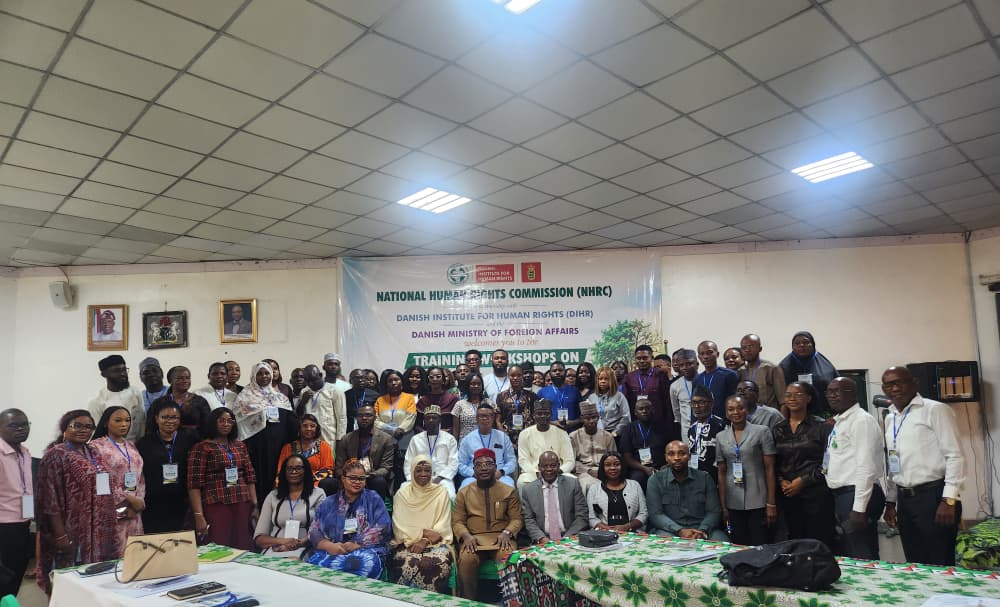
NHRC Nigeria: Calls for Human Rights Climate Policy Integration
Summary
- The National Human Rights Commission (NHRC) has called for human rights to be integrated into Nigeria's national climate change policy.
- The NHRC specifically urged the engagement of human rights experts to assess both the physical and human rights implications of climate change.
- This initiative aims to ensure a comprehensive understanding of how climate impacts affect fundamental human entitlements.
- The Commission's recommendation highlights a growing emphasis on rights-based approaches within Nigeria's environmental governance framework.
A Call for Integrated Climate Action
This initiative signals a crucial step towards embedding human rights considerations at the core of Nigeria's national climate change strategy, moving beyond purely environmental concerns to address the profound societal impacts.
The National Human Rights Commission (NHRC) has issued a significant call for the comprehensive integration of human rights considerations into Nigeria's national climate change policy. This directive underscores a growing recognition of the profound societal dimensions of environmental shifts, moving beyond purely ecological concerns to address their direct impact on individuals and communities.
Central to the NHRC's recommendation is the engagement of human rights experts. These specialists are deemed essential for thoroughly assessing the far-reaching implications of climate change, which extend beyond mere physical environmental changes. Their expertise is sought to identify and articulate the specific human rights implications that arise from climate-related phenomena, ensuring a holistic understanding of the challenges ahead.
This initiative signals a crucial step towards embedding human rights considerations at the core of Nigeria's national climate change strategy, moving beyond purely environmental concerns to address the profound societal impacts. It highlights a proactive stance by the NHRC to ensure that future climate policies are not only environmentally sound but also socially just and protective of fundamental human entitlements.
The Interplay of Climate Change and Human Rights
The NHRC's emphasis on both physical and human rights implications acknowledges the multifaceted nature of climate change impacts. Physical implications, such as rising sea levels, desertification, extreme weather events, and resource scarcity, directly translate into severe human rights challenges. These can include threats to the right to life, health, food, water, adequate housing, and even self-determination for communities disproportionately affected.
Engaging human rights experts is vital for meticulously mapping these connections. Their role involves identifying vulnerable populations, assessing the differential impacts of climate change on various groups, and proposing rights-based solutions. This approach ensures that policy responses are tailored to protect those most at risk, aligning Nigeria's climate action with international human rights standards and principles of environmental justice.
By advocating for this expert-led assessment, the NHRC aims to ensure that the development and implementation of Nigeria's climate change policy are informed by a deep understanding of how environmental degradation and climate shifts impinge upon fundamental human entitlements. This focus on Nigeria climate change human rights is critical for fostering resilient and equitable adaptation and mitigation strategies.
Shaping Nigeria's Climate Policy Landscape
The intervention by the National Human Rights Commission Nigeria marks a pivotal moment for the country's environmental governance. By urging the integration of human rights into national climate change policy, the NHRC is advocating for a framework that views climate action through a lens of justice and equity. This suggests a potential evolution in how Nigeria approaches its climate commitments, ensuring that human well-being is a central metric of success.
The NHRC climate policy recommendations are likely to influence future legislative and regulatory developments, pushing for policies that not only reduce emissions or adapt to climate impacts but also safeguard the rights of all citizens, particularly the most marginalized. This proactive stance by a key national institution underscores a growing global trend towards recognizing climate change as a human rights crisis, necessitating rights-based solutions.
This development signals a more comprehensive and ethically grounded approach to climate policy-making within Nigeria. It positions the NHRC as a crucial voice in ensuring that the nation's response to climate change is not merely technical but also deeply rooted in principles of human dignity and protection.
Broader Implications for Governance and Development
The NHRC's call has significant implications for how environmental human rights Nigeria are understood and protected moving forward. By explicitly linking climate policy with human rights, the Commission is setting a precedent for future environmental and development projects to undergo rigorous human rights impact assessments. This could lead to more robust due diligence requirements for both public and private sector initiatives.
Such a policy shift would necessitate greater accountability from all stakeholders involved in climate action, ensuring that interventions do not inadvertently harm human rights or exacerbate existing inequalities. It also encourages a participatory approach, where affected communities have a voice in the design and implementation of policies that directly impact their lives and livelihoods.
Ultimately, the NHRC Nigeria human rights climate policy initiative represents a forward-thinking strategy to build a more resilient and just society in the face of climate change. It reinforces the idea that effective climate action must be inherently human-centered, protecting the rights and dignity of all people as the planet undergoes significant environmental transformation.
Practical Implications
This signals a growing emphasis on human rights within Nigeria's climate policy framework. Lawyers advising clients on environmental projects or climate-related compliance should anticipate future regulations or due diligence requirements that incorporate human rights impact assessments and stakeholder engagement.
Source
How does this affect you?
Get an AI analysis of this article grounded in your jurisdictions, practice areas, and any policy documents you've uploaded to Wansom.
Finish Reading the Full Story and the Expert Analysis.
Get the latest legal & regulatory intelligence in Nigeria
Wansom is AI and can make mistakes.