
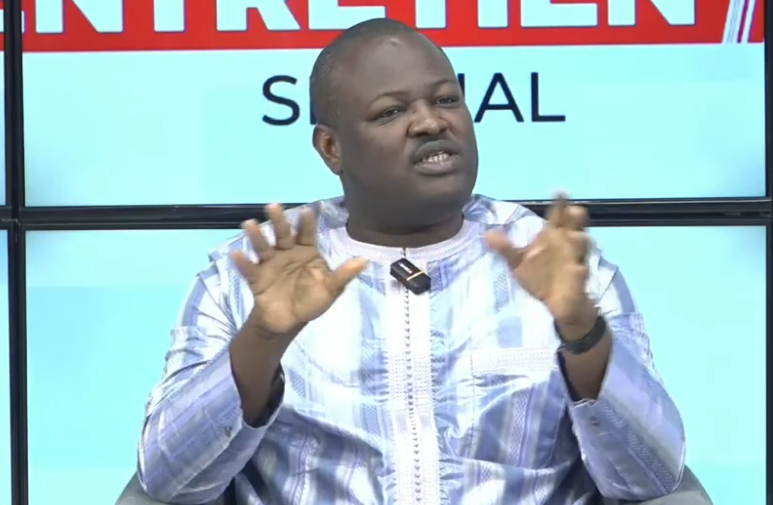
Ngouda Mboup Sénégal Rejet Texte: Parliament Praised for Scrutiny
Summary
- Senegalese deputies rejected a proposed legislative text deemed problematic in both substance and form.
- Mouhamadou Ngouda Mboup, a public law expert and lecturer-researcher at UCAD, commended the parliamentarians for their vigilance.
- Mboup stated that the deputies' action prevented "bad surprises" for Senegal.
- The legal expert's assessment was based on Article 68 of the Senegalese Constitution.
Parliamentary Action and Expert Commentary
Professor Ngouda Mboup explicitly articulated that by declining to pass this specific bill, the parliamentarians successfully "avoided bad surprises for Senegal."
The Senegalese Parliament recently undertook a crucial legislative action, opting to reject a proposed text that had been under consideration. This decision by the deputies has garnered significant praise from prominent legal scholars, who view it as a testament to the legislative body's commitment to thorough scrutiny. The rejected bill was identified as presenting substantial issues, raising concerns not only about its core content but also its structural and formal aspects. This discernment by the Parlement sénégalais in its vote loi process is a key highlight of recent parliamentary activity.
Mouhamadou Ngouda Mboup, a lecturer and researcher specializing in Public Law at the Cheikh Anta Diop University of Dakar (UCAD), was among those who publicly acknowledged and lauded the parliamentarians' stance. His commentary underscored the vital role played by elected officials in meticulously evaluating legislative proposals. According to Professor Mboup, the rejection of this particular text, which he characterized as a "texte problématique," effectively served to protect Senegal from potential future complications and undesirable outcomes, demonstrating the importance of vigilance in the legislative process.
Constitutional Framework and Legal Scrutiny
The foundation for Professor Mboup's expert assessment and, implicitly, for the deputies' decisive action, lies firmly within Senegal's constitutional framework. Specifically, Ngouda Mboup referenced Article 68 Constitution as a guiding principle in his analysis. As a leading jurist in public law, Professor Mboup routinely draws upon such constitutional provisions to evaluate the legality, appropriateness, and potential impact of proposed legislation. His emphasis on this article highlights its significance in ensuring legislative integrity.
This reliance on Article 68 underscores the critical importance of a rigorous and constitutionally compliant review process for all legislative initiatives presented to the Parlement sénégalais. The fact that the Députés Sénégal ultimately chose not to adopt the text suggests that their thorough examination revealed significant deficiencies, both in its substance and its form, which could not be reconciled with existing legal standards or national interests. This adherence to constitutional principles, as advocated by experts like Ngouda Mboup, is paramount for upholding the rule of law and preventing the enactment of flawed legislation within Senegal.
Averting Potential Issues and Broader Implications
The collective decision by the Députés Sénégal to reject the problematic legislative text is widely regarded as a proactive and essential measure to safeguard the nation's future. Professor Ngouda Mboup explicitly articulated that by declining to pass this specific bill, the parliamentarians successfully "avoided bad surprises for Senegal." This powerful statement implies that the text, had it been enacted into law, carried the potential for unforeseen negative consequences, legal ambiguities, or significant compliance burdens that could have impacted various sectors.
The identified issues with the text were not merely superficial; they delved into its core substance and its structural form, indicating deep-seated flaws that made it unsuitable for adoption. The vigilance and critical judgment demonstrated by the deputies in identifying and acting upon these problems highlight a robust and functioning legislative oversight process. This outcome reinforces the critical significance of independent expert analysis, such as that provided by Professor Ngouda Mboup, and the diligent application of constitutional mandates, particularly Article 68 Constitution, within the parliamentary arena, thereby ensuring that only well-vetted and sound laws are ultimately enacted for the benefit of the Senegalese populace. The Ngouda Mboup Sénégal rejet texte incident serves as a clear example of legislative accountability.
Practical Implications
Lawyers and compliance officers in Senegal should note the vigilance of deputies in rejecting a problematic legislative text, as highlighted by Professor Ngouda Mboup. This indicates that the legislative process is actively scrutinizing proposed laws, potentially preventing future legal uncertainties or compliance burdens that might have arisen from the rejected text. It also underscores the importance of monitoring parliamentary debates and the application of constitutional provisions like Article 68 in legislative review.
Source
How does this affect you?
Get an AI analysis of this article grounded in your jurisdictions, practice areas, and any policy documents you've uploaded to Wansom.
Finish Reading the Full Story and the Expert Analysis.
Get the latest legal & regulatory intelligence in Senegal
Wansom is AI and can make mistakes.