
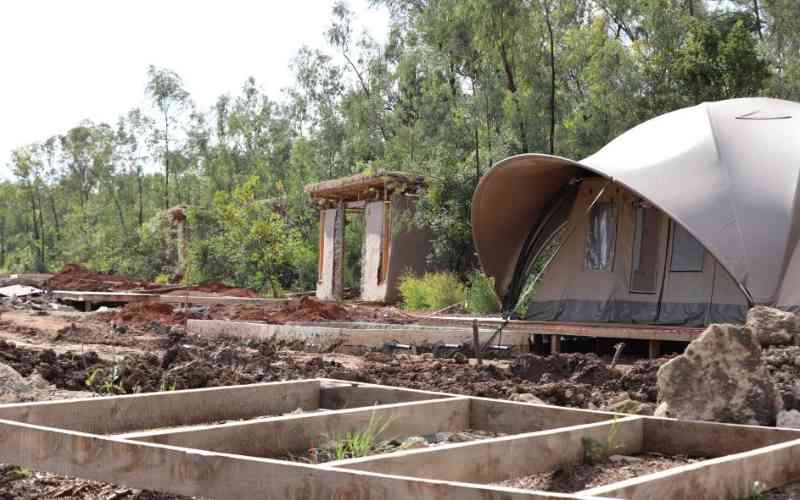
Ngong Forest Eco-Lodge Construction Halted by Environment and Lands Court
Summary
- The Environment and Lands Court has temporarily stopped construction of an eco-lodge project in Ngong Road Forest.
- The court's orders came after a petition was filed by environmental groups against government agencies and private developers.
- The case highlights the importance of adhering to constitutional and statutory environmental requirements in Kenya.
- The halt on construction is a significant victory for environmental groups and a setback for infrastructure works linked to Talanta Sports City.
What Happened
"A conservatory order be and is hereby issued staying and restraining the respondents from any further excavation, tree-felling, land clearance, or construction works of any kind at the eco-lodge site operated by Konyon Company within the Sanctuary Block of Ngong Road Forest," Justice Kemei ruled.
A court has intervened to halt construction of an eco-lodge project in Ngong Road Forest, a move that deals a significant blow to infrastructure works linked to Talanta Sports City. The Environment and Lands Court issued orders stopping all excavation, tree felling, land clearance, and construction works at the proposed eco-lodge site until the case is heard and determined. This decision came after a petition was filed by the Law Society of Kenya (LSK), the Green Belt Movement, and JustAct, public interest litigation group, against the Kenya Urban Roads Authority (KURA), Kenya Forest Service, and private developer Konyon Company Limited. The court's orders also prohibited the removal of an electric fence in the Sanctuary Block of Ngong Road Forest. The petitioners claimed that government agencies have systematically bypassed constitutional and statutory environmental approvals to push through development projects without public participation, environmental impact assessments, lawful authorization, or adherence to the Ngong Road Forest participatory Forest Management Plan.
Legal Context
The court's decision highlights the importance of adhering to constitutional and statutory environmental requirements in Kenya. The petitioners argued that KURA had awarded the road contract before the presidential announcement, and that the project was committed without the necessary environmental authorizations and public participation required by law. This case may set a precedent for future development projects in protected areas, emphasizing the need for strict compliance with environmental regulations. The court's orders also underscore the significance of public interest litigation in protecting the environment and upholding constitutional rights.
Why It Matters
The halt on construction of the eco-lodge project is a significant victory for environmental groups and a setback for infrastructure works linked to Talanta Sports City. The case highlights the ongoing encroachment and destruction of one of Nairobi's remaining indigenous urban forests, threatening biodiversity, wildlife movement, water catchment, and climate resilience. The court's decision may have far-reaching implications for future development projects in protected areas, emphasizing the importance of environmental approvals and public participation. This case demonstrates the critical role that public interest litigation can play in protecting the environment and upholding constitutional rights.
Practical Implications
Lawyers should watch for the precedent set by this court decision, which may impact future development projects in protected areas and highlight the importance of adhering to constitutional and statutory environmental requirements.
Source
How does this affect your business?
Get an AI analysis of this article grounded in your jurisdictions, practice areas, and any policy documents you've uploaded to Wansom.
Wansom is AI and can make mistakes.