
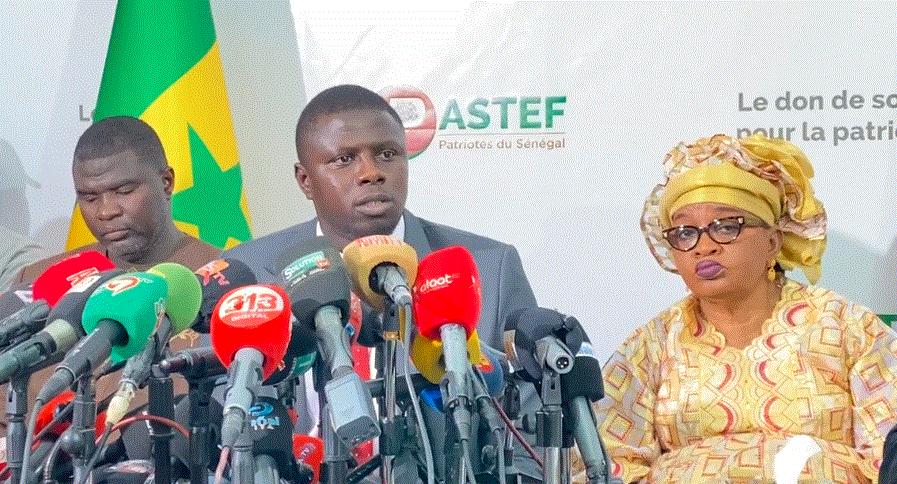
Ngagne Demba Touré: Alleges Complot Against Sénégal's Assemblée Nationale
Summary
- Ngagne Demba Touré has publicly urged the Senegalese judiciary to act.
- He alleges that ruling party officials are openly calling for a conspiracy against the National Assembly President.
- Touré believes judicial intervention is crucial to ensure respect for state institutions and republican principles.
- The President of the National Assembly holds the second-highest position in the Senegalese state.
- This situation highlights concerns about political stability and the judiciary's role in protecting state institutions.
Accusations of Conspiracy Against Assembly President
This development signals potential legal challenges or investigations into alleged political conspiracy against high-ranking officials in Senegal.
Ngagne Demba Touré has recently brought to public attention serious allegations, directly challenging the judicial authority in Senegal. His statements highlight what he perceives as overt calls from high-ranking officials within the incumbent political party, which he characterizes as a concerted effort to undermine the President of the National Assembly. This situation, involving "Ngagne Demba Touré complot Assemblée Sénégal," points to a significant internal political tension.
Touré specifically identifies these pronouncements as a "complot" or conspiracy targeting the individual who holds the second most prominent position in the Senegalese state hierarchy. Such an accusation, originating from a public figure, places considerable pressure on the nation's legal framework to address potential threats to its institutional integrity. The gravity of these claims necessitates a thorough examination of the motivations and implications behind them.
Demands for Judicial Action
In light of these alleged conspiratorial calls, Ngagne Demba Touré has explicitly called upon the "pouvoir judiciaire" to take decisive action. He asserts that a robust response from the justice system is essential to uphold the fundamental "respect institutions républicaines Sénégal" and to safeguard the core principles upon which the republic is founded. This direct appeal underscores a belief that the judiciary bears the ultimate responsibility for protecting the state's foundational structures from political machinations.
Touré's demand is not merely a political statement but a direct challenge to the judiciary's perceived impartiality and its capacity to act independently when faced with allegations involving powerful political actors. The expectation is that the "justice sénégalaise complot politique" will not be tolerated, and that any attempts to destabilize the leadership of the National Assembly will be met with appropriate legal scrutiny. His intervention seeks to ensure that political discourse does not cross into realms that threaten the stability of state offices.
Legal and Institutional Implications
The allegations of a "complot président Assemblée nationale Sénégal" carry profound legal and institutional implications for the country. If officials from the ruling party are indeed orchestrating efforts against the head of the legislative body, it raises serious questions about the separation of powers and the integrity of democratic governance. The judiciary's response, or lack thereof, will inevitably set a precedent for how such high-level political disputes are handled in the future.
This scenario tests the resilience of Senegal's republican principles and the judiciary's commitment to upholding them without fear or favor. The potential for a "justice sénégalaise complot politique" to be either exposed or dismissed by the courts will significantly influence public trust in state institutions. The outcome could either reinforce the rule of law or expose vulnerabilities in the system's ability to protect its own.
Why It Matters for Senegal
The current situation, highlighted by Ngagne Demba Touré's urgent appeal, is critical for the future of Senegal's political stability and institutional respect. The call for judicial intervention against alleged conspiratorial actions by ruling party members against the National Assembly President underscores a deep concern for the nation's democratic health. How the "pouvoir judiciaire" addresses these accusations will be a defining moment, potentially shaping the landscape of political accountability and institutional protection for years to come.
This development signals potential legal challenges or investigations into alleged political conspiracy against high-ranking officials in Senegal. Lawyers should monitor judicial responses to such calls, as they could lead to significant legal precedents regarding political speech, sedition, or the protection of state institutions, impacting future political discourse and legal defense strategies. The integrity of the legislative branch, represented by its president, is paramount, and any perceived threat to it demands a clear and principled response from the legal system.
Practical Implications
This development signals potential legal challenges or investigations into alleged political conspiracy against high-ranking officials in Senegal. Lawyers should monitor judicial responses to such calls, as they could lead to significant legal precedents regarding political speech, sedition, or the protection of state institutions, impacting future political discourse and legal defense strategies.
Source
How does this affect you?
Get an AI analysis of this article grounded in your jurisdictions, practice areas, and any policy documents you've uploaded to Wansom.
Finish Reading the Full Story and the Expert Analysis.
Wansom is AI and can make mistakes.