
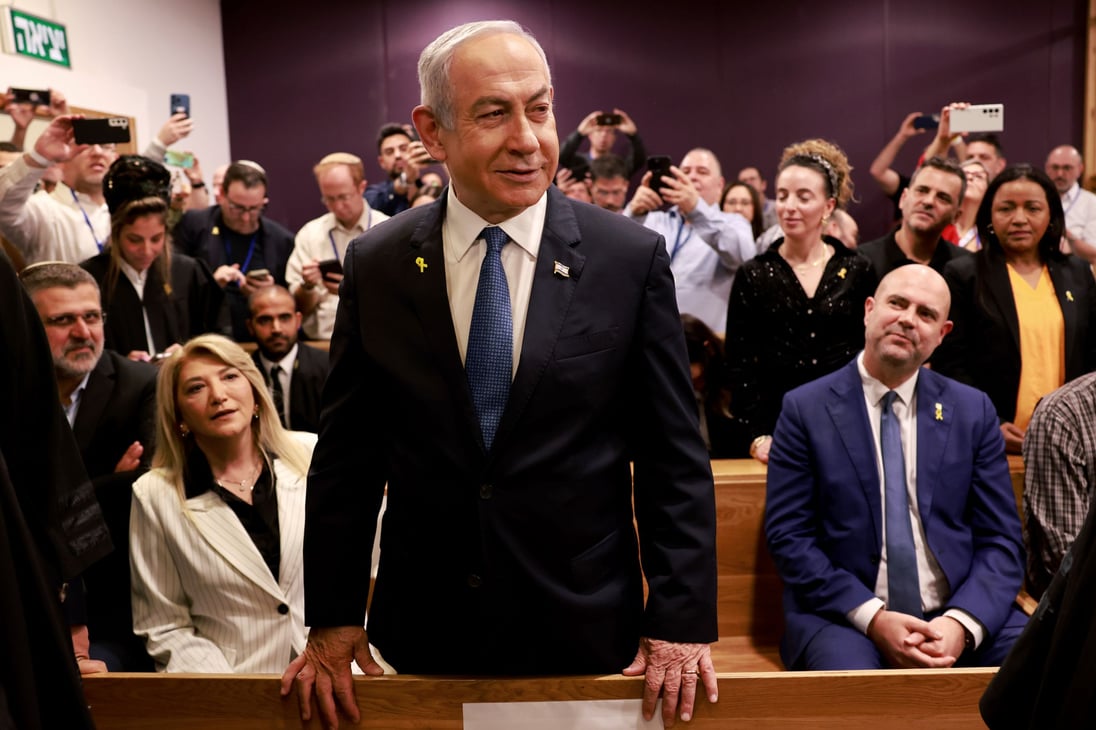
Israel's Netanyahu Corruption Trial Judges: Recommend Dropping Bribery Charge
Summary
- Judges in Benjamin Netanyahu's corruption trial recommended dropping one case, reconsidering another, and settling a third.
- Netanyahu called for an immediate end to the trial, describing the charges as "fabricated cases" causing "terrible suffering."
- In Case 4000, the most serious charge of bribery, judges indicated little chance of conviction due to "considerable difficulties" in proof.
- Attorney General Gali Baharav-Miara was summoned by the judges and stated she would consider their recommendations for a verdict or plea deal.
- The recommendations come as Netanyahu faces political uncertainty after recent elections and could impact his ability to avoid a prison sentence.
Judicial Recommendations Emerge in High-Profile Trial
The judges indicated there was little chance of conviction.
Judges overseeing the long-running corruption trial of Israel's caretaker prime minister, Benjamin Netanyahu, recently issued significant recommendations concerning the various charges. These suggestions, reported by Israeli media, included the complete dismissal of one of the three cases, a reevaluation of the arguments in another, and the resolution of the third through an agreed settlement between the parties.
Following these developments, Mr. Netanyahu, who has served as Israel's longest-serving prime minister, publicly demanded an immediate cessation of the proceedings. In a televised address from parliament, he lamented "Ten years of terrible suffering for me, my family," and spoke of "incitement to hatred that wounds the soul," questioning who could restore those years. He asserted that the "fabricated cases" against him were collapsing and declared, "The trial must end immediately."
Specifics of the Corruption Charges
The most severe of the three cases, known as Case 4000, accuses Mr. Netanyahu of bribery, fraud, and breach of trust. Prosecutors allege that he provided regulatory advantages to the Israeli telecommunications firm Bezeq in exchange for favorable media coverage on the Walla news site, an arrangement purportedly negotiated with Shaul Elovitch, who was then Bezeq's controlling shareholder. During a hearing in Jerusalem, Judge Rivka Friedman-Feldman reportedly highlighted "considerable difficulties" in substantiating the bribery charge, leading the judges to indicate a low probability of conviction and recommend dropping this particular case.
In Case 2000, Mr. Netanyahu faces allegations of fraud and breach of trust for purportedly negotiating with the owner of the Yediot Aharonot newspaper to secure positive coverage. This allegedly involved discussions about potentially advancing legislation to restrict the circulation of Israel Hayom, a free newspaper and a primary competitor to Yediot Aharonot. The judges questioned whether Mr. Netanyahu's actions in this instance constituted criminal conduct and advised a reconsideration of the arguments presented. For Case 1000, which involves charges of fraud and breach of trust related to accepting luxury gifts, including cigars, champagne, and jewelry, from wealthy individuals in exchange for favors, the judges proposed that the involved parties reach an agreement to resolve the matter.
Legal and Political Context
In an unusual procedural step, the judges summoned Attorney General Gali Baharav-Miara to the Wednesday hearing to discuss their recommendations. Ms. Baharav-Miara indicated her willingness to consider the judicial advice and stated her preparedness for either a final verdict or a plea agreement. The trial against Mr. Netanyahu, who is the first sitting Israeli prime minister to face criminal charges, initially commenced in May 2020.
These judicial recommendations emerge at a critical juncture for Mr. Netanyahu, who is currently engaged in a strenuous battle for his political survival following inconclusive elections on October 27. His primary political adversary, Gadi Eisenkot, has been tasked with forming a new government. Should Mr. Netanyahu lose the premiership, he could also forfeit significant leverage that might otherwise help him avoid a potential prison sentence. His right-wing political allies, including Israel Katz, the defense minister in the caretaker government, welcomed the judges' recommendations, with Katz stating on X that "the time has come to put an end to a trial that was flawed from the outset." During his most recent term, which began in late 2022, Mr. Netanyahu had put forward extensive judicial reforms that critics argued would undermine the courts, and allies of Mr. Eisenkot in parliament are now actively working to reverse some of those changes.
Practical Implications
This story reports on a specific criminal trial in Israel. While it provides insight into judicial processes in high-profile corruption cases, it does not present a direct practical implication or actionable advice for lawyers or compliance officers operating within an African legal context.
Source
Source: Original reporting via AFP
How does this affect you?
Get an AI analysis of this article grounded in your jurisdictions, practice areas, and any policy documents you've uploaded to Wansom.
Finish Reading the Full Story and the Expert Analysis.
Get the latest legal & regulatory intelligence in United States
Wansom is AI and can make mistakes.