
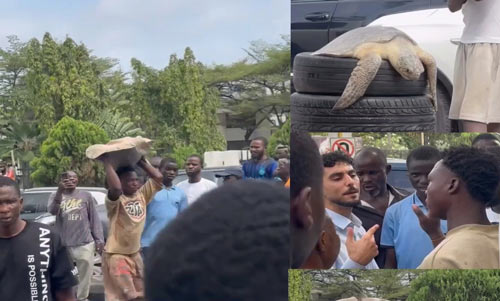
NESREA Enforcement: Lagos Sea Turtle Public Sale Raises Efficacy Questions
Summary
- A foreign national purchased a sea turtle from roadside sellers near Eko Hotel in Lagos to secure its release.
- The rescuer's stated intention was to give the turtle "another chance at life," not to own it.
- Uniformed police officers were reportedly present during the public sale of the protected animal.
- The incident raises significant questions about NESREA's enforcement of wildlife protection laws in Lagos.
- This event highlights ongoing challenges in combating wildlife trafficking and ensuring endangered species protection in Nigeria.
What Happened
The circumstances surrounding the sea turtle's sale, particularly the apparent lack of immediate intervention by authorities who were reportedly on site, underscore the challenges faced by NESREA enforcement in Lagos.
A recent incident in Lagos saw a foreign national intervene to secure the release of a sea turtle being offered for sale by roadside vendors. The marine animal was reportedly being marketed to potential buyers in the vicinity of the Eko Hotel, a prominent location within the bustling city. An eyewitness described how the individual engaged with the sellers, as well as bystanders and uniformed police officers reportedly present at the scene, appealing for the turtle's protection and emphasizing the need to safeguard such vulnerable creatures.
Ultimately, the foreign national opted to purchase the sea turtle directly from the vendors to ensure its freedom, paying an undisclosed sum for its release. His stated intention behind this unusual transaction was explicitly "Not To Own It, But To Give It Another Chance At Life," indicating a clear desire for the animal's welfare rather than personal acquisition. This spontaneous Lagos sea turtle rescue, driven by a private citizen, highlights a concerning public display of illegal wildlife trade occurring without immediate official intervention.
Enforcement Under Scrutiny
This public transaction, occurring openly with uniformed police officers reportedly present, has brought into sharp focus questions regarding the efficacy of environmental law enforcement in Nigeria. Specifically, the incident raises concerns about the National Environmental Standards and Regulations Enforcement Agency (NESREA) and its operational reach in combating wildlife trafficking. The agency is explicitly tasked with upholding regulations designed to protect endangered species, yet the open sale of a protected animal in a prominent urban area suggests potential gaps in oversight and enforcement mechanisms.
The circumstances surrounding the sea turtle's sale, particularly the apparent lack of immediate intervention by authorities who were reportedly on site, underscore the challenges faced by NESREA enforcement in Lagos. This event could signal inconsistent regulatory oversight, prompting scrutiny of how effectively existing Nigerian environmental law enforcement mechanisms deter and prosecute illegal wildlife activities, even when they occur in plain sight. Such incidents risk eroding public trust in the state's commitment to environmental protection.
Broader Implications for Wildlife Protection
The incident serves as a stark reminder of the persistent issue of wildlife trafficking Nigeria faces, particularly concerning protected marine species like sea turtles. These animals are often targeted for their meat, shells, or for the exotic pet trade, despite being protected under national and international laws designed to prevent their exploitation. The public nature of this specific sale, and the subsequent intervention by a private citizen, highlights the ongoing vulnerability of endangered species to illegal trade across the country.
Effective endangered species protection Nigeria requires robust enforcement and widespread public awareness campaigns to educate citizens about the illegality and ecological harm of such practices. When transactions involving protected wildlife occur openly, it not only indicates a failure in deterrence but also risks normalizing illegal activities within communities. This event, therefore, underscores the critical need for strengthened regulatory action and consistent application of environmental laws to prevent similar occurrences and ensure the survival of vulnerable wildlife populations for future generations.
Practical Implications
This incident highlights potential gaps in NESREA's enforcement of wildlife protection laws in Lagos, signaling that lawyers advising clients on environmental compliance or wildlife trade should be aware of inconsistent regulatory oversight and the risk of public scrutiny regarding illegal wildlife activities.
Source
How does this affect you?
Get an AI analysis of this article grounded in your jurisdictions, practice areas, and any policy documents you've uploaded to Wansom.
Wansom is AI and can make mistakes.