
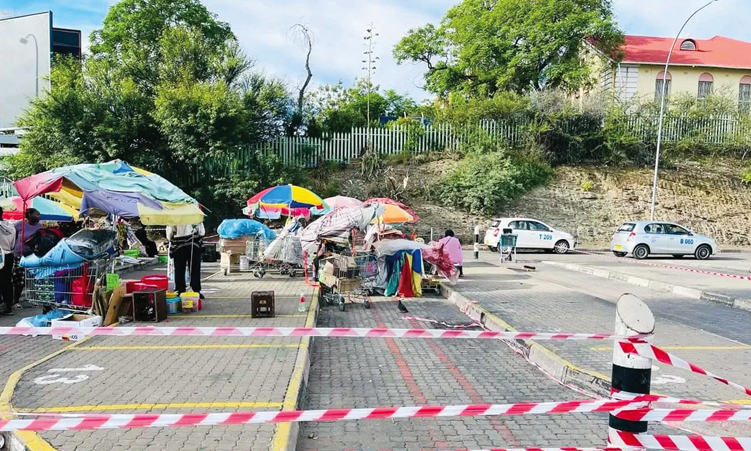
Swapo Youth Wing: Nekongo Demands New Namibia Street Vendor Policy, End Vendor Harassment
Summary
- The Swapo youth wing has urged local authorities, including the Oshakati Town Council, to stop harassing street vendors.
- The youth wing's secretary, Ephraim Nekongo, stated that confiscating, removing, or destroying vendors' goods is not a sustainable policy.
- Instead, the organization proposes that town councils establish designated legal selling spaces for vendors.
- This new Nekongo Namibia street vendor policy aims to allow informal traders to operate lawfully and generate income.
Advocacy for Street Vendors
Ephraim Nekongo, serving as the secretary for the Swapo youth wing, articulated the organization's position, emphasizing the need for a paradigm shift.
The Swapo youth wing has issued a direct appeal to various municipal bodies, including the Oshakati Town Council, urging them to fundamentally alter their approach to managing street vendors. This call advocates for an immediate cessation of the current practices involving the harassment of individuals selling goods in public spaces. The youth wing's stance signals a significant push for a more humane and economically viable policy framework for informal traders across Namibian towns.
Ephraim Nekongo, serving as the secretary for the Swapo youth wing, articulated the organization's position, emphasizing the need for a paradigm shift. He specifically highlighted that the prevailing methods of dealing with street vendors, which often involve the seizure, removal, or outright destruction of their merchandise, are not only punitive but also fundamentally unsustainable as a long-term regulatory strategy. This critique underscores a broader concern regarding the impact of current enforcement on the livelihoods of many citizens.
Instead of these punitive measures, the youth wing proposes a constructive alternative: the establishment of clearly defined, legal selling zones. These designated areas would provide street vendors with legitimate spaces to conduct their business activities, thereby enabling them to operate within the bounds of the law and secure a stable income. This proposed Nekongo Namibia street vendor policy aims to formalize and support the informal economy rather than suppress it.
Critique of Current Enforcement
The current enforcement mechanisms employed by local authorities against street vendors have drawn sharp criticism from the Swapo youth wing. The secretary, Ephraim Nekongo, explicitly condemned the practice of confiscating vendors' goods, removing their stalls, or destroying their merchandise. He characterized these actions as counterproductive and ultimately ineffective in fostering a stable economic environment for the informal sector.
Nekongo's statement underscores a belief that such aggressive tactics do not constitute a viable or progressive policy for managing urban trade. The youth wing argues that these methods not only inflict financial hardship on vulnerable individuals but also fail to address the underlying economic realities that drive people to street vending. The existing approach, therefore, is seen as lacking the necessary foresight and compassion required for sustainable urban development.
This critique extends beyond Oshakati to encompass other town councils, suggesting a widespread issue with how informal trade is regulated across Namibia. The youth wing's intervention highlights a systemic problem where enforcement prioritizes punitive actions over supportive frameworks, leading to ongoing conflict between vendors and municipal authorities rather than collaborative solutions.
Proposed Path Forward and Economic Impact
The Swapo youth wing's proposal for designated legal selling spaces represents a strategic shift towards empowering street vendors and integrating them more formally into the local economy. By advocating for these specific zones, the organization aims to provide a legitimate operational framework that allows vendors to conduct their business without fear of harassment or loss of goods. This move is envisioned to foster an environment where informal traders can thrive and contribute meaningfully to their communities.
This alternative Nekongo Namibia street vendor policy is designed to ensure that vendors can earn income legally and consistently, moving away from the precarious existence often associated with informal street vending. The creation of such spaces would not only legitimize their trade but also potentially open avenues for better regulation, sanitation, and even access to basic services within these designated areas. It reflects a commitment to supporting grassroots economic activity rather than stifling it.
Ultimately, the youth wing's call is for local authorities to adopt a more progressive and supportive stance towards street vendors. By ceasing harassment and establishing legal selling points, municipalities can transform a contentious issue into an opportunity for economic inclusion and stability for a significant portion of the population. This policy change is presented as a crucial step towards fostering a more equitable and sustainable urban economic landscape.
Source
How does this affect you?
Get an AI analysis of this article grounded in your jurisdictions, practice areas, and any policy documents you've uploaded to Wansom.
Finish Reading the Full Story and the Expert Analysis.
Get the latest legal & regulatory intelligence in Namibia
Wansom is AI and can make mistakes.