
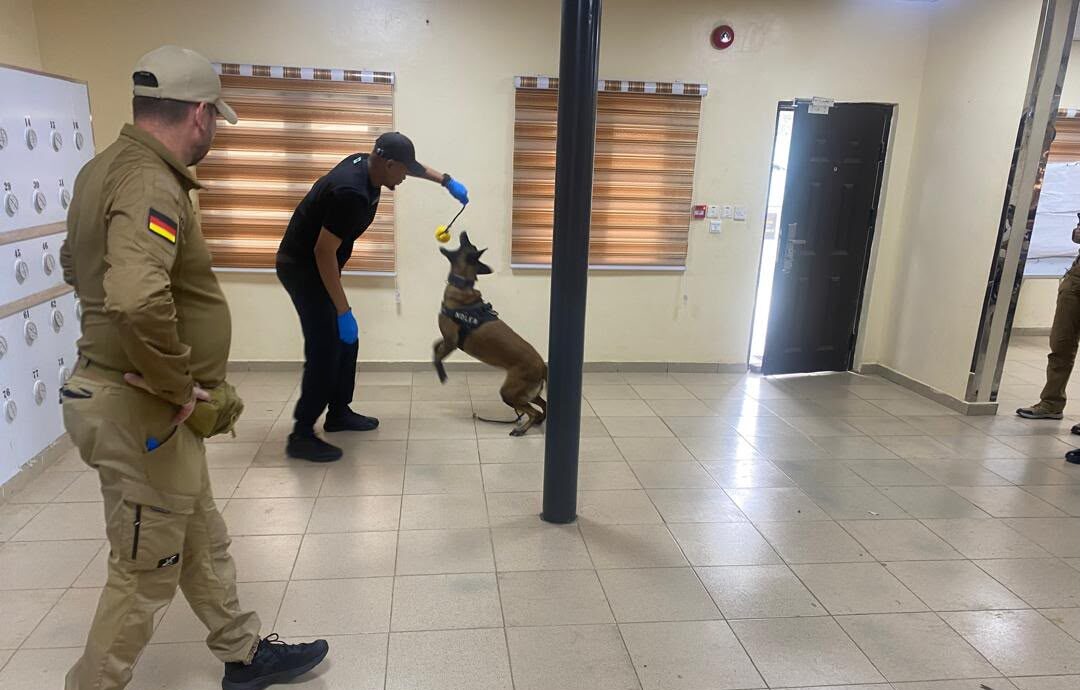
NDLEA: Sniffer Dog Training Nigeria Bolsters Drug Interdiction
Summary
- The National Drug Law Enforcement Agency (NDLEA) provides training for sniffer dog handlers.
- These specialized canine units are instrumental in detecting hidden narcotics.
- Their operations are deployed across Nigeria's airports, seaports, and border crossings.
- The NDLEA acknowledges the significant contribution of these dogs and handlers to its enforcement efforts.
Enhanced Drug Interdiction Capabilities
This strategic investment in specialized canine units underscores a significant enhancement in the agency's capacity to intercept illicit substances, signaling a heightened risk for those involved in drug trafficking.
The National Drug Law Enforcement Agency (NDLEA) has consistently emphasized the critical role of specialized canine units in its ongoing battle against illicit drug trafficking across Nigeria. A key component of this strategy involves rigorous training programs for sniffer dog handlers, ensuring these teams are equipped with the latest techniques for narcotics detection. This continuous investment in human and animal expertise underscores the agency's commitment to bolstering its operational effectiveness.
These highly trained dog-and-handler teams are strategically deployed at crucial entry and exit points throughout the country. Their primary mission is the detection of concealed narcotics, a task at which they have proven exceptionally adept. The NDLEA has publicly acknowledged the significant contributions these units make to its broader NDLEA narcotics interdiction efforts, highlighting their indispensable role in uncovering hidden contraband that might otherwise evade traditional inspection methods.
The deployment of these specialized units at airports, seaports, and various land border points represents a formidable layer of Nigerian border drug enforcement. By maintaining a robust and well-trained canine force, the agency aims to create a more challenging environment for drug traffickers, thereby disrupting supply chains and reducing the availability of illegal substances within the nation. This proactive approach is central to the NDLEA's mandate to secure the country's borders against the influx and outflow of illicit drugs.
Strategic Role of Canine Units in Enforcement
The effectiveness of Nigeria drug detection dogs stems from their superior olfactory capabilities, allowing them to pinpoint even minute quantities of illicit substances hidden within cargo, luggage, or vehicles. This specialized skill set makes them an invaluable asset in the National Drug Law Enforcement Agency's comprehensive strategy to combat drug-related crime. Their presence acts as a significant deterrent, complementing intelligence-led operations and physical searches.
These canine units are not merely an auxiliary force but an integral part of the agency's core enforcement mechanisms. Their ability to rapidly screen large volumes of goods and passengers significantly enhances the efficiency of Customs compliance Nigeria drugs protocols. By identifying suspicious items quickly, they enable human officers to focus resources on targeted inspections, streamlining operations while simultaneously increasing the probability of successful interdictions.
The continuous training of handlers ensures that the partnership between human and canine remains finely tuned, adapting to new concealment methods employed by traffickers. This ongoing professional development is crucial for maintaining the high success rate of these units in detecting a wide array of narcotics, from cannabis and cocaine to heroin and synthetic drugs, across diverse operational environments.
Implications for Trade and Travel
The sustained focus on NDLEA sniffer dog training Nigeria and the subsequent deployment of these highly effective units carries significant implications for both legitimate international trade and individual travelers. This strategic investment in specialized canine units underscores a significant enhancement in the agency's capacity to intercept illicit substances, signaling a heightened risk for those involved in drug trafficking. Businesses engaged in import and export, as well as logistics providers, must recognize the increased scrutiny at all points of entry and exit.
For individuals and entities involved in international commerce, the presence of these advanced drug detection capabilities means a greater emphasis on strict adherence to Customs compliance Nigeria drugs regulations. While the primary target is illicit activity, the enhanced vigilance inherently impacts the operational landscape for all goods and persons moving across Nigerian borders. This necessitates meticulous documentation and transparent practices to avoid potential delays or complications arising from intensified security checks.
Ultimately, the NDLEA's commitment to strengthening its canine units reinforces its resolve to create a drug-free society. The agency's acknowledgment of the vital contributions of these dogs and their handlers serves as a clear message: the fight against narcotics is intensifying, with sophisticated detection methods becoming a standard feature of Nigerian border drug enforcement. This development should be noted by all stakeholders navigating the country's ports and borders.
Practical Implications
This development signals enhanced drug interdiction capabilities by the NDLEA at Nigerian entry points. Lawyers advising clients involved in international trade, logistics, or criminal defense should note the increased risk of narcotics detection and potential enforcement actions at airports, seaports, and border crossings.
Source
How does this affect you?
Get an AI analysis of this article grounded in your jurisdictions, practice areas, and any policy documents you've uploaded to Wansom.
Finish Reading the Full Story and the Expert Analysis.
Get the latest legal & regulatory intelligence in Nigeria
Wansom is AI and can make mistakes.