
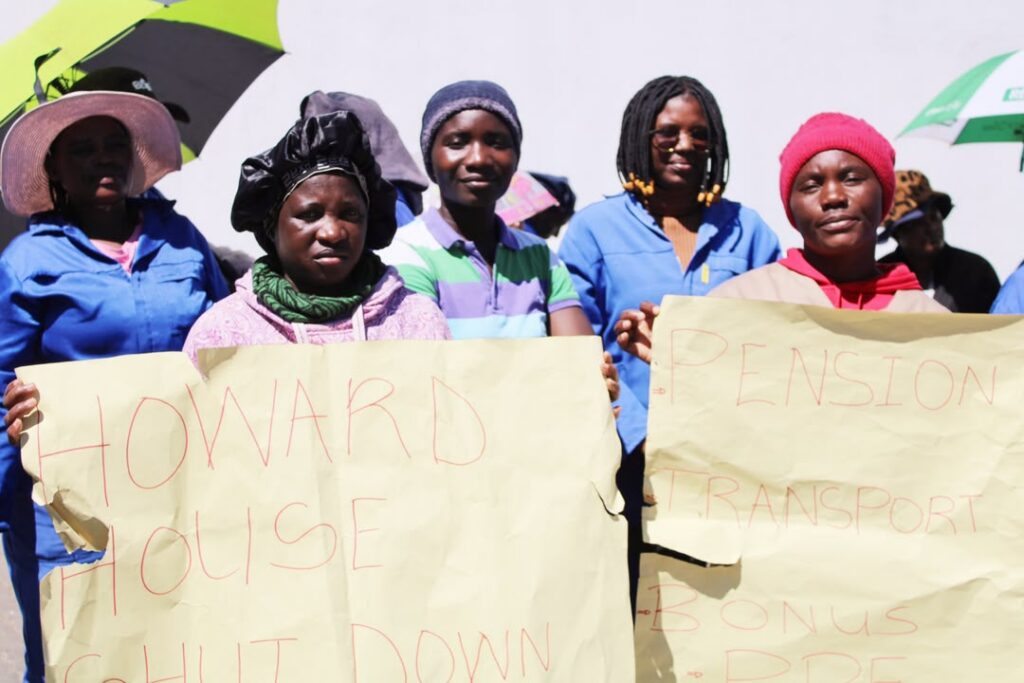
Namibia Snack Firm Uses Armed Guards During Strike
In Namibia, the snack company Howard House Manufacturing deployed masked, armed security guards from Xiphos security during a worker strike over a N$1,400 salary increase demand, as reported by The Namibian.
This incident carries significant legal implications for labour relations and the conduct of industrial action in Namibia. The use of armed, masked private security personnel during a strike raises serious questions about potential intimidation, the right to peaceful protest, and the appropriate boundaries for employer responses to industrial disputes. It could be perceived as an attempt to suppress legitimate strike action, potentially violating fundamental labour rights enshrined in Namibian law. For practitioners, this highlights the delicate balance between an employer's right to protect property and maintain operations, and employees' rights to strike without undue interference or fear of violence. The involvement of armed guards could escalate tensions and lead to further legal challenges, including claims of unfair labour practices or even criminal complaints depending on the specific actions taken by the security personnel.
The legal context for this situation is primarily governed by Namibia's Labour Act 11 of 2007, which outlines the framework for collective bargaining, strikes, and lockouts, and protects the rights of employees to engage in industrial action. Additionally, the Private Security Industry Regulation Act (or similar legislation if applicable in Namibia) would govern the conduct and licensing of security firms like Xiphos, potentially imposing restrictions on their involvement in labour disputes or the use of force. Constitutional provisions guaranteeing freedom of assembly and expression are also relevant. The Ministry of Labour, Industrial Relations and Employment Creation, and the Labour Court would be the primary bodies responsible for adjudicating disputes arising from such circumstances. The specific outcome of this particular deployment, including any legal challenges or regulatory investigations, is not reported in the excerpt.
Key parties involved include Howard House Manufacturing, the employer; the striking workers, whose specific union affiliation is not mentioned; and Xiphos security guards, the private security firm engaged. The Namibian newspaper served as the source reporting on the event. For attorneys, this situation underscores the critical need for employers to carefully consider the legal and reputational risks associated with engaging private security during strikes, especially armed personnel. Practitioners advising businesses should review their clients' industrial relations policies to ensure compliance with labour laws and to mitigate the risk of actions that could be construed as intimidation or unlawful interference with strike action. Conversely, labour lawyers representing employees should be prepared to challenge such deployments on grounds of unfair labour practices or violations of fundamental rights, monitoring for any instances of excessive force or unlawful conduct by security personnel.
How does this affect you?
Get an AI analysis of this article grounded in your jurisdictions, practice areas, and any policy documents you've uploaded to Wansom.
Finish Reading the Full Story and the Expert Analysis.
Get the latest legal & regulatory intelligence in Namibia
Wansom is AI and can make mistakes.