
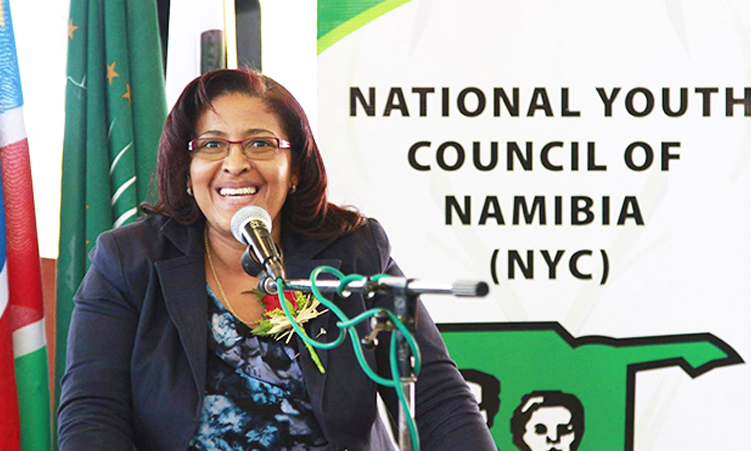
Namibia Labour Court: Dismisses Schwartz-Gowases Back Pay Claim
Summary
- The Namibia Labour Court dismissed a back pay claim from former National Youth Council director Calista Schwartz-Gowases.
- Schwartz-Gowases sought compensation for a nine-month period between her first five-year contract's expiry and her subsequent reappointment.
- The court's decision means the National Youth Council is not liable for salary during this employment gap.
- The ruling emphasizes that remuneration is generally tied to the existence of an active employment contract.
- This case provides clarity on claims for back pay during gaps between consecutive employment contracts in Namibia.
Court Rejects Back Pay Claim for Employment Gap
This ruling from the Namibia Labour Court carries significant weight for future labour disputes involving employment gaps and claims for back pay.
The Namibia Labour Court has recently dismissed a significant claim for back pay lodged by Calista Schwartz-Gowases, a former director of the National Youth Council. The court's decision effectively absolves the National Youth Council from a salary obligation spanning a nine-month period during which Schwartz-Gowases was not formally under contract, despite her eventual reappointment.
Schwartz-Gowases had sought remuneration for this interim period, arguing for compensation for the time between the expiration of her initial five-year employment agreement and the commencement of her subsequent contract. This ruling by the Namibia Labour Court Schwartz-Gowases back pay claim highlights a strict interpretation of contractual entitlements within Namibia's labour framework.
Background of the National Youth Council Namibia Labour Dispute
The dispute centered on a specific nine-month employment gap in Calista Schwartz-Gowases' tenure with the National Youth Council. Her first five-year contract as director concluded, and a period ensued before she was eventually reappointed to her position. It was for this precise interval, from the expiry of her initial contractual term until her re-engagement, that Schwartz-Gowases contended she was owed back pay.
The former director's legal challenge aimed to secure compensation for these months, asserting a right to salary despite the absence of an active employment contract during the specified period. The Labour Court Namibia employment gap case thus brought into focus the legal standing of individuals in similar situations where there is a break between consecutive employment contracts.
Legal Context and Implications for Namibia Labour Law
The Labour Court's dismissal of the claim for Namibia labour law back pay suggests a judicial stance that remuneration is primarily tied to the existence of an active employment contract. By rejecting the demand for compensation during the nine-month gap, the court implicitly affirmed that without a formal agreement, the employer is not obligated to pay a salary, even if the employee is subsequently re-engaged.
This outcome provides important clarity for both employers and employees regarding Calista Schwartz-Gowases employment contracts and the expectations surrounding periods of non-contractual employment. It underscores the necessity of clearly defined contractual terms, particularly for interim periods, and indicates the potential difficulty in successfully claiming compensation for employment gaps when no explicit agreement for such remuneration exists.
Why It Matters
This ruling from the Namibia Labour Court carries significant weight for future labour disputes involving employment gaps and claims for back pay. It reinforces the principle that, in the absence of specific contractual provisions, an employer may not be held liable for salaries during periods between consecutive contracts, even for long-serving employees or those who are eventually re-hired.
The decision serves as a crucial precedent, guiding legal professionals in advising clients on the meticulous drafting of employment contracts to cover all potential scenarios, including transitional periods between fixed-term agreements. It highlights the importance of ensuring that all terms related to remuneration, including for any interim periods, are explicitly documented to avoid future disputes over back pay.
Practical Implications
This ruling clarifies the Namibian Labour Court's position on claims for back pay during gaps between consecutive employment contracts, indicating a strict interpretation of remuneration entitlements for periods not explicitly covered by a contract. Lawyers should advise clients on the importance of clear contractual terms for interim periods and the potential difficulty in claiming compensation for employment gaps, even if re-engagement occurs.
Source
How does this affect you?
Get an AI analysis of this article grounded in your jurisdictions, practice areas, and any policy documents you've uploaded to Wansom.
Finish Reading the Full Story and the Expert Analysis.
Get the latest legal & regulatory intelligence in Namibia
Wansom is AI and can make mistakes.