
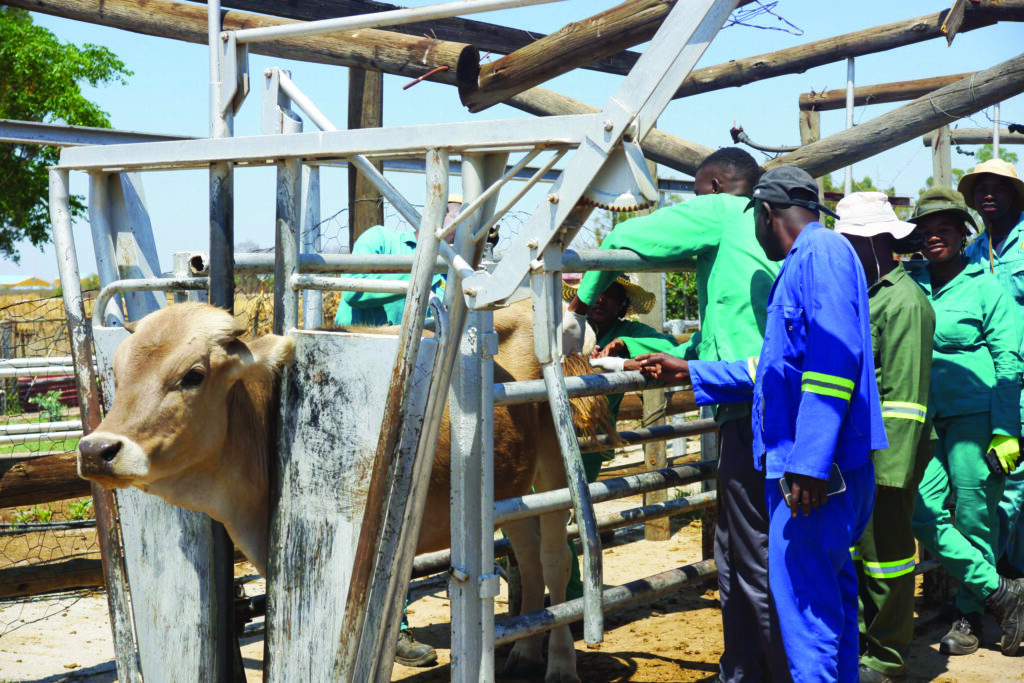
Namibia: FMD Vaccine Authorization Reserved for Government Officials
Summary
- Namibian farmers are currently prohibited from selling their livestock due to an outbreak of Foot-and-Mouth Disease.
- Romeo Muyunda, spokesperson for the Ministry of Agriculture, Fisheries, Water and Land Reform, confirmed these restrictions.
- Only government animal health officials are authorized to administer the FMD vaccine in Namibia.
- Foot-and-Mouth Disease is classified as a government-controlled ailment, necessitating strict state oversight.
- Livestock owners are restricted from selling animals as part of the government's FMD containment strategy.
Government Imposes Strict Livestock Trade Restrictions in Namibia
The Ministry of Agriculture, Fisheries, Water and Land Reform has explicitly stated that the administration of the FMD vaccine is exclusively reserved for government animal health officials.
Namibian farmers are currently facing prohibitions on the sale of their livestock, a measure implemented in response to the ongoing Foot-and-Mouth Disease (FMD) outbreak. This directive directly impacts the agricultural sector, particularly those involved in animal husbandry and trade across the nation. The restrictions are a critical component of the government's strategy to contain the highly contagious disease and prevent its further spread among animal populations, safeguarding both animal welfare and economic interests.
Romeo Muyunda, who serves as the spokesperson for the Ministry of Agriculture, Fisheries, Water and Land Reform, issued a public statement confirming these stringent regulations. His announcement underscored the gravity of the situation, emphasizing the necessity of these controls to safeguard the country's livestock resources. The government's proactive stance aims to mitigate the economic repercussions that a widespread FMD epidemic could inflict upon the agricultural community and the national economy, ensuring stability in a vital sector.
The primary reason for these widespread livestock trade restrictions in Namibia is the classification of Foot-and-Mouth Disease as a government-controlled ailment. This designation grants the state significant authority over disease management protocols, including the movement and sale of animals. Consequently, livestock owners are explicitly barred from engaging in any transactions involving their animals until further notice, a measure deemed essential for effective disease containment.
Exclusive Government Control Over FMD Vaccination
A key aspect of Namibia's disease management strategy for Foot-and-Mouth Disease is the centralized control over vaccination efforts. The Ministry of Agriculture, Fisheries, Water and Land Reform has explicitly stated that the administration of the FMD vaccine is exclusively reserved for government animal health officials. This policy ensures that the vaccination process is carried out by trained professionals, adhering to standardized protocols to maximize effectiveness and minimize risks associated with improper application.
This strict government authorization for FMD vaccine administration in Namibia highlights the disease's classification as a government-controlled ailment. The decision to centralize vaccine distribution and application is a deliberate effort to maintain rigorous oversight over the disease's containment. By limiting vaccine administration to official personnel, authorities aim to prevent unauthorized or improper use of the vaccine, which could potentially complicate disease surveillance and control efforts and undermine public health initiatives.
The spokesperson, Romeo Muyunda, reiterated that only authorized personnel from the state's animal health services possess the legal mandate to administer the Foot-and-Mouth Disease vaccine. This exclusivity is not merely a procedural formality but a fundamental pillar of the national strategy to combat FMD. It underscores the government's commitment to a coordinated and scientifically sound approach to managing outbreaks, ensuring that all vaccination activities contribute effectively to disease eradication and control.
Implications for Namibia's Agricultural Sector
The current livestock trade restrictions in Namibia, coupled with the exclusive government authorization for FMD vaccine administration, carry significant implications for the nation's agricultural sector. Livestock owners are directly affected by the inability to sell their animals, which can lead to economic hardship and disruptions in their farming operations. This measure, while necessary for disease control, underscores the delicate balance between public health imperatives and economic stability for farmers and the broader rural economy.
The government's firm grip on Foot-and-Mouth Disease Namibia management reflects its commitment to protecting the country's animal health status and its international trade reputation. The Romeo Muyunda statement serves as a crucial reminder to all stakeholders about the critical role of compliance in preventing the spread of FMD. Adherence to these regulations, including the prohibition on livestock sales and reliance on official channels for FMD vaccine administration Namibia, is paramount for the long-term health of the national herd and the resumption of normal trade activities.
Ultimately, the effectiveness of these measures hinges on the cooperation of all livestock owners. The restrictions on selling animals, though burdensome, are designed to create a controlled environment where the disease can be effectively monitored and eradicated. This collective effort is vital for restoring the free movement of livestock and ensuring the sustained viability of Namibia's agricultural exports, which are heavily dependent on maintaining a disease-free status.
Practical Implications
Lawyers advising clients in Namibia's agricultural sector, particularly those involved in livestock farming or trade, must be aware of the strict government control over Foot-and-Mouth Disease (FMD) vaccination and the associated prohibitions on livestock sales. Compliance officers need to ensure their organizations adhere to these regulations to avoid legal repercussions and ensure business continuity.
Source
How does this affect you?
Get an AI analysis of this article grounded in your jurisdictions, practice areas, and any policy documents you've uploaded to Wansom.
Finish Reading the Full Story and the Expert Analysis.
Get the latest legal & regulatory intelligence in Namibia
Wansom is AI and can make mistakes.