
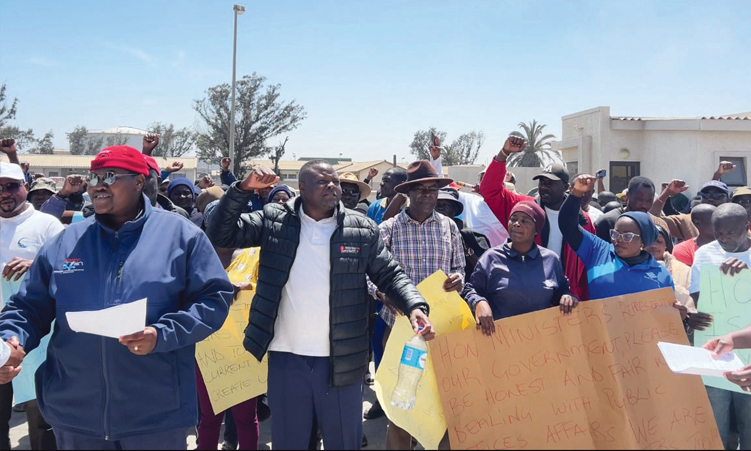
Namibia Fishermen: Gerp Compensation Demand N$250,000 Each
Summary
- Former fishermen under Namibia's Government Employment Redress Programme are demanding N$250,000 each in compensation.
- They have rejected a proposed N$96,000 payment from the government, deeming it insufficient.
- The Okapale Fishermen Association's chairperson, Godfried Kuhanga, called for a clear explanation of how the N$96,000 offer was calculated.
- The association also insists that the government take responsibility for the future employment of these affected workers.
- This Namibia fisheries labor dispute highlights challenges in the implementation and acceptance of government redress programs.
What Happened
The firm rejection of the N$96,000 payment in favor of a N$250,000 compensation demand sets a precedent for how beneficiaries might engage with and challenge proposed settlements in similar initiatives.
A significant compensation dispute has emerged in Namibia, involving former fishermen who were part of the Government Employment Redress Programme (Gerp). These individuals are now collectively demanding a payment of N$250,000 for each affected fisherman, a figure substantially higher than the N$96,000 compensation package previously put forward. The rejection of the government's proposed offer signals a deep dissatisfaction among the former employees regarding the adequacy of the initial settlement.
Godfried Kuhanga, who serves as the chairperson for the Okapale Fishermen Association, recently articulated the collective stance of the affected workers. He emphasized that the government must provide a clear and transparent explanation regarding the methodology used to arrive at the N$96,000 proposed payment. This call for transparency underscores a perceived lack of clarity surrounding the compensation calculation, which has fueled the current impasse.
Furthermore, Kuhanga stressed that beyond financial remuneration, the government bears a responsibility for the long-term economic well-being of these former workers. He explicitly stated that the government should take accountability for ensuring the future employment prospects of those impacted by the Gerp. This dual demand for increased financial compensation and a commitment to future employment highlights the comprehensive nature of the grievances held by the former fishermen.
Legal and Regulatory Context
The Government Employment Redress Programme Namibia (Gerp), an initiative designed to address past labor grievances and provide compensation to individuals who experienced employment-related injustices, is currently in the process of being terminated, with its official end date set for October 31, 2026. Such government redress programs are typically established to rectify historical wrongs or mitigate the impact of significant economic or policy shifts on specific worker groups. The current situation involving the former fishermen falls squarely within the broader context of a Namibia fisheries labor dispute, where the terms of disengagement and subsequent support are under intense scrutiny.
The core of this particular dispute revolves around the perceived fairness and sufficiency of the compensation offered under the Gerp. When a government implements a program like Gerp, it implicitly acknowledges a past obligation or a need to provide relief. However, the success and acceptance of such a program hinge critically on the beneficiaries' perception that the redress is equitable and adequately addresses their losses. The N$96,000 compensation, which has been rejected, suggests a significant divergence between the government's assessment of appropriate redress and the expectations of the affected fishermen.
The Okapale Fishermen Association's demand for N$250,000 compensation per individual, coupled with their insistence on an explanation for the calculation of the lower offer, points to a fundamental disagreement over valuation. This scenario is common in labor redress programs, where the methodology for determining financial settlements can become a contentious point. The association's call for the government to also assume responsibility for the future employment of these workers adds another layer of complexity, moving beyond mere financial compensation to broader social and economic obligations within the framework of this Namibia labor redress program.
Why It Matters
This ongoing Namibia fisheries labor dispute carries significant implications, not only for the former fishermen directly involved but also for the future administration of government redress programs across the nation. The firm rejection of the N$96,000 payment in favor of a N$250,000 compensation demand sets a precedent for how beneficiaries might engage with and challenge proposed settlements in similar initiatives. It underscores the power of organized groups, such as the Okapale Fishermen Association, in advocating for what they perceive as fair and just compensation.
The demand for transparency regarding the calculation of the initial N$96,000 compensation is particularly crucial. Should the government fail to provide a satisfactory explanation, it could erode trust in the mechanisms designed to provide redress and potentially encourage further disputes in other sectors. Furthermore, the insistence that the government take responsibility for the future employment of these workers expands the scope of typical compensation claims, suggesting that affected parties may increasingly seek holistic solutions that address both immediate financial losses and long-term economic stability.
The outcome of this specific Gerp N$250,000 compensation demand could influence how future government employment redress programmes are structured and communicated. It highlights the importance of robust and transparent compensation methodologies, as well as clear communication with affected groups, to prevent prolonged disputes. The resolution of this matter will be closely watched as it could shape expectations for beneficiaries and obligations for the government in similar labor redress scenarios in Namibia.
Practical Implications
Lawyers advising clients on government redress programs or labor compensation in Namibia should monitor this dispute for potential precedents regarding the calculation and acceptance of settlement offers, especially where large groups of former employees are involved.
Source
How does this affect you?
Get an AI analysis of this article grounded in your jurisdictions, practice areas, and any policy documents you've uploaded to Wansom.
Finish Reading the Full Story and the Expert Analysis.
Wansom is AI and can make mistakes.