
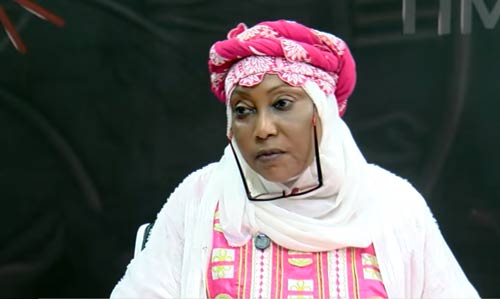
Naja’atu Muhammad: Accuses Judiciary of Undermining Democracy, Faults ADC Judgment
Hajia Naja’atu Muhammad, a chieftain of the African Democratic Congress (ADC), has accused the Nigerian judiciary of undermining democracy and suggested that judges have become susceptible to external influence, specifically citing a Federal High Court judgment that impacted the party's leadership and former Vice President Atiku Abubakar's presidential aspirations.
This accusation carries significant weight within Nigeria's legal and political landscape, particularly concerning the integrity of the judicial process and its role in safeguarding democratic institutions. If substantiated, such judicial compromise could erode public trust in the courts, which are the ultimate arbiters of electoral disputes and constitutional matters. The implication that the ruling All Progressives Congress (APC) might be leveraging the judiciary to weaken opposition parties ahead of the 2027 general elections raises serious concerns about the fairness and impartiality of future electoral contests.
The legal context involves the jurisdiction of the Federal High Court, which handles numerous cases related to political parties, elections, and fundamental human rights in Nigeria. The Nigerian Constitution vests judicial power in the courts, including the Supreme Court, Court of Appeal, and the Federal High Court, with a mandate to uphold the rule of law and ensure justice. Allegations of judicial compromise, if proven, would fall under the purview of judicial misconduct, potentially triggering disciplinary actions by the National Judicial Council (NJC) and undermining established legal precedents regarding judicial independence.
The key parties mentioned are Hajia Naja’atu Muhammad, representing a critical voice from the opposition ADC, the Federal High Court as the adjudicating body, and the ruling APC, which is accused of political maneuvering. The former Vice President Atiku Abubakar is also indirectly involved due to the judgment's impact on his political ambitions. The judiciary as an institution, and specifically the judges presiding over such cases, are central to these allegations.
Legal professionals and political actors should closely monitor any further developments or investigations stemming from these accusations. It is crucial for the judiciary to maintain its independence and public confidence. Attorneys involved in election petitions or cases involving political parties should be acutely aware of the potential for such allegations to influence public perception and judicial proceedings, and they must continue to advocate for transparency and fairness within the legal system.
How does this affect you?
Get an AI analysis of this article grounded in your jurisdictions, practice areas, and any policy documents you've uploaded to Wansom.
Finish Reading the Full Story and the Expert Analysis.
Get the latest legal & regulatory intelligence in Nigeria
Wansom is AI and can make mistakes.