
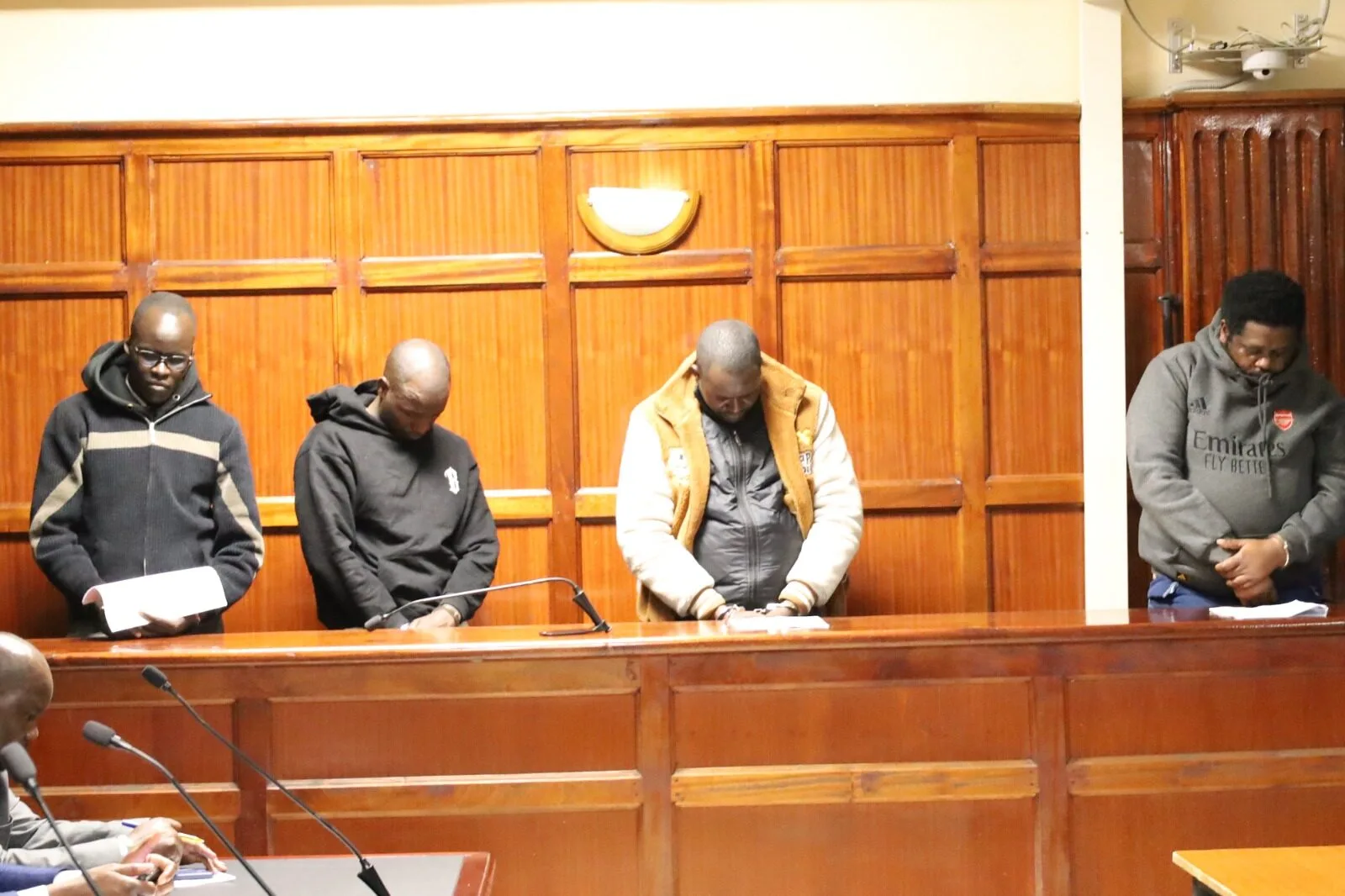
Nairobi Court: DCI Mathew Mbobu Murder Suspects Get 15-Day Detention
Summary
- A Nairobi court granted the DCI 15 additional days to detain four suspects linked to the murder of lawyer Mathew Kyalo Mbobu.
- Chief Magistrate Gethi Kibiru issued the order on September 25, 2026, following an application by the DCI and ODPP.
- The suspects, arrested on September 24, 2026, include a police officer alleged to be the gunman, with others accused of transport, surveillance, and planning roles.
- The DCI cited the need for forensic analysis, tracing other suspects, preventing witness interference, and ensuring suspect safety as reasons for extended detention.
- The investigation, which includes ballistic analysis, CCTV footage, and call-data records, is exploring a property dispute as a potential motive.
Court Extends Detention for Mathew Mbobu Murder Suspects
This Kenya DCI pre-charge detention ruling provides a practical example of the courts' application of pre-charge detention powers for complex criminal investigations within the criminal investigation procedure Kenya framework.
A Nairobi court has authorized the Directorate of Criminal Investigations (DCI) to hold four individuals for an additional 15 days in connection with the murder of lawyer Mathew Kyalo Mbobu. Chief Magistrate Gethi Kibiru issued the detention order on September 25, 2026, following an application jointly presented by the Office of the Director of Public Prosecutions (ODPP) and the DCI. This ruling grants investigators crucial extra time to finalize their probe into the high-profile case.
The four suspects, identified as Julias Cheruiyot, Nicholas Naula Lemiso, Noah Kipkurui Langat, and Kennedy Kipkemei, were apprehended on September 24, 2026, as part of an intelligence-led operation. The DCI had initially requested a 30-day detention period to facilitate comprehensive investigative activities. The victim, Mathew Kyalo Mbobu, was tragically shot on September 9, 2025, around 6:00 PM, while driving his vehicle near the Brookhouse International School in Nairobi. The incident was reported at Langata Police Station, with DCI detectives and scenes-of-crime officers initiating the initial response before the Homicide Investigations Bureau assumed control of the case.
Key Allegations and Investigation Details
The ongoing Mathew Kyalo Mbobu murder investigation has uncovered specific allegations against each of the detained suspects. According to an affidavit filed in court, Julias Cheruiyot, a police officer attached to Pangani Police Station, is alleged to be the gunman. Investigators reportedly recovered a pistol during their operations, which ballistic examination linked to cartridge cases and a bullet found at the scene. The DCI claims this weapon was issued to Cheruiyot. Nicholas Naula Lemiso is accused of providing transport for Cheruiyot to the shooting location using a motorcycle, while Noah Kipkurui Langat allegedly monitored Mbobu's movements, trailing his vehicle from his office prior to the incident. Kennedy Kipkemei is implicated in the planning of the attack, having reportedly held meetings with Cheruiyot, Langat, and another individual identified as an alleged financier.
Detectives have recovered several exhibits from Mbobu's vehicle, including a spent cartridge, bullet fragments, and bullet heads. Further items, such as mobile phones, motorcycles, and the firearm, were seized during the operation. The DCI has been meticulously analyzing CCTV footage and call-data records to reconstruct Mbobu's movements before the shooting and the events surrounding his death. A property dispute has emerged as a significant line of inquiry, with Inspector Patrick Wachira of the Homicide Investigations Bureau informing the court that Mbobu had been representing the family of Professor David Musyimi Ndetei in a land dispute before the Machakos Environment and Land Court.
Rationale for Extended Pre-Charge Detention
The DCI's application for extended custody underscored the complex nature of the criminal investigation procedure in Kenya. Investigators cited several critical reasons for needing additional time, including the necessity to complete forensic examinations, conduct further searches, analyze digital evidence, and trace other individuals suspected of involvement who have not yet been apprehended. The DCI argued that releasing the suspects prematurely could severely compromise the integrity of the probe by exposing witnesses to potential interference, enabling outstanding suspects to coordinate their actions, or creating opportunities for evidence to be concealed or destroyed.
Furthermore, the DCI expressed concerns regarding the safety of the four suspects themselves. The high-profile nature of the case and the public knowledge of their identities, including among Mbobu's family, were cited as factors necessitating their continued detention. Several exhibits, including mobile phones, motorcycles, and the recovered firearm, require further detailed analysis. Additional searches are also planned at locations associated with the suspects. These factors collectively formed the basis for the Chief Magistrate Gethi Kibiru detention order, allowing the Kenya DCI pre-charge detention ruling to proceed for the specified 15-day period.
Legal and Procedural Context
This Kenya DCI pre-charge detention ruling provides a practical example of the courts' application of pre-charge detention powers for complex criminal investigations within the criminal investigation procedure Kenya framework. The decision by Chief Magistrate Gethi Kibiru to grant the ODPP DCI detention application highlights the judiciary's consideration of the detailed rationale presented by law enforcement, particularly concerning the need for extensive forensic analysis, witness protection measures, and the tracing of outstanding suspects.
It is important to note that the allegations against the four individuals have not yet been tested in a criminal trial. The suspects will remain in custody for the 15 days granted by the court, during which detectives will pursue outstanding leads and work towards finalizing the investigation file. This period is crucial for the DCI to consolidate evidence and prepare a robust case, ensuring that all procedural requirements are met before any potential charges are formally laid.
Practical Implications
This ruling provides a practical example of the Kenyan courts' application of pre-charge detention powers for complex criminal investigations, highlighting the DCI's grounds for extension and the factors considered by the judiciary. Lawyers involved in criminal defense or prosecution should note the detailed rationale for such detentions, particularly concerning forensic analysis, witness protection, and tracing outstanding suspects.
Source
How does this affect you?
Get an AI analysis of this article grounded in your jurisdictions, practice areas, and any policy documents you've uploaded to Wansom.
Finish Reading the Full Story and the Expert Analysis.
Get the latest legal & regulatory intelligence in Kenya
Wansom is AI and can make mistakes.