
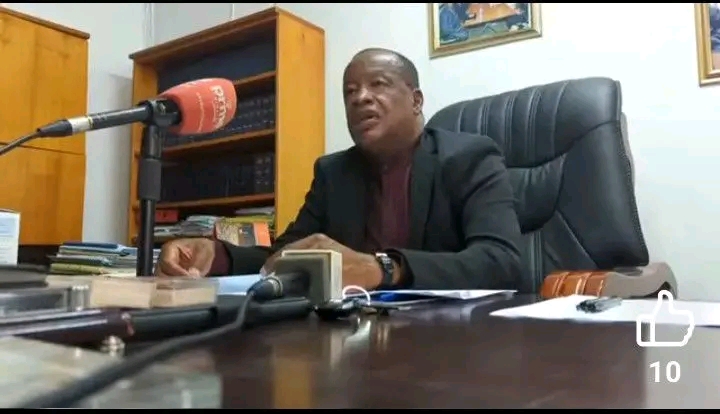
Mwiimbu: UN Rapporteur Reminded of Zambia Sovereignty
Summary
- On September 3, 2026, Hon. Jack Mwiimbu SC, UPND Chairperson for Legal and Constitutional Affairs, reaffirmed Zambia's sovereignty to UN Special Rapporteur Gina Romero.
- Mwiimbu emphasized that UN partnerships must be based on mutual respect for Zambia's sovereignty, territorial integrity, and non-interference, as per the UN Charter.
- He stated that Zambia's democratically elected government is committed to the rule of law, protecting citizens' rights, and maintaining national stability.
- The Zambian government will not allow UN mechanisms to be misused for unfactual, one-sided political narratives.
- Mwiimbu called for the UN to operate with objectivity, fairness, and professionalism, as expected by both Zambians and the international community.
Zambia Reaffirms Sovereignty to UN Rapporteur
This statement reinforces Zambia's firm stance on national sovereignty and non-interference in its internal affairs, even when engaging with UN mechanisms.
On September 3, 2026, in Lusaka, Hon. Jack Mwiimbu SC, serving as the UPND Chairperson for Legal and Constitutional Affairs, conveyed a clear message to UN Special Rapporteur Gina Romero regarding Zambia's national sovereignty. Mwiimbu underscored Zambia's status as a sovereign state, emphasizing its governance under the rule of law. This interaction highlighted the Zambian government's firm stance on its autonomy in international engagements.
During the discussion, Hon. Mwiimbu acknowledged Zambia's appreciation for the United Nations' support in bolstering its democratic institutions. However, he stressed that any partnership with the global body must be founded on mutual respect for Zambia's sovereignty, its territorial integrity, and the fundamental principle of non-interference in its internal affairs. These tenets, he reminded the Rapporteur, are explicitly enshrined within the Charter of the United Nations itself.
Upholding Democratic Mandate and Rule of Law
Hon. Mwiimbu further elaborated on the democratic foundations of the Zambian government, asserting that its mandate is derived directly from the freely expressed will of the people through the ballot. He reiterated the government's unwavering dedication to upholding the rule of law, safeguarding the rights of all Zambians, and ensuring the continued peace, stability, and national unity of the country. This commitment forms the bedrock of Zambia's internal governance.
While acknowledging and respecting the mandate of the United Nations, Mwiimbu made it clear that Zambia would not permit the misuse of UN mechanisms. He specifically warned against their deployment to advance one-sided political narratives that lack factual grounding. This position underscores the Zambian government's cautious approach to external scrutiny, particularly concerning its human rights record and internal policies.
Expectations for UN Engagement
In light of these principles, Hon. Mwiimbu called upon the United Nations to execute its functions with the utmost objectivity, fairness, and professionalism. He articulated that such a standard of conduct is not only expected by the people of Zambia but also by the broader international community. This statement reinforces Zambia's firm stance on national sovereignty and non-interference in its internal affairs, even when engaging with UN mechanisms.
Lawyers advising clients on human rights, governance, or international investment in Zambia should note this diplomatic posture, as it may influence how the Zambian government responds to external scrutiny or recommendations. The emphasis on the Zambia UN non-interference principle, coupled with the commitment to the Zambia rule of law, signals a clear boundary for international interactions, particularly those involving the Zambian government and UN human rights bodies.
Practical Implications
This statement by Hon. Mwiimbu reinforces Zambia's firm stance on national sovereignty and non-interference in its internal affairs, even when engaging with UN mechanisms. Lawyers advising clients on human rights, governance, or international investment in Zambia should note this diplomatic posture, as it may influence how the Zambian government responds to external scrutiny or recommendations.
Source
How does this affect you?
Get an AI analysis of this article grounded in your jurisdictions, practice areas, and any policy documents you've uploaded to Wansom.
Finish Reading the Full Story and the Expert Analysis.
Wansom is AI and can make mistakes.