
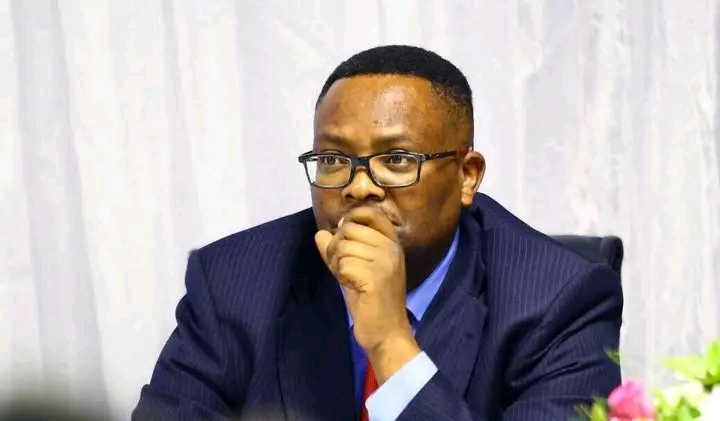
Zambia: Mwamba Petitions AU To Stop Hichilema Inauguration Amid Crisis
Summary
- Emmanuel Mwamba, the exiled Media Chairperson for the Tonse-Pamodzi Alliance, has urged the African Union to intervene and prevent the inauguration of Zambia's President-elect, Hakainde Hichilema.
- Mwamba's appeal, contained in a letter dated August 25, 2026, claims that Zambia is currently experiencing a post-election crisis.
- The request to the AU highlights an ongoing challenge to the legitimacy of the recent presidential election results and the incoming administration.
- This action by a prominent opposition figure signals continued political instability and a significant presidential dispute in Zambia.
Call for Intervention
This challenge to the presidential transition could complicate the new government's ability to govern effectively, both domestically and in its foreign relations.
Emmanuel Mwamba, identified as the exiled Media Chairperson for the Tonse-Pamodzi Alliance, has formally petitioned the African Union (AU) to halt the impending inauguration of Zambia's President-elect, Hakainde Hichilema. This urgent appeal, articulated in a letter dispatched on August 25, 2026, directly addresses the continental body, seeking its immediate involvement in Zambia's political landscape.
Mwamba's communication underscores a significant challenge to the legitimacy of the electoral outcome, framing the nation's current state as embroiled in a persistent post-election crisis. His request for the AU to intervene and stop the Hichilema inauguration highlights a deep-seated dispute regarding the recent presidential polls. The letter represents a direct attempt to leverage regional diplomatic influence to alter the course of Zambia's political transition.
This action by a prominent opposition figure signals a continued, high-stakes Zambia presidential dispute, even as preparations for the new leader's assumption of office proceed. The call for the AU to prevent the inauguration of Hakainde Hichilema introduces an element of international scrutiny into what would typically be a domestic constitutional process, emphasizing the perceived gravity of the situation by the appellant.
Grounds for the Appeal
The core justification provided by Emmanuel Mwamba for his unprecedented request to the African Union centers on his assertion that Zambia remains entangled in a profound post-election crisis. This claim suggests that the electoral process or its outcome has not been fully resolved or accepted by significant political factions, leading to an unstable political environment. The appeal to the AU implies a belief that domestic mechanisms are insufficient to address the perceived grievances.
Mwamba's specific reference to a "post-election crisis" serves as the foundation for his plea for the AU to intervene in the Hakainde Hichilema inauguration challenge. By characterizing the situation in such stark terms, the exiled Tonse-Pamodzi Alliance Media Chairperson aims to elevate the matter beyond a mere political disagreement to a regional concern requiring external mediation or intervention. This framing is crucial for garnering the attention and action of a body like the African Union, whose mandate includes promoting peace and stability on the continent.
The letter, dated August 25, 2026, therefore positions the upcoming inauguration not as a resolution but as a potential exacerbation of an ongoing national dispute. It seeks to impress upon the African Union the urgency of the situation, suggesting that allowing the inauguration to proceed without addressing the underlying "Zambia post-election crisis AU" concerns could have detrimental effects on the nation's stability and democratic principles.
Implications for Governance
The formal request by Emmanuel Mwamba to the African Union to prevent the inauguration of President-elect Hakainde Hichilema carries significant implications for Zambia's political stability and its international standing. Such an appeal from an exiled opposition figure directly challenges the legitimacy of the incoming administration before it has even taken office, potentially fostering an environment of uncertainty and distrust. The act itself, an Emmanuel Mwamba African Union letter, underscores a perceived breakdown in national political consensus.
This challenge to the presidential transition could complicate the new government's ability to govern effectively, both domestically and in its foreign relations. A successful inauguration is typically a symbol of national unity and a peaceful transfer of power, but an external call to stop it, even if unsuccessful, can cast a shadow over the new leadership. The very existence of a "Zambia presidential dispute" being brought to a continental body suggests a deep division within the country's political landscape.
For lawyers and compliance officers, this development signals potential political instability and challenges to the legitimacy of the incoming Zambian administration. Such an environment could impact the regulatory framework, policy direction, and the overall investment climate in Zambia, necessitating close monitoring of the evolving political situation. The AU's response, or lack thereof, to this call to stop the Hichilema inauguration will be closely watched as it sets a precedent for how continental bodies engage with post-election disputes.
Practical Implications
Lawyers and compliance officers should monitor this development as it signals potential political instability and challenges to the legitimacy of the incoming Zambian administration, which could impact the regulatory environment, policy direction, and overall investment climate in Zambia.
Source
How does this affect you?
Get an AI analysis of this article grounded in your jurisdictions, practice areas, and any policy documents you've uploaded to Wansom.
Wansom is AI and can make mistakes.