
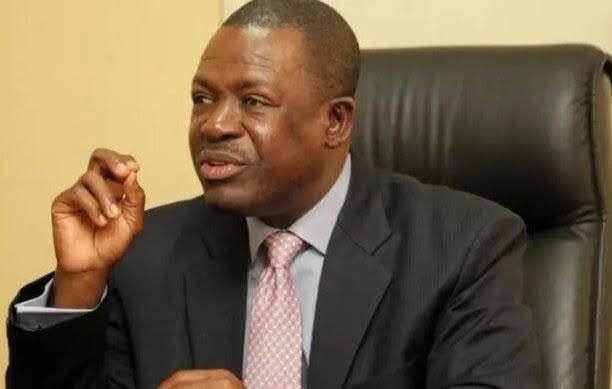
Wynter Kabimba: Mundubile Treason Case Nolle Prosequi Could Harm UPND
Summary
- Former Justice Minister Wynter Kabimba has issued a warning regarding the treason case involving Brian Mundubile and seventeen co-accused.
- Kabimba stated that if the State fails to secure convictions or enters a nolle prosequi, the ruling UPND could face severe long-term political repercussions.
- A nolle prosequi is a legal mechanism allowing the State to discontinue criminal proceedings without an acquittal.
- The decision in the Mundubile treason case is seen as critical for the UPND's political standing and public perception in Zambia.
High-Stakes Treason Proceedings
Wynter Kabimba has explicitly warned that the ruling United Party for National Development (UPND) could face a devastating, long-term political backlash if the State either fails to secure convictions or opts for a nolle prosequi in the high-profile treason case involving Brian Mundubile and seventeen co-accused.
Wynter Kabimba, a former justice minister and leader of the Economic Front, has issued a stern warning regarding the ongoing treason case involving Brian Mundubile and seventeen co-accused. His recent statement underscores the significant political ramifications for the ruling United Party for National Development (UPND) depending on the outcome of these high-profile proceedings. The case, which has drawn considerable public attention, places the State's prosecutorial decisions under intense scrutiny.
Kabimba's intervention highlights the critical juncture at which the Zambian legal system finds itself, particularly concerning politically sensitive matters. He specifically cautioned that if the State either fails to secure convictions against Mundubile and his co-accused or chooses to enter a nolle prosequi, the consequences for the UPND could be dire and long-lasting. This warning from a seasoned legal and political figure adds considerable weight to the public discourse surrounding the Brian Mundubile treason charges.
The Legal Mechanism of Nolle Prosequi
At the heart of Kabimba's warning is the legal instrument known as a nolle prosequi, a Latin term meaning 'to be unwilling to prosecute.' In the Zambian legal context, this power allows the Director of Public Prosecutions (DPP) to discontinue criminal proceedings at any stage before judgment, effectively halting a trial without an acquittal or conviction. While it is a legitimate prosecutorial tool, its application, especially in cases with significant political implications like the Mundubile treason case, often sparks debate about executive influence and judicial independence.
Should the State opt for a nolle prosequi in the Zambia nolle prosequi treason matter, it would mean that the charges against Brian Mundubile and the seventeen others are dropped, but they could potentially be reinstated at a later date. This discretionary power, while intended to serve justice, can be perceived by the public as a political maneuver, particularly when applied to high-profile individuals. Kabimba's concern centers on how such a decision would be interpreted by the electorate and its potential to erode public trust in the justice system and the ruling party.
Political Fallout for the UPND
Wynter Kabimba has explicitly warned that the ruling United Party for National Development (UPND) could face a devastating, long-term political backlash if the State either fails to secure convictions or opts for a nolle prosequi in the high-profile treason case involving Brian Mundubile and seventeen co-accused. He articulated that such an outcome would not merely be a minor setback but could, in his words, 'kill the UPND in the long run.' This stark prediction underscores the perceived gravity of the situation and the potential for public discontent.
The UPND political implications Mundubile's case carries are therefore substantial. Kabimba's perspective, informed by his tenure as a former justice minister, suggests that the public expects a definitive resolution to such serious allegations. A failure to achieve convictions or the use of a nolle prosequi could be interpreted as a lack of resolve or even an admission of weakness by the State, leading to a significant erosion of political capital for the ruling party. The Wynter Kabimba treason case commentary thus serves as a critical barometer for the political climate surrounding this sensitive legal battle.
Practical Implications
Lawyers in Zambia should observe the political implications of nolle prosequi in high-profile cases like the Mundubile treason matter, as it highlights the potential for executive influence on prosecutorial decisions and sets a precedent for how politically sensitive criminal proceedings may be handled, impacting legal strategy and client advice.
Source
Source: Original reporting via The Mast
How does this affect you?
Get an AI analysis of this article grounded in your jurisdictions, practice areas, and any policy documents you've uploaded to Wansom.
Finish Reading the Full Story and the Expert Analysis.
Get the latest legal & regulatory intelligence in Zambia
Wansom is AI and can make mistakes.