
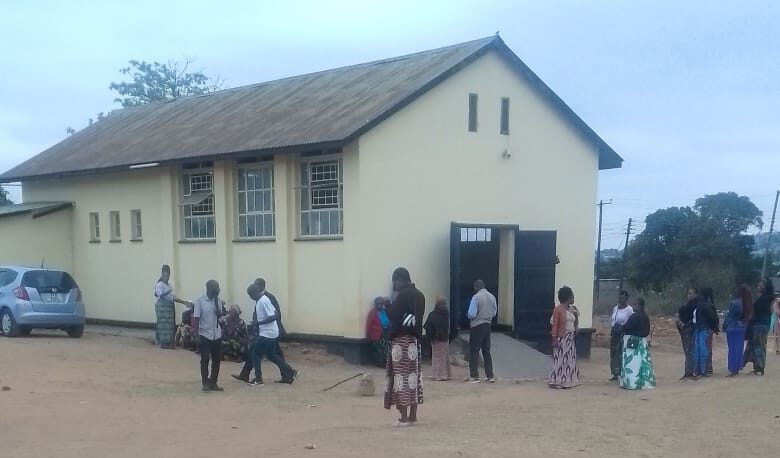
Kabushi Local Court: Mulenga Tembo Divorce Proceedings Begin
Summary
- Gwen Mulenga, 27, has filed for divorce from her 37-year-old husband, Emmanuel Tembo, at Kabushi Local Court.
- The couple, married in 2014 with a K200 dowry, has been separated for eight months.
- Ms. Mulenga cited a lack of peace at home following Mr. Tembo's return from a peacekeeping mission as the reason for the divorce suit.
- The case highlights the routine role of local courts in handling matrimonial proceedings in Zambia.
Initiation of Divorce Proceedings
Her assertion of 'no peace at home' highlights a fundamental breakdown in their domestic life, which ultimately led to their eight-month separation and the subsequent decision to seek a legal divorce.
Gwen Mulenga, a 27-year-old resident of Jacaranda, has formally initiated divorce proceedings against her husband, Emmanuel Tembo, aged 37. The matrimonial dispute was brought before the Kabushi Local Court, where Ms. Mulenga presented her petition for the dissolution of their marriage. This action marks a significant step in the couple's relationship, which has reportedly been strained for an extended period.
According to the details presented, the couple has not been cohabiting for the past eight months, indicating a prolonged period of separation prior to the formal court filing. Ms. Mulenga's primary contention, as articulated in her submission, centers on a profound lack of domestic tranquility within their home. This marital discord, she stated, became particularly pronounced following Mr. Tembo's return from a peacekeeping mission, leading to an environment devoid of peace. The Mulenga Tembo divorce case is now officially underway at the local judicial level.
Marital History and Allegations
The union between Gwen Mulenga and Emmanuel Tembo commenced in 2014, establishing a marriage that has now spanned nearly a decade. At the time of their marriage, a traditional dowry payment of K200 was made, a customary practice in many Zambian matrimonial proceedings. This historical detail forms part of the background information presented to the Kabushi Local Court as it considers the couple's petition.
The core of Ms. Mulenga’s complaint revolves around the deterioration of their marital harmony, specifically noting the period after Mr. Tembo’s return from his overseas deployment. Her assertion of 'no peace at home' highlights a fundamental breakdown in their domestic life, which ultimately led to their eight-month separation and the subsequent decision to seek a legal divorce. The court will now delve into these specific allegations as part of its review of the Mulenga Tembo divorce.
Legal Framework for Matrimonial Proceedings in Zambia
The Kabushi Local Court, like other local courts across the nation, frequently serves as the initial and often final arbiter for family cases, including divorce. These institutions play a crucial role in the Zambian legal system, providing accessible forums for citizens to resolve personal and domestic disputes. The current matrimonial proceedings involving Gwen Mulenga and Emmanuel Tembo fall squarely within the jurisdiction and typical caseload of such a court.
Zambia divorce law, as applied in these local settings, addresses various grounds for marital dissolution, often considering factors such as prolonged separation, lack of peace, and other forms of marital breakdown. The process generally involves both parties presenting their accounts and evidence, allowing the court to make an informed decision regarding the future of the marriage. Cases like this underscore the continuous engagement of the judiciary with the intimate details of family life.
Significance of Local Court Family Cases
While the Mulenga Tembo divorce case does not introduce new legal precedent or alter existing statutes, it exemplifies the daily function of Zambia's local courts in addressing fundamental family law matters. Such cases are vital for maintaining social order and providing avenues for individuals to legally conclude relationships that have become untenable. The details, including the specific ages of the parties, the marriage year, and the dowry amount, are standard elements that courts consider when adjudicating these sensitive issues.
The ongoing flow of Kabushi Local Court family cases, including this particular one, highlights the persistent need for judicial intervention in domestic affairs. It reflects societal realities where marital challenges lead to formal separation and divorce, ensuring that legal mechanisms are in place to manage these transitions. This specific filing contributes to the broader understanding of how matrimonial proceedings in Zambia are handled at the grassroots level, offering a snapshot of common legal challenges faced by couples.
Practical Implications
This article reports on a standard divorce filing in a local court, offering no new legal precedent, policy changes, or specific compliance implications for legal professionals beyond general awareness of ongoing family law matters in Zambia.
Source
How does this affect you?
Get an AI analysis of this article grounded in your jurisdictions, practice areas, and any policy documents you've uploaded to Wansom.
Finish Reading the Full Story and the Expert Analysis.
Get the latest legal & regulatory intelligence in Zambia
Wansom is AI and can make mistakes.