
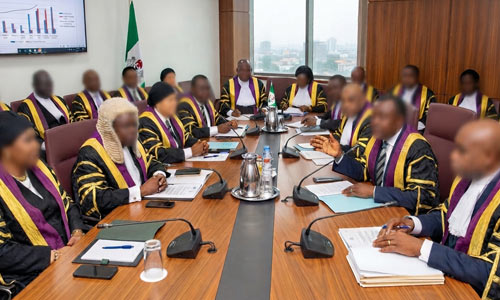
Body of Benchers: Muhammed Rufa'u Struck From Call to Bar List
Summary
- The Body of Benchers removed Muhammed Bello Rufa'u from the Nigerian Call to Bar list.
- Rufa'u is a serving police officer and a Nigerian Law School student.
- The removal followed a petition alleging his involvement in an assault on his sister during a family dispute.
- The decision was specifically linked to a pending criminal trial concerning the alleged assault.
What Happened
The Body of Benchers' decision regarding Muhammed Rufa'u underscores the rigorous character and fitness requirements that govern admission to the Nigerian Bar.
The Body of Benchers has taken decisive action by striking the name of Muhammed Bello Rufa'u from the roster of individuals slated for admission to the Nigerian Bar. This significant decision impacts Rufa'u, who is currently both a serving police officer and a student at the Nigerian Law School, effectively halting his immediate entry into the legal profession. The removal stems from a formal petition lodged against him, detailing serious allegations that have cast a shadow over his eligibility.
The core of the petition centers on claims that Rufa'u was involved in an assault. Specifically, it alleges his participation in an attack on his own sister, an incident said to have occurred during the course of a family dispute. Such an accusation, particularly one involving a family member and violence, raises immediate concerns regarding an individual's character and fitness to practice law. The Body of Benchers, as the ultimate authority on admission to the bar, acted upon these grave claims, leading to the immediate consequence for the aspiring lawyer.
Legal and Ethical Framework
The Body of Benchers' decision regarding Muhammed Rufa'u underscores the rigorous character and fitness requirements that govern admission to the Nigerian Bar. This esteemed body is entrusted with the critical responsibility of ensuring that only individuals of impeccable integrity and moral standing are permitted to join the legal profession. The existence of a pending criminal trial, particularly one involving allegations of assault, is considered a significant impediment to meeting these stringent ethical standards.
The integrity of the legal profession in Nigeria relies heavily on the conduct of its members, both within and outside their professional duties. Allegations of violent conduct, even if yet to be proven in a court of law, can be sufficient grounds for the Body of Benchers to defer or deny admission. This proactive stance is designed to protect the public and uphold the dignity of the bar, signaling that personal conduct, especially when it involves criminal accusations, directly impacts one's suitability for a legal career. The Rufa'u decision serves as a stark reminder of these foundational principles of legal profession ethics in Nigeria.
Why It Matters
The removal of Muhammed Rufa'u from the Call to Bar list sends a clear message about the unwavering commitment of the Body of Benchers to maintaining the high ethical standards expected of legal practitioners. This incident highlights that the journey to becoming a lawyer involves more than just academic achievement; it demands an unblemished personal record and adherence to a strict code of conduct. Aspiring legal professionals must understand that any involvement in criminal proceedings, even if the case is still pending, can jeopardize their future in the legal field.
This case reinforces the notion that the legal profession ethics in Nigeria are not merely theoretical constructs but are actively enforced to safeguard the public's trust. The Body of Benchers' swift action in response to the petition against Rufa'u demonstrates that character assessment is an ongoing process, extending right up to the point of admission. It serves as a crucial precedent, emphasizing that individuals seeking to join the bar must maintain an exemplary record, free from any conduct that could bring disrepute to the esteemed profession.
Practical Implications
This case underscores the stringent character and fitness requirements for admission to the Nigerian Bar, indicating that even pending criminal allegations, particularly those involving assault, can lead to removal from the Call to Bar list. Lawyers should advise aspiring legal professionals on the importance of maintaining an impeccable record and avoiding any conduct that could compromise their eligibility for admission.
Source
How does this affect you?
Get an AI analysis of this article grounded in your jurisdictions, practice areas, and any policy documents you've uploaded to Wansom.
Finish Reading the Full Story and the Expert Analysis.
Get the latest legal & regulatory intelligence in Nigeria
Wansom is AI and can make mistakes.