
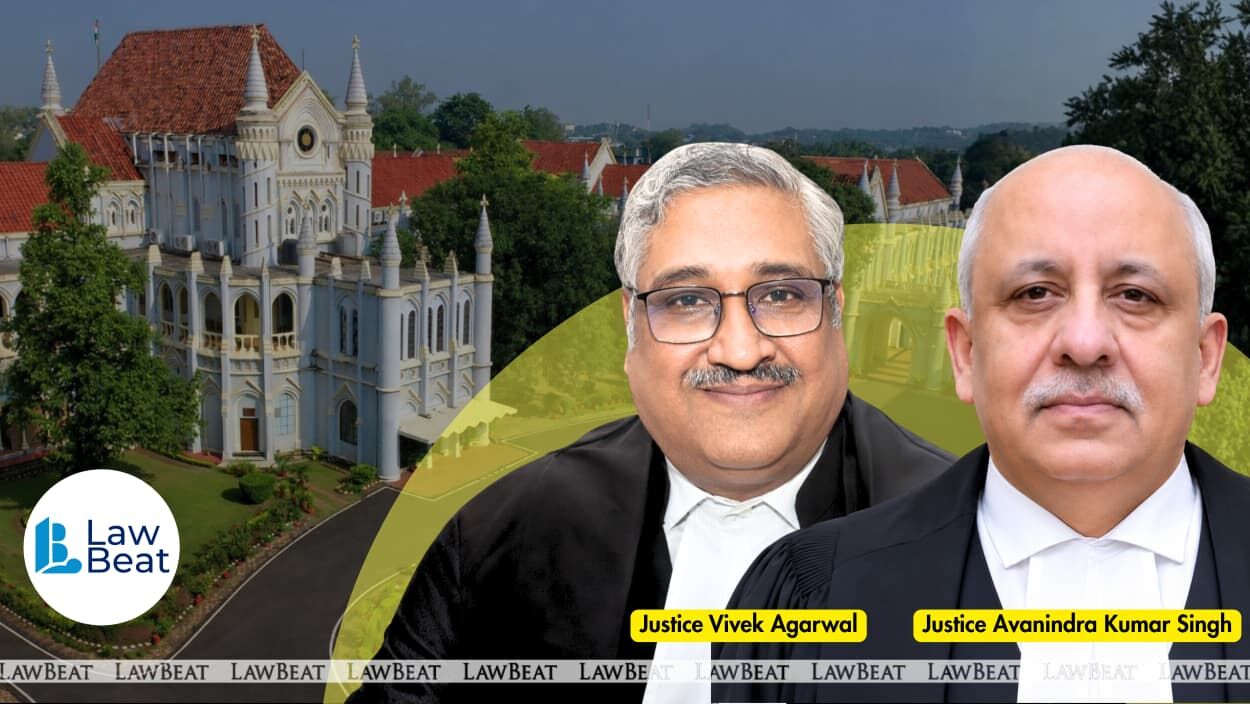
MP High Court: Mandates Website Third-Party Audit After E-Hearing Failures
Summary
- The Madhya Pradesh High Court ordered a third-party IT audit of its new website following significant disruptions to an e-hearing.
- Justices Vivek Agarwal and Avanindra Kumar Singh expressed serious concern over "judicial time wasted" due to persistent website glitches.
- The audit will be conducted by experts from Tata Consultancy Services, Infosys, and/or L&T Technology Services within 30 days.
- The court also demanded an internal inquiry and action against IT staff deemed responsible for the technical failures.
- The issues arose during a criminal appeal, `Aditya Soni vs The State of Madhya Pradesh`, where the website failed to support e-hearing.
Court Proceedings Interrupted by Technical Failures
The judicial panel took a 'very serious view' of the situation, asserting that valuable judicial time was wasted due to the perceived 'incompetency of the I.T. Staff.'
The Madhya Pradesh High Court's Jabalpur Bench recently mandated a comprehensive third-party IT audit of its new website after persistent technical malfunctions severely disrupted a scheduled e-hearing. A Division Bench, comprising Justices Vivek Agarwal and Avanindra Kumar Singh, was presiding over a criminal appeal in the case of `Aditya Soni vs The State of Madhya Pradesh` when the court's digital infrastructure proved inadequate. The proceedings were specifically hampered by the website's inability to adequately support the e-hearing system, leading to significant operational issues.
During the hearing, counsel for the appellant, Shri Alok Vagrecha, appearing with Shri Abhinesh Soni, requested to withdraw an application, I.A. No.11051/2026, which was a second request for suspension of sentence and bail for Aditya Soni. This withdrawal was granted, and the application was formally dismissed. The primary appeal was subsequently scheduled for its final hearing in Part-B of the cause list, in accordance with its turn and seniority. However, the court's attention was then drawn to the pervasive technical problems plaguing the newly launched website, an issue that had reportedly been a source of frustration for both the judiciary and legal practitioners for some time.
Judicial Scrutiny and Accountability Demanded
The bench expressed profound dissatisfaction with the state of the e-hearing infrastructure, explicitly stating in its order that the High Court's website was failing to support e-hearings and was riddled with numerous glitches. The court noted that Mr. K.S. Kushwaha, the Registrar (IT-CSA), had been summoned to assist with the issues. Despite this, the judicial panel took a "very serious view" of the situation, asserting that valuable judicial time was wasted due to the perceived "incompetency of the I.T. Staff." Consequently, the bench directed that the Chief Justice initiate appropriate action against the responsible IT personnel.
Further underscoring the gravity of the situation, the court highlighted a prior communication from the Acting Chief Justice. Weeks earlier, specifically on August 25/26, 2026, the Acting Chief Justice had circulated a WhatsApp message to all judges, indicating that the website's update process would require an eight-day period. The bench observed that "more than 15 days" had elapsed since this communication, yet the website's performance remained "far from satisfactory." Lawyers appearing before the court had also openly voiced their discontent, lamenting that the "old website was better" than its current iteration, contributing to the growing concerns over `Madhya Pradesh High Court IT glitches`.
Mandated Third-Party IT Audit
In response to the persistent failures and the significant disruption to court proceedings, the Division Bench issued a directive for a detailed inquiry into the matter. Registrar (IT-CSA) Mr. K.S. Kushwaha was specifically instructed to provide a comprehensive explanation for the "obstacle being caused to the working of the High Court." The court further mandated that punitive action be taken against any "delinquent" staff members, with the findings of this internal inquiry to be reported back to the bench within seven days from the date of the order.
Going beyond internal measures, the court ordered an independent `MP High Court website third-party audit` of its entire IT system. This critical assessment is to be undertaken by a team of experts drawn from prominent technology companies, specifically naming Tata Consultancy Services (TCS), Infosys, and L&T Technology Services. The bench stipulated that this `TCS Infosys L&T Technology Services court audit` must be finalized within 30 days, with a detailed report subsequently presented to the court. To ensure a broad spectrum of technical expertise, the audit team may also include officials from C-DOT (Centre for Development of Telematics) and MASSCOM (Madhya Pradesh Association of Computer and Communication Companies), addressing concerns about `Indian e-hearing system failures`. The court's frustration was evident when, later the same day, even with Mr. Kushwaha present, the system continued to exhibit "buffering and hanging issues" during further testing.
Implications for Digital Judicial Infrastructure
The court's decisive action underscores a growing intolerance for technical deficiencies that impede judicial processes and waste valuable resources. The directive for a thorough `MP High Court website third-party audit` by leading technology firms signals a serious commitment to resolving the underlying issues affecting the court's digital operations. This development highlights the broader challenges faced by judicial systems in India as they transition to more robust e-hearing and e-filing platforms, and the critical need for reliable IT infrastructure to support these initiatives.
The explicit demand for accountability from IT staff and the involvement of external experts indicate a push for higher standards in the maintenance and functionality of court websites. This incident, centered around the `Aditya Soni vs State of MP` case, serves as a stark reminder of how technical glitches can directly impact the efficiency of justice delivery, leading to `judicial time wasted website India`. The outcome of this audit and the subsequent actions taken by the High Court will likely set a precedent for how similar technical challenges are addressed across other judicial bodies striving for digital transformation.
Practical Implications
Lawyers and compliance officers practicing in the Madhya Pradesh High Court should be aware of the ongoing technical issues with the court's e-hearing system and the court's strong stance on accountability for IT failures. This development signals potential improvements in e-filing and e-hearing reliability in the future, but also highlights the current need to anticipate and prepare for technical disruptions during virtual proceedings.
Source
How does this affect you?
Get an AI analysis of this article grounded in your jurisdictions, practice areas, and any policy documents you've uploaded to Wansom.
Finish Reading the Full Story and the Expert Analysis.
Get the latest legal & regulatory intelligence in India
Wansom is AI and can make mistakes.