
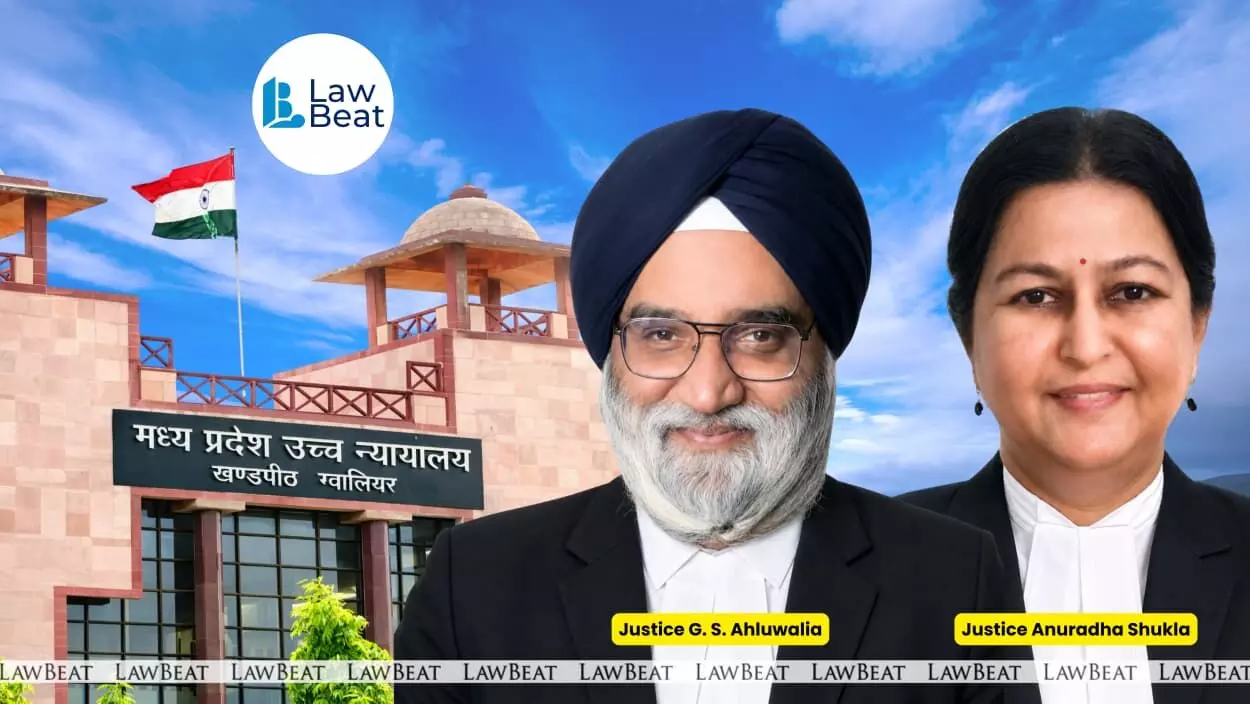
MP High Court: ADPO Promotion Quota of 10% Invalidated
Summary
- The Madhya Pradesh High Court at Gwalior struck down a 2002 amendment that created a 10% promotion quota for clerical staff to Assistant District Public Prosecution Officer (ADPO) posts.
- The court ruled the quota violated Articles 14, 16, and 21 of the Constitution of India, describing it as an unconstitutional "backdoor entry."
- Before the amendment, all ADPO positions were filled by direct recruitment; the quota allowed CrPC Clerks and Assistants with an LL.B. degree and seven years of service to be promoted.
- The High Court emphasized the specialized nature of a public prosecutor's role, requiring courtroom practice and legal qualifications distinct from clerical experience.
- The ruling preserved all promotions already made under the impugned amendment, while rejecting arguments that the challenge was delayed due to a "continuous cause of action."
Court Strikes Down Promotion Quota
The court underscored that the role of a public prosecutor is distinct from typical government employment, involving "multiple onerous duties" and requiring direct engagement with judicial decision-making.
The Madhya Pradesh High Court, sitting at Gwalior, recently invalidated a 2002 amendment that had established a 10% promotion quota for clerical staff aspiring to become Assistant District Public Prosecution Officers (ADPO). This significant ruling, delivered by a Division Bench comprising Justice G.S. Ahluwalia and Justice Anuradha Shukla on October 29, 2026, found the amendment to be "ultra vires of Articles 14, 16 and 21" of the Constitution of India. The decision, which stemmed from two petitions, W.P. No. 12769/2020 and W.P. No. 27731/2026, effectively removed a pathway that allowed non-legal personnel to enter a specialized legal cadre through an internal promotion system.
The court's judgment specifically targeted a notification issued on October 14, 2002, which had modified Schedules II and IV of the Madhya Pradesh Public Prosecution (Gazetted Services) Recruitment Rules, 1991. While declaring the quota unconstitutional, the High Court prudently safeguarded all promotions that had already been made under the provisions of the now-struck-down amendment, ensuring that individuals who had already benefited from the policy would not be adversely affected by the retrospective application of the ruling.
Background of the Disputed Policy
Prior to the 2002 amendment, every ADPO position, classified as a Class II post, was exclusively filled through direct recruitment. The amendment introduced a significant shift in this recruitment model, reserving 10% of these posts for promotion from specific clerical cadres within the prosecution department. Eligible positions included CrPC Clerks, Assistant Grade III, and Assistant Previous Conviction Detective (APCD) Grade III employees.
To qualify for this promotional route, clerical staff were required to possess an LL.B. degree and accumulate a minimum of seven years of service. The remaining 90% of ADPO posts continued to be filled via direct recruitment, maintaining a dual entry system that the petitioners argued created an unfair advantage and undermined the professional standards of the public prosecution service.
Legal Challenge and Judicial Scrutiny
The challenge to the MP High Court ADPO promotion quota was initiated by individuals like Rohan Sharma, a Gwalior-based advocate who had unsuccessfully appeared in ADPO examinations in 2011 and 2015, represented by Advocate Abhishek Singh Bhadauriya. Another petition was filed by Karan Shrivastava and others, with Senior Advocate M.P.S. Raghuwanshi and advocate R.B.S. Tomar presenting their case. The petitioners contended that clerical duties, which primarily involve office work, bear no relation to courtroom practice, and that the amendment improperly created a distinct class based solely on an LL.B. degree, offering two disparate promotion avenues for a single feeder post.
Representing the State, Additional Advocate General Ankur Mody acknowledged that the State's defense was "not very encouraging," conceding that the original objectives behind the amendment were not documented and that a single feeder post should not lead to two separate promotional paths. Interveners, represented by Advocates D.P. Singh, Prabhakar Singh, and Prashant Sharma, attempted to dismiss the petitions by arguing an 18-year delay in the challenge and a lack of standing for the petitioners. However, the court rejected these objections, asserting that the validity of a provision gives rise to a "continuous cause of action," thereby allowing the challenge to proceed regardless of the time elapsed.
Upholding Professional Standards
The court underscored that the role of a public prosecutor is distinct from typical government employment, involving "multiple onerous duties" and requiring direct engagement with judicial decision-making. It highlighted that CrPC clerks, by contrast, hold ministerial positions with "no contact either closely or distantly with Judicial decision making." The bench further clarified that merely holding an LL.B. degree does not automatically create a separate class deserving of special treatment, viewing the quota as a "backdoor entry to Class II cadre without clearing PSC examination" for those who might otherwise fail the Public Service Commission test.
The High Court also referenced the Advocates Act, noting that an ADPO appearing before a Magistrate must be an enrolled advocate who has successfully cleared the All India Bar Examination. Promoting government clerks through the quota, the court reasoned, would circumvent these essential requirements. While the court did not prescribe minimum qualifications for direct recruitment, it left this determination to the State and to "some other appropriate case." Furthermore, a 2019 letter from the Director of Prosecution, which flagged the poor performance of promoted ADPOs and recommended the quota's withdrawal (a suggestion rejected by the State in 2021), was treated by the court as "authoritative proof" that the quota lacked a rational connection to its intended purpose, reinforcing the court's decision in this significant Public Prosecutor qualification challenge.
Practical Implications
This ruling establishes a precedent for challenging promotion quotas in specialized government roles, particularly for public prosecutors in Madhya Pradesh, by emphasizing the professional nature of the role over clerical experience. Lawyers advising on public service recruitment or challenging similar 'backdoor entry' provisions should note the court's interpretation of constitutional articles and the continuous cause of action for such challenges.
Source
Source: Original reporting via Live Law
How does this affect you?
Get an AI analysis of this article grounded in your jurisdictions, practice areas, and any policy documents you've uploaded to Wansom.
Wansom is AI and can make mistakes.