
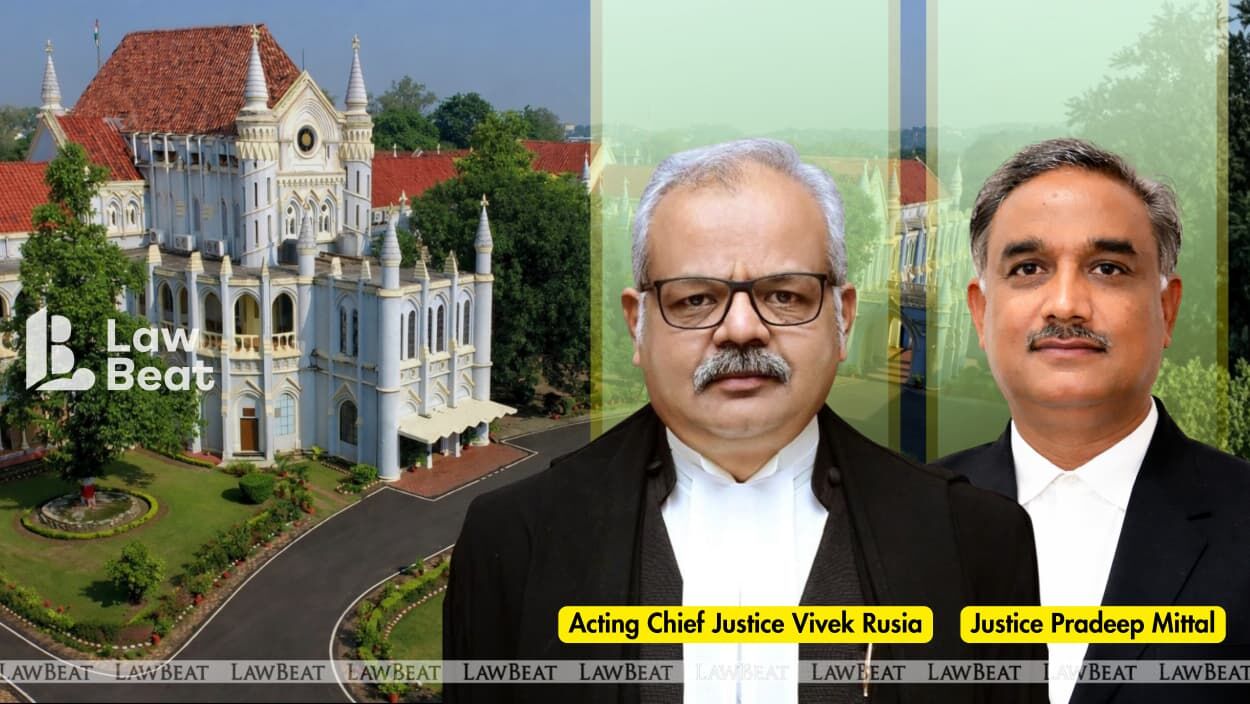
MP High Court: Judicial Infrastructure Is Constitutional Duty, Not Executive Largesse
Summary
- The Madhya Pradesh High Court ruled that adequate judicial infrastructure is a constitutional duty under Article 21, not executive discretion.
- This judgment arose from a public interest litigation concerning the prolonged delay in funding a new District Court building in Anuppur.
- The court rejected the state's explanations of budgetary constraints, citing the Supreme Court's All India Judges' Association case precedent.
- State officials reported that Rs 45,87,72,036 was recommended for the Anuppur project, but current funds were exhausted on other major judicial constructions.
- The bench also highlighted acute courtroom shortages in Bhopal, Jabalpur, and Indore, linking them to increased case pendency and directing the state to find additional land for Bhopal.
Judicial Infrastructure as a Constitutional Mandate
The court emphasized that the administration of justice is a sovereign function, and ensuring proper infrastructure is a fundamental obligation owed to citizens to guarantee access to justice under Article 21 of the Indian Constitution.
The Madhya Pradesh High Court has unequivocally declared that providing adequate judicial infrastructure constitutes a constitutional duty, not a matter of executive discretion or administrative largesse. This significant pronouncement underscores that the judiciary cannot be treated merely as another government department when it comes to essential facilities. The court emphasized that the administration of justice is a sovereign function, and ensuring proper infrastructure is a fundamental obligation owed to citizens to guarantee access to justice under Article 21 of the Indian Constitution.
This ruling by the MP High Court firmly establishes that judicial infrastructure is a constitutional duty, a principle that state governments are bound to uphold. It reframes the provision of court facilities from a discretionary allocation to a mandatory requirement, directly impacting the availability of resources for the judiciary across India.
The Anuppur District Court Delay
This pivotal ruling emerged from a public interest litigation concerning the protracted delay in sanctioning funds for a new District Court building in Anuppur. Advocate Basudev Chatterjee, representing the Jila Vikas Manch, Anuppur, initiated the petition, seeking directives for the construction of a facility with 14 courtrooms in the tribal-dominated district. Despite Anuppur being designated a separate civil district in 2009, its judicial operations have continued from an old, rented building.
The petitioner highlighted that this existing structure lacks sufficient space, causing considerable inconvenience for advocates, litigants, and the general public alike. The High Court itself had previously intervened, writing to the Law and Legislature Department on February 3, 2021, to expedite financial sanction for the proposed building, a request echoed by the Anuppur District Bar Association through representations in 2021 and 2024. The state's repeated justification for the delay in the Anuppur District Court building funding was a lack of budgetary allocation.
State's Fiscal Explanations and Court's Rejection
In response to the court's persistent inquiries, which included a directive for senior officials to appear, Manish Rastogi, Additional Chief Secretary of Finance, and Mukesh Kumar, Secretary of Law, presented the state's position. Advocate General Prashant Singh, accompanied by Deputy Advocate General Swapnil Ganguly, informed the bench that an Evaluation Committee had, on July 17, 2026, recommended sanctioning Rs 45,87,72,036 for the project, based on the new Schedule of Rates. However, he cautioned that financial constraints might lead to delays in disbursal, though he pledged his personal attention to resolve the issue promptly.
Rastogi further elaborated that the Law Department's budget for the current year had already been allocated to two significant projects: the construction of 60 courtrooms at the High Court building in Jabalpur and the establishment of the MP Judicial Officers Academy. Consequently, a proposal for enhanced allocation would be necessary for the 2027-28 fiscal year to accommodate the Anuppur District Court building funding. The Division Bench, however, remained unconvinced by these explanations, reiterating its stance that financial limitations cannot be used to deny essential judicial infrastructure, particularly when considering the Madhya Pradesh High Court judiciary funding as a constitutional obligation.
Wider Systemic Challenges and Judicial Directives
The Madhya Pradesh High Court underscored its position by referencing the Supreme Court's rulings in the All India Judges' Association case precedent, which established that financial constraints cannot be pleaded by the executive to justify inadequate infrastructure for the judiciary. This precedent reinforces the court's view that the provision of judicial facilities is not subject to executive largesse judicial infrastructure.
Beyond the immediate concern of the Anuppur District Court building, the bench also brought to light a severe shortage of courtrooms within the Bhopal district court complex, where no land is currently available for expansion. In light of this, the court directed the state to actively consider allotting additional land nearby to address the pressing need. The judges observed that the widespread shortage of courtrooms across key judicial centers like Bhopal, Jabalpur, and Indore directly contributes to escalating case pendency, leading to situations where under-trial prisoners remain incarcerated simply because criminal cases cannot proceed due to a lack of available space. The court also noted that a Finance Committee meeting held on August 10, 2026, had examined fund allocation without adequately addressing the court's concerns.
Practical Implications
This ruling establishes a strong precedent that adequate judicial infrastructure is a constitutional duty under Article 21, not executive discretion. Lawyers can leverage this judgment in public interest litigation or advocacy to compel state governments to provide necessary court facilities, especially where delays or lack of resources impede access to justice.
Source
How does this affect you?
Get an AI analysis of this article grounded in your jurisdictions, practice areas, and any policy documents you've uploaded to Wansom.
Finish this article free. Just your email for instant unlock.
Wansom is AI and can make mistakes.