
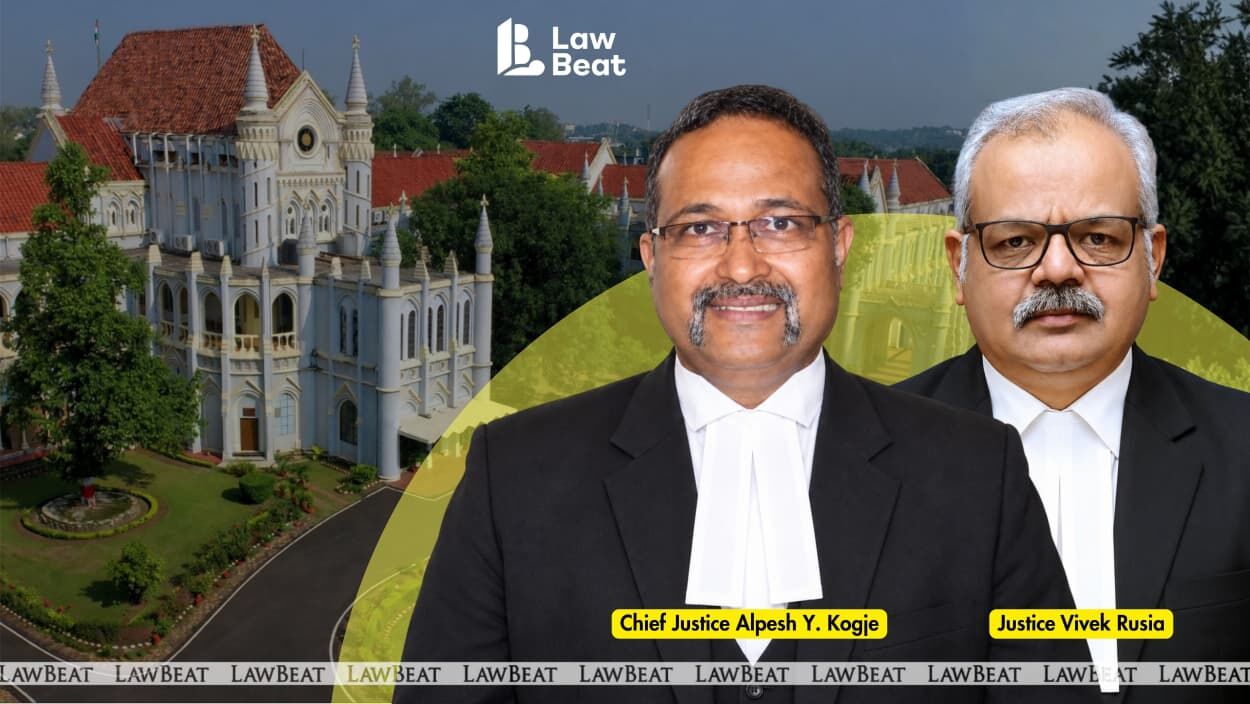
MP High Court: Advocate Perpetual Confidentiality Upheld, Petition Dismissed
Summary
- The Madhya Pradesh High Court dismissed a petition by Dr. Krishna Kumar Tripathi, a former legal head of Sasan Power Limited.
- Dr. Tripathi sought an inquiry into alleged irregularities in R&R beneficiary lists, using information gathered during his employment.
- The court imposed costs of Rs 20,000 on Dr. Tripathi, deeming his conduct "highly objectionable and reprehensible."
- The ruling affirmed that an advocate's duty of confidentiality and loyalty to a former employer is perpetual and does not end with employment termination.
- Information acquired during employment cannot be used against a former employer, even in public interest litigation.
What Happened
This obligation does not cease upon termination of employment, it remains perpetual.
Dr. Krishna Kumar Tripathi, a practicing advocate and former Legal Head at Sasan Power Limited, recently had his petition dismissed by the Madhya Pradesh High Court. Dr. Tripathi, who previously managed land acquisition for the power plant until his departure on August 30, 2016, sought a judicial inquiry into alleged irregularities concerning Rehabilitation and Resettlement (R&R) beneficiary lists. His writ petition, filed under Article 226 of the Constitution, requested directives for the Collector and Sub-Divisional Officer (SDO) of Singrauli to produce relevant records, including beneficiary lists and disbursed amounts, and to act on a complaint he filed on August 12, 2024.
The petitioner alleged that an initial R&R beneficiary list, signed by the SDO during his tenure, contained both eligible and ineligible individuals. Subsequently, a new list was purportedly created, which Dr. Tripathi claimed included ineligible persons and reclassified minors from the original list as adults to facilitate monetary benefits. He asserted that this process led to an increase of 300 beneficiaries. Dr. Tripathi stated he uncovered these discrepancies through a Right to Information Act reply dated December 26, 2024, which also indicated that his complaint had been forwarded by the Collector to the SDO on October 28, 2024, yet no action had been taken for six months.
The Court's Decision
A Division Bench of the Madhya Pradesh High Court, comprising Chief Justice Alpesh Y. Kogje and Justice Vivek Rusia, ultimately dismissed Dr. Tripathi's petition. The court imposed costs of Rs 20,000 on the petitioner, characterizing his actions as "highly objectionable and reprehensible." Initially, a Single Judge had noted on April 28, 2025, that the matter, given the petitioner's stated lack of personal interest, should have been registered as a Public Interest Litigation (PIL). Dr. Tripathi then applied on May 7, 2025, for it to be treated as a PIL, leading to its referral to the Division Bench.
However, the Division Bench remained unconvinced by the petitioner's assertion of having no personal interest, stating, "We cannot believe that the petitioner has no personal interest in this matter, as he has already projected himself as a complainant." The court further ruled that Dr. Tripathi was not eligible to bring this matter as a public interest litigation at all. Given his prior role as legal head, where he handled land acquisition matters for Sasan Power Limited, the bench emphasized that he was "required to maintain secrecy of facts and material which he had gathered" during his employment.
Legal Context and Rationale
The MP High Court's ruling underscored a fundamental principle of legal ethics in India: the `perpetual duty of confidentiality advocate` owes to a former employer. The court explicitly stated that "An advocate owes an uncompromising duty of loyalty and confidentiality." This duty is not merely a professional courtesy but a statutory bar, preventing an advocate from disclosing communications made during the course of employment unless express consent is provided. This principle is particularly pertinent for an `ex-legal head former employer confidentiality` scenario, where an individual possesses intimate knowledge of a company's affairs.
Crucially, the court clarified that this obligation of confidentiality does not terminate with the cessation of employment. The bench unequivocally declared that "This obligation does not cease upon termination of employment, it remains perpetual." This means that information acquired while serving as a legal professional for an organization, such as `Sasan Power Limited confidentiality ruling` details, cannot subsequently be used to expose or act against that former employer, even if the individual believes they are acting in the public interest. The court's stance reinforces that an ex-employee is "not supposed to highlight the matters relating" to their former employer's internal affairs.
Why It Matters
The `MP High Court advocate perpetual confidentiality` decision carries significant weight for legal professionals across India. It serves as a clear reminder that the `advocate duty of loyalty India` extends beyond the period of active employment, establishing a critical ethical boundary. Lawyers and compliance officers must understand that the duty of confidentiality to a former employer is perpetual and does not cease upon termination of employment. This ruling reinforces that information gained during employment cannot be used against the former employer, even in public interest litigation.
This `Sasan Power Limited confidentiality ruling` reinforces the sanctity of client-attorney privilege and the broader ethical obligations of legal practitioners. The court's imposition of costs on Dr. Krishna Kumar Tripathi further emphasizes the seriousness with which such breaches of confidentiality and loyalty are viewed. The judgment solidifies the principle that an advocate, regardless of their current role or perceived public interest, cannot leverage privileged information obtained during past employment to initiate actions against their former client or employer.
Practical Implications
Lawyers and compliance officers must understand that the duty of confidentiality to a former employer is perpetual and does not cease upon termination of employment. This ruling reinforces that information gained during employment cannot be used against the former employer, even in public interest litigation, highlighting a critical ethical boundary for legal professionals.
Source
How does this affect you?
Get an AI analysis of this article grounded in your jurisdictions, practice areas, and any policy documents you've uploaded to Wansom.
Finish Reading the Full Story and the Expert Analysis.
Get the latest legal & regulatory intelligence in India
Wansom is AI and can make mistakes.