
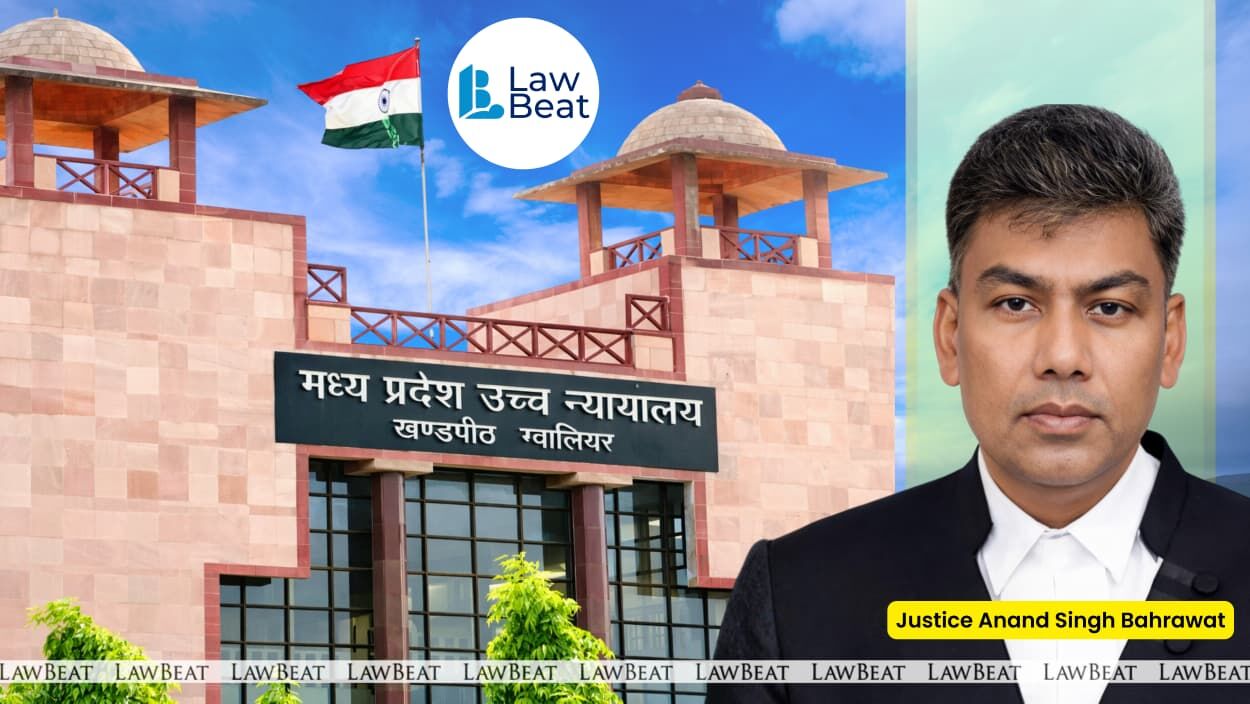
MP High Court: No Fraud, Compassionate Appointment Cancellation Overturned
Summary
- The MP High Court at Gwalior quashed the cancellation of Suraj Sagar's compassionate appointment as a Dawasaj.
- The court ruled that authorities cannot reverse a decision based on facts known at the time of appointment unless fraud or suppression of material facts is proven.
- Suraj Sagar, a grandson nominated by his deceased grandmother, was appointed in 2016, but his job was cancelled in 2019 following a complaint about his dependency status.
- Justice Anand Singh Bahrawat found no evidence of fraud or concealment by Sagar, noting the dispute concerned the correctness of the initial decision.
- The judgment cited Supreme Court precedents, emphasizing that administrative decisions based on known facts cannot be arbitrarily undone years later.
What Happened
The court's decision to quash the compassionate appointment cancellation without fraud being proven reinforces the idea that government departments must exercise due diligence at the time of appointment.
The Madhya Pradesh High Court, sitting at Gwalior, recently overturned the cancellation of a compassionate appointment granted to a grandson, Suraj Sagar. This decision, delivered by Justice Anand Singh Bahrawat on October 15, 2026, reinstated Sagar's position as a Dawasaj, effectively quashing the Divisional Ayush Officer's order from February 18, 2019, which had terminated his employment. The petitioner, a member of the Scheduled Caste community, faced a difficult family situation after his father passed away in 2008 when Sagar was only twelve years old. His widowed mother, two sisters, and a younger brother subsequently relied on his grandmother, Smt. Krishna Devi, who worked as a Dai at the Government Ayurved Dispensary in Mehgaon, District Bhind.
Smt. Krishna Devi had formally nominated Suraj Sagar in her service records. Following her death while in service on December 6, 2015, Sagar applied for a compassionate appointment on June 9, 2016. His case was reviewed by a Screening Committee under the State Government's Madhya Pradesh compassionate appointment policy, established on September 29, 2014, which subsequently recommended him for the position. He was appointed Dawasaj on August 29, 2016, successfully completed a three-year probationary period, and commenced his duties at Debhai, District Datia. However, his employment faced jeopardy after a complaint led to a show-cause notice on February 12, 2018, alleging that he did not meet the definition of a dependent under specific clauses (2.1 to 2.7) of the relevant policy. Despite his response and an appearance in Bhopal to record a statement, his Suraj Sagar compassionate appointment was ultimately cancelled.
Legal Context and High Court's Rationale
In its ruling, the MP High Court emphasized that once a compassionate appointment is granted after authorities have thoroughly examined all pertinent facts, it cannot be revoked years later unless fraud or suppression of material information by the employee is unequivocally established. The court found no evidence in the impugned cancellation order to suggest that Suraj Sagar had obtained his appointment through false documentation, fraudulent practices, or the deliberate withholding of any crucial facts. Justice Bahrawat specifically noted that "the petitioner did not conceal his relationship with the deceased employee," and that the core dispute revolved around the accuracy of the authorities' initial decision at the time of appointment, rather than any subsequent misconduct on Sagar's part.
The court acknowledged that compassionate appointments represent an exception to standard recruitment procedures and must align with governing policies. However, it asserted that the specific circumstances of each case must be meticulously evaluated. Citing Supreme Court precedents, including *Md. Zamil Ahmed v. State of Bihar* and *Union of India v. K.P. Tiwari*, the High Court affirmed that authorities are precluded from unilaterally reversing their own decisions concerning facts that were already known to them at the time of the original appointment. The court also referenced its own September 2025 decision in *Surendra Singh v. State of M.P.* to support its stance. An intervener, identified as the deceased employee’s daughter, had alleged suppression of facts and mentioned a pending succession suit, but the court clarified that the petition was not the appropriate forum to adjudicate matters of estate succession or retiral dues.
Significance of the Ruling
This significant judgment by the MP High Court establishes a high threshold for the cancellation of compassionate appointments, particularly when such actions occur years after the initial approval. The ruling underscores that administrative bodies cannot arbitrarily undo decisions based on facts that were available and considered during the initial appointment process, absent clear proof of fraud or deliberate suppression of material information by the applicant. This principle is crucial for ensuring stability and fairness for individuals who have secured employment through compassionate grounds, protecting them from retrospective challenges to their eligibility.
The court's decision to quash the compassionate appointment cancellation without fraud being proven reinforces the idea that government departments must exercise due diligence at the time of appointment. While acknowledging that nomination and dependency do not automatically override explicit eligibility criteria within a policy, and explicitly stating that "The Court is not holding that every grandson is entitled to compassionate appointment," the judgment firmly places the burden on authorities to demonstrate fraud if they wish to revoke an appointment years later. This provides a strong precedent for challenging such quashing compassionate appointment cancellation, particularly where the original decision was made with full knowledge of the applicant's circumstances and no new, material facts indicating deception have emerged.
Practical Implications
Lawyers advising clients on compassionate appointments, or government departments handling such appointments, should be aware that this ruling sets a high bar for cancellation of an appointment years later. Authorities cannot arbitrarily reverse a decision based on facts known at the time of approval unless fraud or suppression of material facts is proven, providing a strong precedent for challenging such cancellations.
Source
How does this affect you?
Get an AI analysis of this article grounded in your jurisdictions, practice areas, and any policy documents you've uploaded to Wansom.
Finish Reading the Full Story and the Expert Analysis.
Get the latest legal & regulatory intelligence in India
Wansom is AI and can make mistakes.