
MP High Court: Article 227 Cannot Quash RCR Proceedings
Summary
- The MP High Court's Gwalior Bench dismissed a husband's Article 227 petition seeking to quash his wife's Section 9 Hindu Marriage Act plea for restitution of conjugal rights.
- The court ruled that Article 227 supervisory jurisdiction cannot be used to question civil proceedings that are appealable under law, dismissing the petition on maintainability.
- The decision emphasized that decrees under Section 9 of the Hindu Marriage Act are appealable under Section 28, and judicial orders of a civil court are not amenable to writ jurisdiction under Article 226, citing *Radhey Shyam v. Chhabi Nath*.
- The High Court relied on Supreme Court precedents like *Jacky v. Tiny* and *K. Valarmathi* to affirm that Articles 226 and 227 cannot be used to question a plaint.
- This ruling reinforces the necessity of exhausting statutory remedies and appeal mechanisms within the Family Courts Act and Hindu Marriage Act for matrimonial disputes.
What Happened
The court firmly stated that its supervisory jurisdiction under Article 227 cannot be invoked to challenge proceedings that are inherently civil and subject to appeal under existing law.
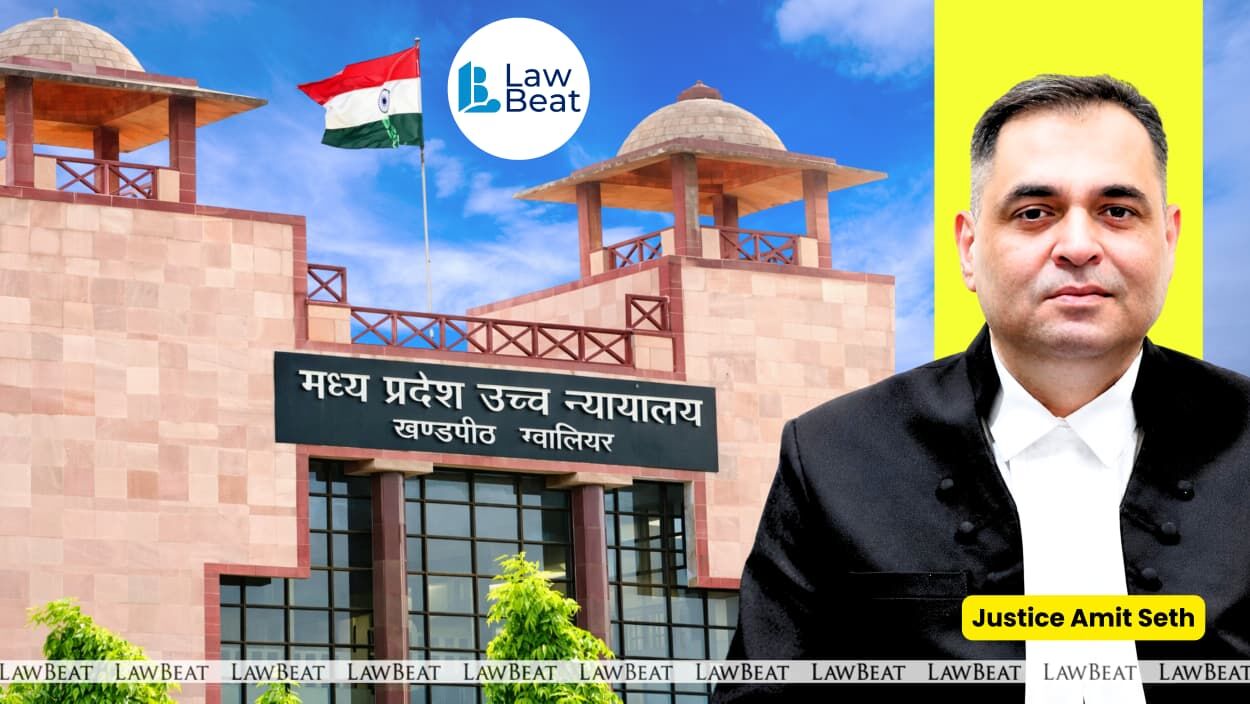
The Gwalior Bench of the Madhya Pradesh High Court recently dismissed a husband's petition, filed under Article 227 of the Constitution, which sought to quash his wife's application for restitution of conjugal rights. The court firmly stated that its supervisory jurisdiction under Article 227 cannot be invoked to challenge proceedings that are inherently civil and subject to appeal under existing law. Justice Amit Seth, presiding over the matter, rejected the husband's plea on the grounds of maintainability, without delving into the substantive merits of the underlying matrimonial dispute.
The husband had approached the High Court arguing that his wife's restitution of conjugal rights plea, filed under Section 9 of the Hindu Marriage Act, constituted a significant abuse of legal process, designed solely to harass him. His legal counsel contended that the wife had previously failed to comply with a similar application filed in 2018. Furthermore, they asserted that her current 2023 application was a retaliatory measure, or a "counter-blast," to a divorce petition he had initiated, citing separation since March 2007.
Legal Arguments and Precedents
During the proceedings, the wife's advocate, Madan Mohan Shrivastava, raised a preliminary objection regarding the maintainability of the husband's Article 227 petition. He argued that the Article 227 supervisory jurisdiction is strictly supervisory and should not be employed to supersede the original jurisdiction of a subordinate court or to circumvent established statutory remedies. The advocate also highlighted a critical development: an earlier order from June 18, 2025, issued by a coordinate Bench, which had initially allowed the husband's petition and quashed the wife's Section 9 proceedings, was subsequently recalled on August 13, 2025, following a review petition that referenced the Supreme Court's decision in *K. Valarmathi and Others v. Kumaresan*.
Conversely, the husband's legal team, comprising advocates Shashank Sharma, Haush Sharma, and Atif, cited several judicial pronouncements to support the maintainability of their petition. They referred to the Kerala High Court's ruling in *Rinju v. Santosh*, the Supreme Court's judgment in *Surya Dev Rai v. Ram Chander Rai and Others*, and a 2026 order from the Madras High Court in *K. Sivakumar vs. Anita Udayakumar*.
Court's Rationale and Ruling
The High Court meticulously examined the procedural framework established by the Family Courts Act and the Hindu Marriage Act. It noted that Section 10 of the Family Courts Act explicitly applies the Code of Civil Procedure to proceedings before a Family Court. Crucially, the court observed that decrees issued under Section 9 of the Hindu Marriage Act, pertaining to restitution of conjugal rights, are appealable under Section 28 of the same Act. Consequently, the Bench concluded that proceedings under Section 9 of the Hindu Marriage Act are civil in nature, empowering the court to issue a decree for restitution of conjugal rights.
Drawing heavily on Supreme Court precedents, particularly *Jacky v. Tiny Alias Antony and Others* and *K. Valarmathi*, the Gwalior Bench emphasized that the powers conferred by Articles 226 and 227 of the Constitution cannot be utilized to question a plaint. The court further remarked on the undesirable tendency within an overburdened judiciary to "short-circuit procedure to reach hasty outcomes," cautioning that such impulses can render procedural safeguards and substantive rights ineffective. The Bench also dismissed the husband's alternative reliance on Article 226, noting that the original petition had specifically invoked Article 227. It clarified that the *Surya Dev Rai* ruling had been partially overruled by the Supreme Court's later decision in *Radhey Shyam and Another v. Chhabi Nath and Others*, which established that judicial orders from a civil court are not subject to writ jurisdiction under Article 226. Importantly, the court affirmed the correctness of the earlier review order that had recalled the quashing of the wife's Section 9 proceedings.
Implications for Matrimonial Law
This ruling by the MP High Court serves as a significant clarification regarding the scope of Article 227 supervisory jurisdiction in matrimonial disputes. It underscores that litigants cannot bypass established statutory remedies and appeal mechanisms by filing an Article 227 petition to quash restitution of conjugal rights pleas in Family Courts. The decision reinforces the principle that where specific appeal provisions exist, such as under the Hindu Marriage Act, these must be exhausted before invoking the extraordinary jurisdiction of the High Court.
The judgment has direct implications for litigation strategy in matrimonial cases, particularly concerning attempts to secure a Section 9 Hindu Marriage Act quash. It highlights the importance of adhering to the procedural safeguards and appellate avenues provided within the Family Courts Act and the Hindu Marriage Act, rather than seeking to circumvent them through writ petitions. This stance reaffirms the specialized jurisdiction of Family Courts and the structured appeal process designed for such sensitive matters.
Practical Implications
This ruling clarifies that lawyers cannot use Article 227 petitions to bypass statutory remedies and quash restitution of conjugal rights pleas in Family Courts in Madhya Pradesh. It reinforces the importance of exhausting appeal mechanisms within the Family Courts Act and Hindu Marriage Act, impacting litigation strategy for matrimonial disputes.
Source
Source: Original reporting via LiveLaw
How does this affect you?
Get an AI analysis of this article grounded in your jurisdictions, practice areas, and any policy documents you've uploaded to Wansom.
Finish Reading the Full Story and the Expert Analysis.
Get the latest legal & regulatory intelligence in India
Wansom is AI and can make mistakes.