
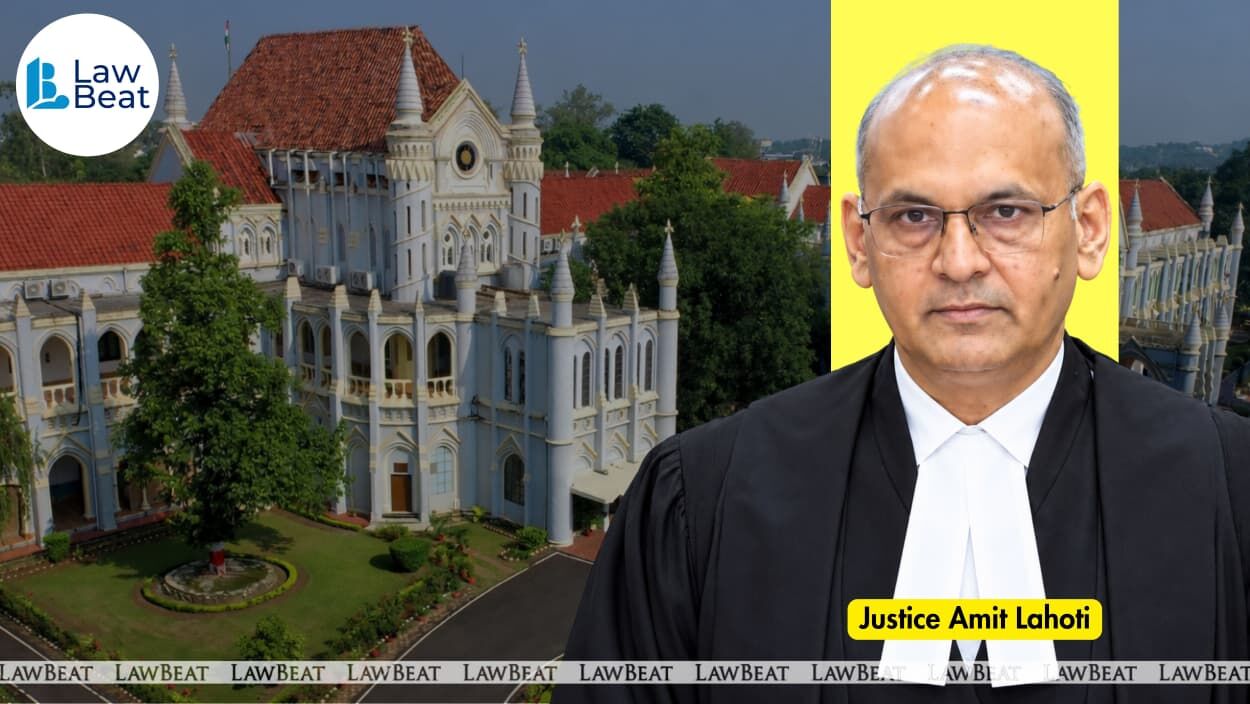
MP High Court: Article 22(1) Bail Requires Demonstrated Prejudice
Summary
- The Madhya Pradesh High Court ruled that the non-supply of written grounds of arrest, while violating Article 22(1), does not automatically entitle an accused to bail.
- Justice Amit Lahoti denied bail to murder accused Raju Sonker, emphasizing that actual prejudice must be demonstrated for bail to be granted on such grounds.
- The court applied a "prejudice test," referencing the Supreme Court's ruling in State of Karnataka v. Sri Darshan, to assess the impact of the procedural lapse.
- Despite acknowledging the Article 22(1) violation, the court found no demonstrable prejudice as Sonker had legal representation and had not raised the objection earlier.
- Raju Sonker has been in custody since January 22, 2026, facing charges under the Bharatiya Nyaya Sanhita, 2023, related to a fatal stabbing incident on January 20, 2026.
Key Ruling on Bail and Procedural Lapses
This judgment sets a precedent requiring proof of harm to the accused's defense rather than merely pointing to a procedural irregularity.
The Madhya Pradesh High Court has recently clarified a critical aspect of bail jurisprudence, ruling that while the failure to provide written grounds of arrest constitutes a violation of Article 22(1) of the Constitution, this procedural lapse alone does not automatically entitle an accused person to bail. In a significant decision, Justice Amit Lahoti dismissed the first bail application of an individual accused of murder, emphasizing that for bail to be granted on such grounds, the applicant must demonstrate actual prejudice resulting from the non-furnishing of these written grounds. This judgment sets a precedent requiring proof of harm to the accused's defense rather than merely pointing to a procedural irregularity.
The court's pronouncement underscores that personal liberty, while a fundamental constitutional value, is not absolute. It suggests that the right to liberty must sometimes yield when weighed against other considerations, particularly in serious criminal matters. This ruling establishes a higher bar for defense lawyers seeking bail based on Article 22(1) violations, necessitating a clear showing of how the absence of written grounds specifically hampered the accused's ability to prepare their defense or understand the charges against them.
Details of the Murder Case
The bail application before Justice Lahoti concerned Raju Sonker, who has been in custody since January 22, 2026. Sonker faces serious charges under various sections of the Bharatiya Nyaya Sanhita, 2023, including Sections 296(b), 109(1), 103(1), and 3(5), which correspond to Sections 294, 307, 302, and 34 of the Indian Penal Code, alongside Section 25 of the Arms Act. The prosecution detailed an incident occurring on January 20, 2026, where Sonker and a co-accused allegedly confronted the deceased outside his residence following a prior dispute.
According to the prosecution's account, after a verbal altercation, the applicant reportedly restrained the deceased from behind, enabling the co-accused to stab the victim in the right armpit with a knife. When a complainant intervened, the co-accused also allegedly attacked them, causing injuries to the fingers of their left hand. The deceased was initially transported to Civil Hospital, Ranjhi, before being moved to Hyderabad Omega Hospital in Jabalpur, where he was subsequently pronounced dead.
Contrasting Legal Arguments and Precedents
Senior Advocate Mrigendra Singh, representing Raju Sonker alongside Advocates Akbar Hussain Usmani and Guncha Rasool, argued several points in favor of bail. They contended that the fatal knife injury was solely attributed to the co-accused, that eyewitness testimony had already been recorded, and that there was no remaining risk of witness tampering. Crucially, the defense asserted that the written grounds of arrest were never communicated to Sonker, neither at the time of his apprehension nor prior to his production for remand, thereby violating his rights under Article 22(1) of the Constitution. To support this, they cited Supreme Court decisions such as Prabir Purkaystha v. NCT of Delhi, Vihaan Kumar v. State of Haryana, and Mihir Rajesh Shah v. State of Maharashtra, with the latter case specifically holding that withholding grounds of arrest infringes upon fundamental rights, including the right to life and personal liberty under Article 21.
Conversely, Government Advocate Naveen Thakur, representing the State, countered these arguments. He highlighted Sonker's alleged active involvement in the crime and his extensive criminal history, which included 25 prior cases. Thakur maintained that the grounds for arrest were orally conveyed to Sonker, his wife was informed, and the investigating officer had presented these grounds to the remand Magistrate without any objection from the applicant at any stage, including before the trial court. The State's counsel relied on the Supreme Court's more recent ruling in State of Karnataka v. Sri Darshan, which mandates that any lapse in providing written grounds must be assessed for actual prejudice, and State of Meghalaya v. Sonal Raghuvanshi, which differentiated between the non-service of grounds and the failure to provide adequate reasons. Advocates Hiimanshu Tiwari and Ankit Dubey also appeared for the complainant.
The Court's Application of the Prejudice Test
Upon reviewing the case records, Justice Lahoti acknowledged the defense's contention that Raju Sonker had not been provided with written grounds of arrest. The court concurred that this indeed constituted a violation of Article 22(1), aligning with the principles established in Mihir Rajesh Shah v. State of Maharashtra. However, the Madhya Pradesh High Court then proceeded to apply the "prejudice test," a standard derived from the Supreme Court's decision in State of Karnataka v. Sri Darshan. This test requires an assessment of whether the procedural irregularity caused actual harm or disadvantage to the accused.
In Sonker's case, Justice Lahoti found no demonstrable prejudice. The court noted that Sonker had secured legal representation from the very beginning of the proceedings and had promptly filed for bail shortly after his arrest. Furthermore, the objection regarding the non-provision of written grounds was not raised at any earlier stage of the legal process. These factors led the court to conclude that despite the technical violation of Article 22(1), the applicant had not suffered any actual detriment to his defense or legal rights, thereby justifying the denial of his bail application.
Practical Implications
Defense lawyers must now demonstrate actual prejudice when arguing for bail based on the non-provision of written grounds of arrest under Article 22(1), as the MP High Court has clarified that procedural lapses alone are insufficient without proof of harm to the accused's defense.
Source
How does this affect you?
Get an AI analysis of this article grounded in your jurisdictions, practice areas, and any policy documents you've uploaded to Wansom.
Finish Reading the Full Story and the Expert Analysis.
Get the latest legal & regulatory intelligence in India
Wansom is AI and can make mistakes.