
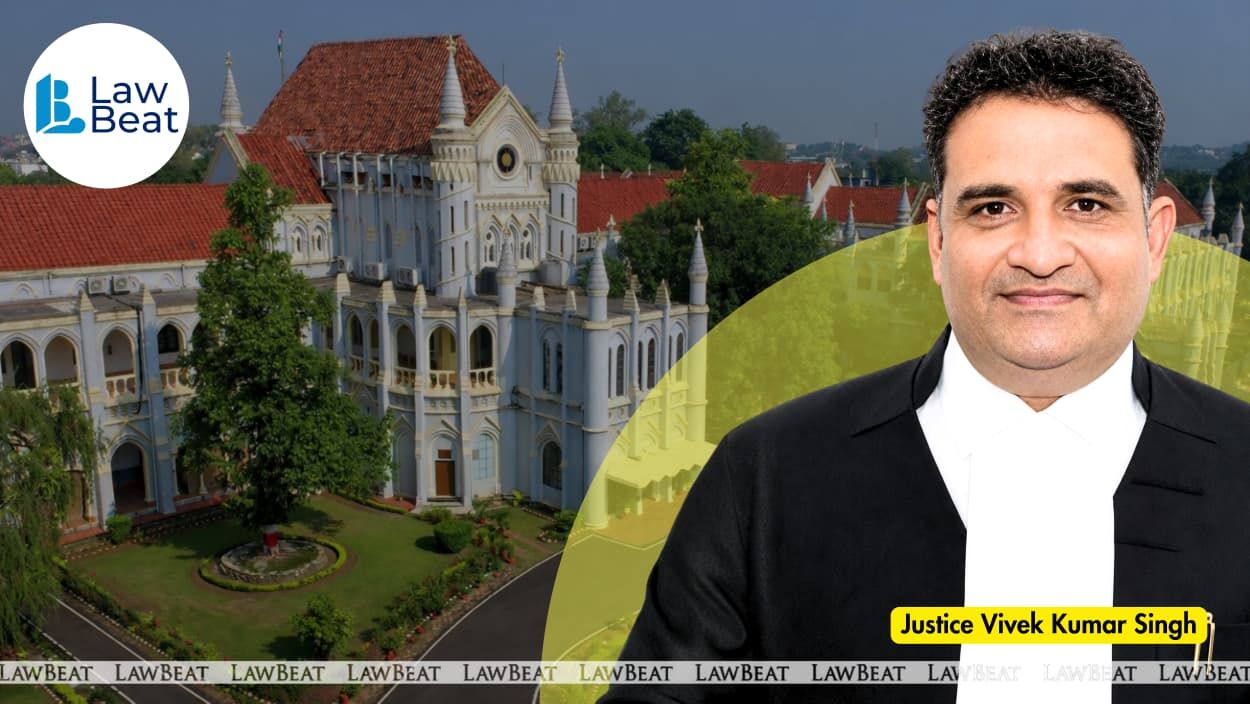
MP High Court: Overturns Major CISF Accidental Firing Penalty
Summary
- The Madhya Pradesh High Court set aside a major penalty against a CISF constable for an accidental rifle discharge that caused no harm.
- The court found the punishment disproportionate to a bona fide human error, directing for a minor penalty instead.
- The constable's pay was reduced by two stages for two years with cumulative effect, a sanction classified as a major penalty under CISF Rules 2001, Rule 34.
- The High Court emphasized that disciplinary action should be corrective and redressive, not vindictive, when no actual harm occurs.
- The ruling reinforces the doctrine of proportionality and the scope for judicial review of departmental findings that lack evidentiary support.
The Court's Landmark Ruling
The court underscored that disciplinary measures, especially when no actual harm has occurred, should serve a corrective and redressive purpose rather than being vindictive.
The Madhya Pradesh High Court has delivered a significant ruling, overturning a major penalty imposed on a Central Industrial Security Force (CISF) constable for an accidental firearm discharge that resulted in no injury or damage. Justice Vivek Kumar Singh, presiding over the case, deemed the punishment shockingly disproportionate to what was, by the department's own admission, a genuine human error. The court's decision underscores a crucial principle in service law: disciplinary actions must be proportionate to the offense, especially when no actual harm has occurred.
This judgment directly addresses the `MP High Court CISF accidental firing penalty`, setting aside the severe disciplinary measure and remitting the matter for a minor punishment. The constable, N. P. Dwivedi, who was posted at the BHEL Unit in Bhopal, had faced a reduction in pay by two stages for two years with cumulative effect, a sanction classified as a major penalty under the relevant service rules. The court's intervention highlights the judiciary's role in ensuring fairness and preventing arbitrary or excessive departmental actions against personnel.
Incident and Disciplinary Process
The incident at the heart of the dispute occurred on the night of November 15/16, 2010. While Constable Dwivedi was reporting for his night shift and inspecting his issued INSAS rifle in the Kote verandah, a single round was accidentally discharged, striking the ceiling. Crucially, it was undisputed that no one was hurt, and no property was damaged as a result of the accidental firing.
Initially, the department treated the event as an accident, recovering a token sum of Rs. 18 as the penal cost for the cartridge, which the constable promptly paid. However, a subsequent departmental enquiry concluded that Dwivedi had “deliberately inserted a loaded magazine and operated the trigger,” thereby finding him guilty of gross negligence. Based on this conclusion, the Disciplinary Authority imposed the aforementioned major penalty, which was then upheld through both the appeal and revisional stages. This penalty, a reduction in pay with cumulative effect, squarely falls within the definition of a major penalty as outlined in Rule 34 of the CISF Rules, 2001.
Arguments and Judicial Scrutiny
Before the High Court, counsel for the petitioner, Shri Utkarsh Agrawal and Shri Pradeep Kumar Dwivedi, argued that the finding of deliberate misconduct was unfounded. They highlighted that all ten prosecution witnesses, including co-duty personnel, had corroborated that the firing was accidental. Furthermore, they presented mitigating circumstances, including the constable being made to work 12 to 14-hour shifts in violation of a CISF circular against continuous 12-hour duty, and facing acute personal stress due to his father's cancer treatment, his daughter's 40% disability, and an impending housing loan deadline.
Conversely, Shri Shrikrishna Sharma, representing the respondents, defended the enquiry's procedural fairness and asserted that an unwarranted weapon discharge constituted a grave lapse for a paramilitary force. He also contended that the authorities had already shown leniency by not opting for dismissal or removal. However, the High Court found the Enquiry Officer's conclusion legally unsustainable, noting an absolute lack of evidence to support any subjective finding of deliberate defiance or willful sabotage. The court characterized the treatment of an admitted accident as deliberate gross negligence as “legally perverse,” concluding that penalizing the constable first for an accident and then imposing a major, career-altering penalty for the same incident reflected a “vindictive and disproportionate approach.”
Precedential Impact and Proportionality
Invoking the `Madhya Pradesh High Court proportionality doctrine`, the court firmly stated that “the sledgehammer of a major penalty should not be used to crack the nut of a bona fide human error.” This principle is central to the ruling, emphasizing that when an `accidental weapon discharge no harm punishment` is considered, disciplinary action should be corrective and redressive, rather than vindictive. The judgment provides crucial guidance for `CISF constable disciplinary action India`, particularly in cases where minor errors do not lead to actual damage or injury.
The court reinforced its stance by relying on established legal precedents, including a coordinate bench's ruling in *Ravi Saxena v. State of M.P.* and Supreme Court judgments such as *B.C. Chaturvedi v. Union of India*. These precedents affirm that findings which no reasonable authority could have reached based on the record are subject to `service law disproportionate penalty judicial review`, even within the context of disciplined forces. This ruling serves as a vital reminder that departmental inquiries must be grounded in evidence and that penalties must be proportionate to the gravity of the misconduct, offering a significant precedent for personnel facing similar disciplinary challenges.
Practical Implications
This ruling provides a significant precedent for lawyers advising government or paramilitary personnel facing disciplinary action, particularly where minor errors cause no actual harm. It reinforces the doctrine of proportionality, allowing for judicial review of departmental enquiries that impose disproportionate penalties, and can be cited to argue for corrective rather than vindictive punishment.
Source
Source: Original reporting via Live Law
How does this affect you?
Get an AI analysis of this article grounded in your jurisdictions, practice areas, and any policy documents you've uploaded to Wansom.
Finish Reading the Full Story and the Expert Analysis.
Wansom is AI and can make mistakes.