
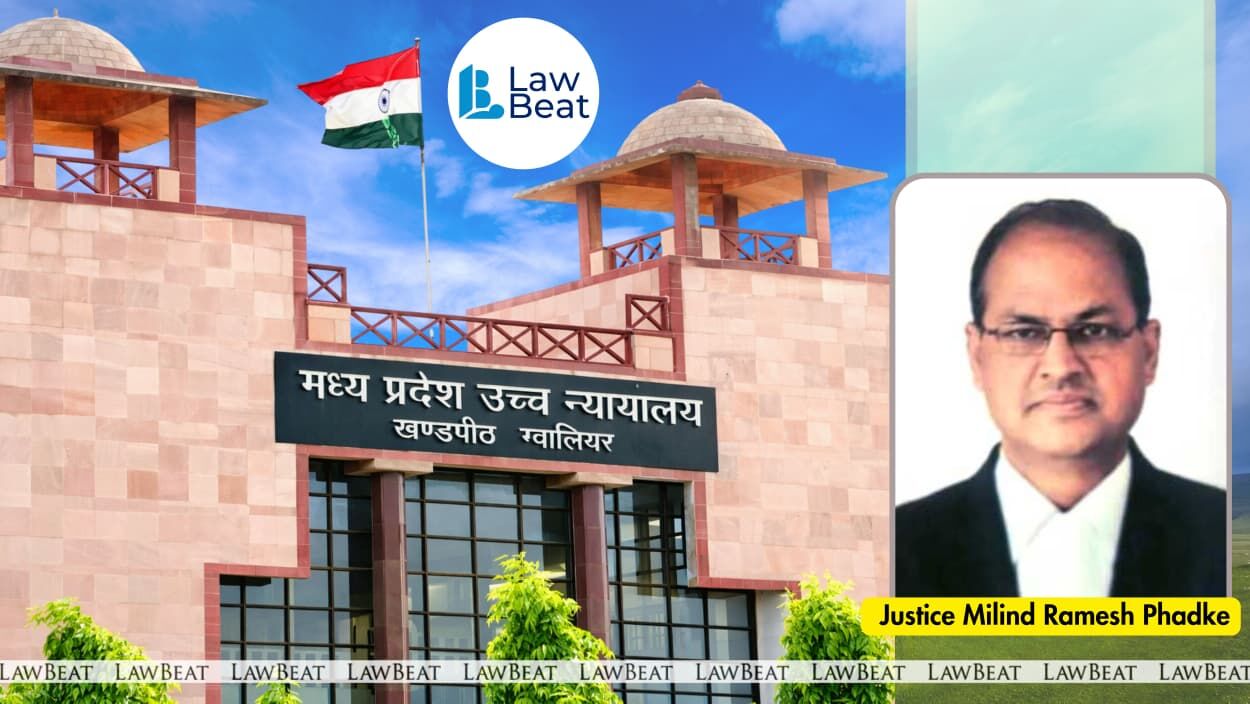
MP High Court: Denies Journalist's Extortion FIR Quash Bid
Summary
- The Madhya Pradesh High Court refused to quash an extortion FIR against journalist Shashikant Jatav.
- Jatav was accused of threatening a Sarpanch to publish false news unless paid Rs 50,000, under sections of the Bharatiya Nyaya Sanhita.
- The journalist claimed the FIR was retaliation for his prior exposé of a Rs 25 lakh scam in the Sarpanch's panchayat.
- The court found the FIR contained "specific imputations" of extortion and threats, despite claims of malice and police targeting.
- The High Court ruled that contested factual questions, including claims of police retaliation, must be resolved at trial, not through a pre-trial quashing petition.
The Allegations and Defense
The court ultimately determined that the FIR contained 'specific imputations regarding extortion and threats made to a local public functionary,' and that such contested factual questions were best resolved through a full trial.
A journalist's bid to quash an extortion First Information Report (FIR) against him at the preliminary stage has been denied by the Madhya Pradesh High Court, Gwalior Bench. The court ruled that claims of police retaliation for investigative reporting must undergo scrutiny during a full trial, rather than serving as a basis to prematurely halt prosecution. The case involves Shashikant Jatav, also known as Shashikant Goyal or Shashi Kapoor, a journalist affiliated with the Bejod Ratna newspaper, who sought the quashing of FIR No. 53 of 2025. This FIR, registered at Police Station Endori in District Bhind, levies serious charges under the Bharatiya Nyaya Sanhita (BNS), specifically Sections 308(2), 308(4), 308(6), 308(7), 296, 351(2), and 3(5), which correspond to Sections 384, 387, 389, 388, 294, 506, and 34 of the Indian Penal Code (IPC).
The complaint was lodged by Kaptan Singh Kushwaha, the Sarpanch of Sherpur Gram Panchayat. Kushwaha alleged that approximately eight to nine months prior to filing the complaint, Jatav and another journalist, Pritam Singh, had approached him. They purportedly threatened to disseminate false information and file complaints concerning his work within the panchayat unless he remitted a payment of Rs 50,000.
Representing the petitioner, advocate Rahul Bansal contended that the FIR was a direct act of reprisal. Bansal highlighted that his client had previously exposed a Rs 25 lakh scam within the Sherpur Gram Panchayat through two articles published in Bejod Ratna on May 28 and June 5, 2024. This exposé had significant repercussions, leading to the suspension of officials and the attachment of panchayat property. The defense argued that the complaint against Jatav only surfaced after these revelations, and with an unexplained delay of eight to nine months, strongly indicating malicious intent.
Legal Arguments and Context
Further bolstering the journalist's defense, advocate Bansal pointed out that the FIR was registered without a preliminary inquiry, notably just one day after the petitioner had secured a protection order from the Supreme Court. The defense also alleged a pattern of targeting journalists critical of the local administration by Dr. Asit Yadav, who was the Superintendent of Police, Bhind, and is now the Deputy Inspector General (DIG) for the Gwalior Range. As an example, it was claimed that Jatav and fellow journalist Amarkant Singh Chouhan were summoned, physically assaulted, and coerced into recording a video statement asserting that a prior dispute had been "resolved."
In his arguments for the quashing of the FIR, the petitioner invoked the Supreme Court's established guidelines from the case of *State of Haryana & Ors. vs. Bhajan Lal & Ors.* He asserted that the allegations contained within the complaint were "so absurd and inherently improbable that no prudent person could reach a just conclusion that there are sufficient grounds for proceeding." This legal precedent is often cited in petitions seeking to quash FIRs on the grounds that the accusations are baseless or lack credibility.
Conversely, the state's legal representatives, government advocate B.K. Tyagi and advocate Vijay Kumar Jha (appearing for Dr. Asit Yadav), presented a different narrative. They characterized the petitioner not as a victim, but as an "opportunist" who had exploited his journalistic position to extort money. They dismissed the petition as "false and frivolous," designed merely to shield Jatav from legitimate prosecution. To underscore their claims, they referenced a Special Information notice issued by the Inspector General of Police, Chambal Zone. This notice had warned the public about an alleged organized group of YouTubers and WhatsApp news channels purportedly extorting money from various public functionaries, including Sarpanches, teachers, and Anganwadi workers, under the threat of adverse media coverage. Such extortion charges, particularly under the Bharatiya Nyaya Sanhita, can carry severe penalties, including punishment up to life imprisonment.
Court's Rationale and Implications
After a thorough review of the case records, Justice Rajesh Kumar Gupta, presiding over the matter, concluded that the FIR contained "specific imputations regarding extortion and threats made to a local public functionary." While acknowledging that the petitioner's assertion of retaliatory action could not be entirely disregarded, the court also emphasized that the material presented by the State, which suggested a broader pattern of alleged extortion by local media personalities, could not be overlooked.
The court ultimately determined that such contested factual questions were best left to be resolved during a full trial, rather than being decided at the threshold of a quashing petition. This ruling underscores a critical principle in Indian criminal jurisprudence: the high bar for quashing an FIR, especially when the complaint discloses specific, actionable allegations and factual disputes exist. The decision implies that mere claims of *mala fide* intent or a history of investigative journalism, while relevant, are insufficient on their own to warrant the quashing of an FIR if the complaint itself outlines a prima facie case.
For legal practitioners advising clients accused of extortion, particularly journalists who claim police retaliation, this judgment from the Madhya Pradesh High Court serves as an important precedent. It highlights that even in cases where there is a strong narrative of prior investigative work or alleged official malice, the courts will prioritize the resolution of specific factual disputes through the trial process. This approach ensures that the merits of an accusation are fully examined, rather than being dismissed based on preliminary arguments, thereby setting a clear standard for FIR quashing grounds in India.
Practical Implications
Lawyers advising clients accused of extortion, particularly journalists claiming retaliation, should note that the Madhya Pradesh High Court has set a high bar for quashing FIRs at the threshold. Claims of *mala fide* intent or prior investigative work are insufficient if the complaint discloses specific imputations and factual disputes exist, indicating that such matters are best resolved at trial rather than through pre-trial quashing petitions.
Source
Source: Original reporting via Live Law
How does this affect you?
Get an AI analysis of this article grounded in your jurisdictions, practice areas, and any policy documents you've uploaded to Wansom.
Wansom is AI and can make mistakes.