
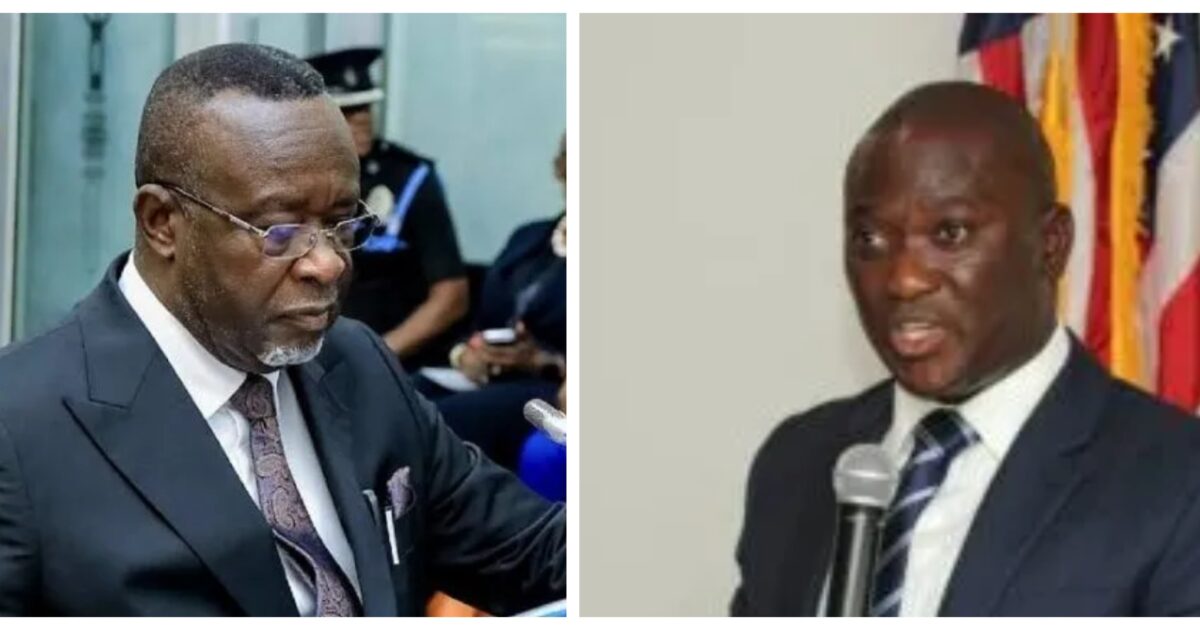
Ghana Chief Justice Baffoe-Bonnie: NPP Demands Resignation Call Over Political Comments
Summary
- Ghana's Chief Justice, Paul Baffoe-Bonnie, is facing calls for his resignation after making remarks praising the current administration's performance.
- Gushegu MP Alhassan Tampuli accused the Chief Justice of engaging in partisan politics, stating he should resign if he intends to pursue a political career.
- The New Patriotic Party (NPP) formally demanded a retraction of the Chief Justice's comments or his resignation, describing them as 'partisan political'.
- The NPP also alleged judicial bias against opposition figures, citing expedited warrants for NPP members and questioning the Chief Justice's commitment to the President's agenda.
- The controversy has sparked significant debate over judicial impartiality and independence within Ghana's legal system.
Calls for Resignation Amidst Political Comments Controversy
This unfolding situation places significant scrutiny on judicial independence Ghana and the perceived fairness of its legal proceedings.
Ghana's Chief Justice, Paul Baffoe-Bonnie, is facing significant pressure to resign following accusations of engaging in partisan politics. Gushegu Member of Parliament, Alhassan Tampuli, publicly called for the Chief Justice to step down from his judicial post if he intends to pursue an active political career, asserting that Justice Baffoe-Bonnie has 'worn a political jersey' and descended into the political arena.
The controversy stems from remarks made by Chief Justice Baffoe-Bonnie on September 2, 2026, during official visits to various state institutions. During these visits, he reportedly lauded the performance of the Minerals Income Investment Fund (MIIF) and other public bodies operating under the current administration. Specifically, Justice Baffoe-Bonnie was quoted as saying, "Sometimes, when we hear about the things that you have done and the things that some organisations are doing now, we wonder. Some of us keep wondering what we really have been doing in the past eight years." This statement, according to MP Tampuli, appeared to draw a comparison between the performance of state institutions under the current National Democratic Congress (NDC) government and the preceding New Patriotic Party (NPP) administration, prompting questions about the Chief Justice's impartiality.
MP Tampuli expressed deep concern over these comments, particularly given that political disputes frequently escalate to the Judiciary for resolution. He argued that a Chief Justice who has already taken a public stance on political matters compromises the perceived neutrality of the judicial system. The New Patriotic Party (NPP) subsequently issued a formal demand on Thursday, September 3, 2026, through its General Secretary Justin Kodua Frimpong, insisting that the Chief Justice either retract his 'partisan political comments' or resign and formally align with the NDC. The NPP stated it viewed the video of the Chief Justice's remarks with "profound shock and disgust," characterizing his language as that of a "party propagandist" rather than the head of Ghana's Judiciary.
Allegations of Bias and Judicial Impartiality Concerns
The NPP's strong reaction to the Ghana Chief Justice Baffoe-Bonnie resignation call extends beyond the initial remarks, encompassing broader allegations of bias within the judiciary. The party questioned the Chief Justice's reported commitment to ensuring the success of President John Dramani Mahama's agenda, especially at a time when individuals associated with the NPP are facing prosecution under the government's 'Operation Recover All Loot' (ORAL) initiative. The NPP emphasized that a Chief Justice's oath is solely to the Constitution, not to any President, political party, or specific agenda.
Further criticisms from the NPP include allegations that the Judiciary, under the current Chief Justice, has demonstrated a clear bias against opposition figures. The party cited what it described as the "extraordinary alacrity" with which vacation warrants have been issued in cases involving NPP members, specifically mentioning the incarceration of Bernard Antwi Boasiako, widely known as Chairman Wontumi, who was formerly the Ashanti Regional Chairman. These instances, according to the NPP, highlight significant Chief Justice Paul Baffoe-Bonnie impartiality concerns.
The NPP also raised concerns regarding the state of court infrastructure and the working conditions within the Judiciary, pointing out issues like 'leaking roofs' in court buildings. They accused the Chief Justice of failing to implement meaningful reforms to address persistent delays in the justice system, suggesting that his visible activities have instead focused on targeting opposition voices rather than improving judicial efficiency. These accusations contribute to the ongoing Ghana judiciary political comments controversy, casting a shadow over the institution's perceived neutrality.
Impact on Ghana's Judicial Independence
This unfolding situation places significant scrutiny on judicial independence Ghana and the perceived fairness of its legal proceedings. The core argument from critics, including MP Alhassan Tampuli, is that a judiciary head expressing political preferences undermines public trust and the institution's ability to adjudicate impartially, particularly in politically sensitive cases. The NPP demands Chief Justice Baffoe-Bonnie resignation or retraction underscores the high stakes involved when the head of the judiciary is seen to be aligning with a political faction.
The controversy highlights the delicate balance required to maintain public confidence in the judiciary, especially in a democratic system where political disputes are an inevitable part of governance. When the head of the judicial branch makes comments that appear to favor one political administration over another, it raises fundamental questions about the judiciary's role as an independent arbiter. The implications extend to the perceived fairness of all legal proceedings, potentially influencing how citizens and international observers view the rule of law in Ghana. This development serves as a critical reminder of the constant need for judicial leaders to uphold strict neutrality to safeguard the integrity and independence of the legal system.
Practical Implications
This development highlights significant scrutiny on judicial impartiality and independence within Ghana's legal system. Lawyers and compliance officers should monitor this situation for its potential impact on the perceived fairness of legal proceedings, particularly in politically sensitive cases, and consider its implications when advising clients on litigation strategy or political risk.
Source
How does this affect you?
Get an AI analysis of this article grounded in your jurisdictions, practice areas, and any policy documents you've uploaded to Wansom.
Finish Reading the Full Story and the Expert Analysis.
Wansom is AI and can make mistakes.