
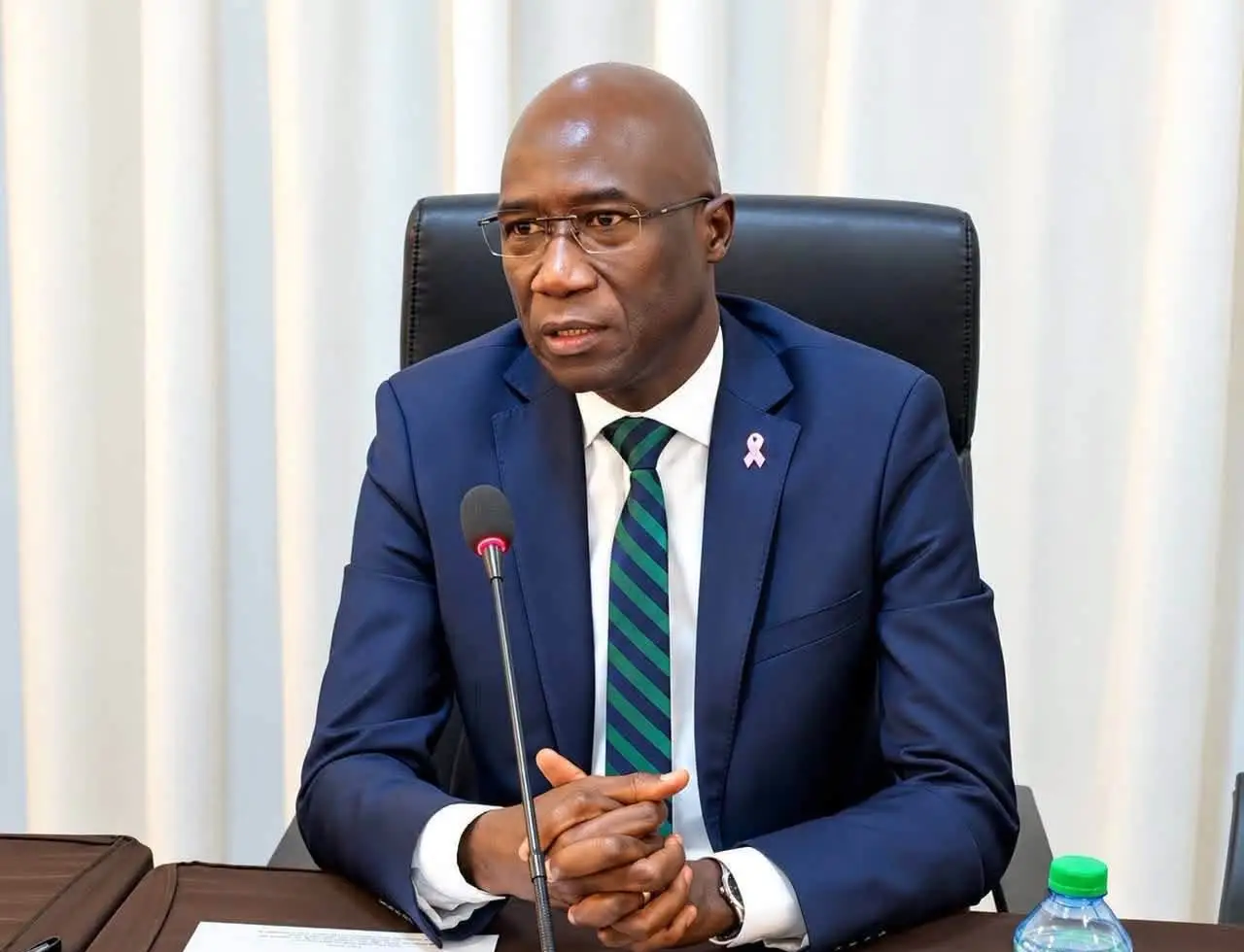
Sénégal: Moussa Sarr Confirms State Soutien FSF Ahead Of TAS Hearing
Summary
- Senegal's Minister of Justice, Me Moussa Sarr, announced state support for the Fédération sénégalaise de Football (FSF) ahead of its TAS hearing on October 8, 2026.
- This support comes from President Bassirou Diomaye Diakhar Faye, the Prime Minister, the Government, and Minister Sarr personally.
- The FSF is challenging a CAF decision that declared Senegal lost the CAN 2025 final by forfeit (3-0) against the Royal Moroccan Football Federation.
- Minister Sarr praised the rigorous preparation of the FSF's lawyers and affirmed that sports arbitration respects international rules.
- He also stated that fraternal ties between Senegal and Morocco would be preserved regardless of the outcome.
Government Backing for FSF's TAS Challenge
This collective expression of solidarity highlights the nation's commitment to its sporting entities in high-stakes international disputes.
As the Fédération sénégalaise de Football (FSF) prepares for crucial pleadings before the Tribunal arbitral du Sport (TAS) on Thursday, October 8, 2026, the Senegalese government has publicly affirmed its robust support for the national football body. This significant backing was conveyed by Minister of Justice Me Moussa Sarr to FSF President Abdoulaye Fall, underscoring a unified national stance ahead of the international arbitration. The support for the FSF is not merely personal but emanates from the highest levels of state authority, including President Bassirou Diomaye Diakhar Faye, the Prime Minister, and the entire Government, in addition to Minister Sarr’s personal endorsement. This collective expression of solidarity highlights the nation's commitment to its sporting entities in high-stakes international disputes.
The intervention by Minister Moussa Sarr signals a strong governmental interest in the outcome of the FSF’s appeal before the TAS Sénégal. This direct engagement from the Ministry of Justice, particularly from Me Moussa Sarr, emphasizes the strategic importance the state places on defending its national interests within the framework of international sports law. Such high-level endorsement can provide significant moral and logistical leverage to the FSF as it navigates the complexities of the international arbitration process. The upcoming hearing represents a critical juncture for Senegalese football, and the state's vocal support aims to bolster the FSF's position.
This development, where Ministre Justice Moussa Sarr FSF publicly announces state support, sets a precedent for how national governments might engage with their federations in international legal battles. It demonstrates a proactive approach to ensuring national bodies are well-resourced and confident when facing international tribunals. The announcement comes just a day before the scheduled hearing, providing a timely boost to the FSF’s legal team and its leadership.
The Core of the Dispute
At the heart of the matter lies a contentious football litige between the FSF and the Fédération royale marocaine de Football. The Senegalese federation initiated proceedings at the Tribunal arbitral du Sport Sénégal to challenge a specific ruling by the Confédération africaine de football (CAF). This ruling, a CAF CAN 2025 forfait décision, declared Senegal to have lost the final of the CAN 2025 tournament by forfeit, with a final score of 3-0. The FSF’s appeal seeks to overturn this decision, which has significant implications for the national team’s standing and future participation in continental competitions.
The decision by CAF to declare a forfeit against Senegal has been a point of contention, prompting the FSF to seek redress through the established channels of international sports arbitration. The Tribunal arbitral du Sport, often referred to as the TAS, serves as the ultimate judicial body for resolving such disputes in the world of sports. The FSF’s decision to appeal underscores its belief in the merits of its case and its determination to challenge what it perceives as an unjust ruling. This Sénégal Maroc football litige is therefore not just a sporting rivalry but has escalated into a formal legal challenge on the international stage.
Strategic Legal Posture and Diplomatic Assurance
In his official communication, Minister Me Moussa Sarr not only conveyed the state’s unwavering support but also commended the FSF’s strategic approach and the meticulous preparation demonstrated by its legal counsel, as reported by dakar92. This acknowledgement of rigorous legal work highlights the importance of thoroughness in international arbitration. The Minister further affirmed that the FSF's recourse to arbitrage sportif international État adheres fully to established international rules and norms governing such proceedings, reinforcing the legitimacy of Senegal's actions on the global stage.
Looking ahead to the hearing, Minister Sarr expressed Senegal’s intention to approach the proceedings with utmost serenity, projecting confidence in its legal arguments. He also articulated the nation’s hope that the arbitrators presiding over the case would favorably consider the requests put forth by the FSF. Crucially, Me Moussa Sarr emphasized that, irrespective of the Tribunal arbitral du Sport Sénégal’s final verdict, the deep-rooted fraternal ties between Senegal and the Kingdom of Morocco would be diligently preserved. This diplomatic assurance underscores the broader context of regional relations, ensuring that a sporting dispute does not undermine bilateral harmony. The Ministre Justice Moussa Sarr FSF’s comprehensive statement thus covers both the legal strategy and the diplomatic considerations surrounding this high-profile case.
Practical Implications
This development signals the Senegalese government's strong commitment to supporting its national entities in international arbitration, particularly in high-stakes sports disputes. Lawyers advising national federations or other state-linked bodies involved in international dispute resolution should note this precedent for direct state backing and the emphasis on rigorous legal preparation, which can influence strategy and resource allocation in similar cases.
Source
How does this affect you?
Get an AI analysis of this article grounded in your jurisdictions, practice areas, and any policy documents you've uploaded to Wansom.
Finish Reading the Full Story and the Expert Analysis.
Get the latest legal & regulatory intelligence in Senegal
Wansom is AI and can make mistakes.