
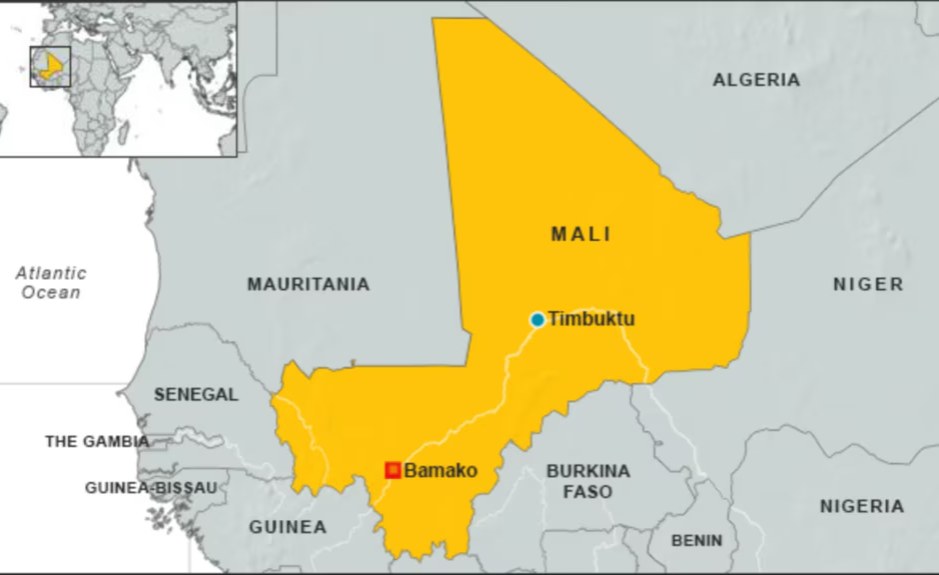
Mali: Mountaga Tall Enforced Disappearance Marks Six Months amid Junta Crackdown
Summary
- Mountaga Tall, a critic of Mali's junta, and his son, Cheick Mamadou Tall, have been missing for six months after separate abductions in May.
- Malian authorities have not acknowledged their detention or provided any information, despite international media reports suggesting intelligence services involvement.
- The disappearances are part of a broader political crackdown by Mali's military junta, which has targeted opposition, media, and civil society since 2021.
- The UN Committee on Enforced Disappearances has urged Mali to locate and protect Tall and his son, highlighting severe human rights concerns.
- Enforced disappearance, defined by international law, places victims at high risk and inflicts profound suffering on families.
The Disappearance of Mountaga Tall
The practice of enforced disappearance inflicts profound and lasting suffering not only on the direct victims but also on their families.
Six months have passed since prominent Malian political figure Mountaga Tall and his son, Cheick Mamadou Tall, were forcibly disappeared, with their whereabouts and condition remaining unknown. Mountaga Tall, a former government minister between 2014 and 2017, had become an outspoken critic of Mali's military junta after initially aligning with them, particularly opposing their decision to dissolve political parties. His disappearance, a clear instance of enforced disappearance in Mali, has raised significant concerns about human rights in the country.
Tall was first abducted on May 2 in Bamako, the nation's capital, by unidentified gunmen. Two weeks later, on May 16, his son, Cheick Mamadou Tall, also vanished after receiving a phone call instructing him to deliver personal belongings to his father, who was reportedly held at an undisclosed location. Despite international media reports suggesting that Malian intelligence services might be holding Tall in a secret facility, Malian authorities have consistently refused to acknowledge their detention. They have provided no information regarding the location, legal status, or health of either Mountaga Tall or his son, even after repeated inquiries from their family and legal representatives.
Escalating Political Crackdown
The disappearances of Mountaga Tall and his son are not isolated incidents but rather indicative of a broader and intensifying political crackdown orchestrated by Mali's military junta, which seized power in 2021. Since then, the military-led government has systematically suppressed dissent, targeting political opposition, independent media, and civil society organizations. This campaign has included the suspension and banning of various media outlets, the dissolution of civil society groups, and the termination of multiparty politics, effectively stifling democratic expression.
Critics of the regime have been subjected to arbitrary detention and enforced disappearance, creating a climate of fear. Following Tall's abduction, numerous other political figures and their relatives have reportedly been taken by masked gunmen. This specific modus operandi is widely associated with Malian intelligence services, and many of these individuals also remain missing, underscoring a pattern of state-sponsored abductions designed to silence opposition and consolidate power.
International Legal Framework and Response
Under the principles of international human rights law, an enforced disappearance is defined as a situation where state authorities or their agents detain an individual and subsequently refuse to acknowledge the detention or disclose the person's fate or whereabouts. This act effectively places the individual outside the protection of the law, rendering them extremely vulnerable. Victims of enforced disappearance face a significantly heightened risk of torture, extrajudicial execution, and other grave abuses.
The international community has taken note of the situation, with the United Nations Committee on Enforced Disappearances reportedly urging Malian authorities in July to actively locate and ensure the protection of Mountaga Tall and his son. Despite these calls and the clear legal obligations, the Malian government has maintained its silence, offering no transparency or accountability regarding the fate of the disappeared individuals.
Profound Human Rights Concerns
The practice of enforced disappearance inflicts profound and lasting suffering not only on the direct victims but also on their families. Relatives are left in an agonizing state of uncertainty, constantly grappling with the unknown status of their loved ones—whether they are alive or deceased. This lack of information also fundamentally denies families the opportunity to seek justice or even mourn properly, creating deep psychological distress and a pervasive sense of injustice.
The ongoing situation surrounding Mountaga Tall and his son, Cheick Mamadou Tall, highlights severe Mali human rights violations and a critical erosion of the rule of law under the current junta. It underscores the urgent need for Malian authorities to immediately disclose the whereabouts of both individuals, guarantee their safety, and facilitate their prompt release, in line with their international human rights obligations.
Practical Implications
Lawyers advising clients in Mali, particularly those involved in political discourse or human rights advocacy, must be acutely aware of the heightened risk of arbitrary detention and enforced disappearance by state actors. This case exemplifies the severe lack of due process and legal recourse, necessitating advice on extreme caution, risk mitigation strategies, and potential international legal avenues for redress, given the Malian authorities' non-compliance with international human rights law.
Source
How does this affect you?
Get an AI analysis of this article grounded in your jurisdictions, practice areas, and any policy documents you've uploaded to Wansom.
Finish Reading the Full Story and the Expert Analysis.
Wansom is AI and can make mistakes.