
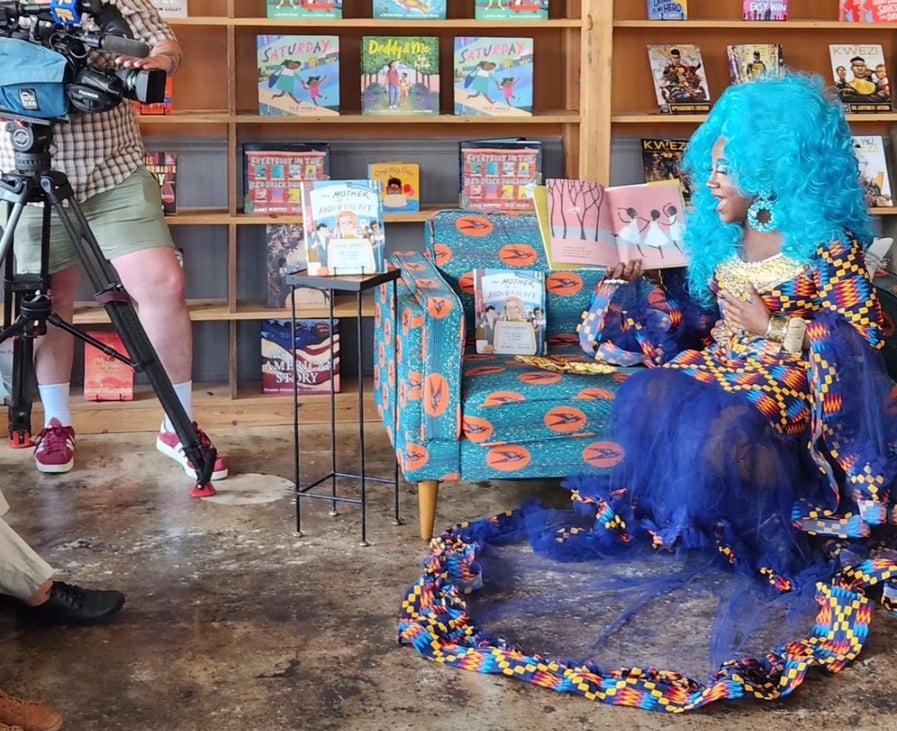
Montana: Federal Judge Declares Drag Story Hours Ban Unconstitutional
Summary
- A federal judge ruled Montana's H.B. 359, which criminalizes drag story hours in state-funded schools and libraries, unconstitutional.
- The law also banned minors from "sexually oriented shows" and imposed severe penalties on performers and venues.
- Judge Brian Morris rejected the state's request to narrow the law's definition of "sexually oriented performances" to obscenity, citing legislative intent.
- The Ninth Circuit previously upheld a preliminary injunction against the law, finding its restrictions were content-based limits on expressive activity.
- Montana Attorney General Austin Knudsen's office has announced its intention to appeal the ruling.
What Happened
The impending appeal means that while the current ruling provides clarity, the ultimate legal landscape regarding Montana's drag story hours ban remains subject to further judicial review.
A federal judge recently declared a Montana statute, H.B. 359, unconstitutional, specifically targeting its provisions that criminalize drag story hours in state-funded schools and libraries. Chief U.S. District Judge Brian Morris, an appointee of former President Barack Obama, issued a summary judgment in favor of a coalition comprising Montana businesses, nonprofits, and performers. These plaintiffs had argued that the 2023 law infringed upon their First Amendment rights to free speech and their Fifth Amendment due process rights.
The challenged legislation, signed by Governor Greg Gianforte, also prohibited minors from attending events classified as "sexually oriented shows." The law carried significant penalties, including fines ranging from $1,000 to $10,000 for owners, managers, and employees involved in such shows, with a third offense leading to the loss of business licenses. Educators and librarians faced permanent revocation of their teaching or administrative certificates for a second violation. Furthermore, H.B. 359 established a private right of action, allowing aggrieved parents to sue involved parties for up to a decade.
This ruling follows a preliminary injunction issued by Judge Morris in late 2023, which temporarily blocked the law's enforcement. That injunction was subsequently upheld by the Ninth Circuit in March, with the appellate court determining that the restrictions constituted content-based limitations on purely expressive activity. Following the latest decision, a spokesperson for Montana Attorney General Austin Knudsen confirmed the state's intention to appeal Judge Morris's ruling.
Legal Context
The core of Judge Morris's decision rested on the statute's broad definition of "sexually oriented performances" and the state's attempt to narrow its interpretation. The state had requested that the court sever the unconstitutional portions of H.B. 359 and reinterpret the remaining provisions to align with constitutional regulations of obscenity. However, Judge Morris rejected this approach, citing clear evidence of legislative intent that contradicted such a construction.
Morris explicitly stated that the language and legislative intent of H.B. 359 extended to performances that were not legally obscene. He emphasized that the law did not confine the definition of "sexually oriented performances" to established obscenity standards. The judge concluded that for the court to interpret the law as only applying to obscenity would necessitate adding language that was not present in the original text and had previously been rejected by the Montana Legislature, effectively rewriting the law to ensure its constitutional validity, which is impermissible.
This judicial stance reinforces the earlier finding by the Ninth Circuit, which had characterized the legislation's restrictions as content-based limitations on purely expressive activity. The state's attorney had argued before Judge Morris for a narrower construction, suggesting the court apply the act's own obscenity definition to limit the ban solely to performances that are obscene, an argument the court ultimately found unpersuasive given the legislative history.
Why It Matters
This ruling represents a significant affirmation of First Amendment protections for expressive activities, particularly in the context of public spaces like schools and libraries. The decision underscores the judiciary's role in scrutinizing legislative attempts to restrict speech, especially when those restrictions are broadly defined and do not adhere to established constitutional standards for regulating obscenity.
The Montana Attorney General's office has voiced strong disapproval of the court's decision, with spokesperson Amanda Braynack stating disappointment that the court sided with "sexual groomers" who allegedly use the First Amendment to push "radical ideologies" onto children, asserting that the law was designed to protect children from "predation and obscenity." This rhetoric suggests a continued, vigorous legal battle.
Conversely, Molly Danahy, an attorney for the plaintiffs with Upper Seven Law, celebrated the outcome, highlighting that "The First Amendment protects everyone, regardless of identity." She praised the diverse coalition of Montanans—including teachers, artists, and business owners—who united to challenge what they viewed as a "senseless law." The impending appeal means that while the current ruling provides clarity, the ultimate legal landscape regarding Montana's drag story hours ban remains subject to further judicial review.
Practical Implications
Lawyers advising clients in Montana regarding expressive activities in schools or libraries should note that H.B. 359, which sought to ban drag story hours, has been ruled unconstitutional, reinforcing First Amendment protections in this context. However, they should also monitor the anticipated appeal by the Montana Attorney General, which could alter the legal landscape.
Source
How does this affect you?
Get an AI analysis of this article grounded in your jurisdictions, practice areas, and any policy documents you've uploaded to Wansom.
Finish Reading the Full Story and the Expert Analysis.
Get the latest legal & regulatory intelligence in United States
Wansom is AI and can make mistakes.