
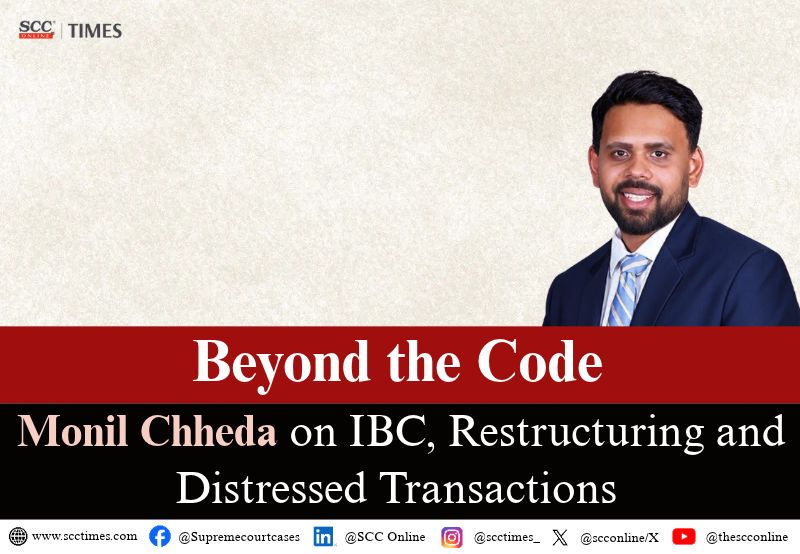
Monil Chheda: Driving IBC Restructuring Evolution in India
Summary
- Monil Anil Chheda is a Partner in the Restructuring and Insolvency practice at Cyril Amarchand Mangaldas, specializing in structured debt, distressed situations, and insolvency resolution.
- He has been involved with India's insolvency regime since its inception, closely observing and contributing to its evolution over the past decade.
- The role of an insolvency lawyer has expanded to include significant pre-insolvency advisory and commercial negotiations, often beginning before formal proceedings.
- As a partner, Chheda now holds direct ownership of matters, mentors associates, and manages commercial responsibilities like market tracking and team profitability.
- His practice focuses on preventing value destruction for financially stressed companies through proactive advisory during the 'twilight period'.
A Leading Voice in India's Restructuring Arena
A substantial portion of their current responsibilities involves providing pre-insolvency advisory services to borrowers during what is termed the 'twilight period'—a critical window when a company is experiencing financial stress but has not yet entered formal insolvency.
Monil Anil Chheda serves as a Partner within the Restructuring and Insolvency practice at Cyril Amarchand Mangaldas in Mumbai, bringing a decade of legal expertise to his role. A graduate of Government Law College, Mumbai, with an LLB, his professional focus spans structured debt, special and distressed debt situations, alongside insolvency resolution and enforcement mechanisms. He regularly provides counsel to a diverse clientele, including creditors, debtors, office-bearers, and acquirers, navigating the complexities of private credit and the broader restructuring and insolvency landscape.
Chheda's initial draw to law stemmed from a deep curiosity about rules, regulations, and bylaws, particularly how they could be applied creatively to achieve advantageous outcomes. This foundational interest has fueled his passion for the field, especially given his direct involvement with India's insolvency regime since its very first day of implementation. He has closely observed and contributed to the India insolvency law evolution over the past ten years, maintaining a genuine enthusiasm for this dynamic practice area. Beyond his professional commitments, Chheda identifies primarily as a husband, father, and son, describing himself as a positive, calm, and easy-going individual who values building both professional and personal connections.
Career Trajectory and Firm Leadership
Chheda's professional journey has consistently centered on the Restructuring & Insolvency (R&I) domain, traversing three distinct law firms throughout his career. He firmly believes that Cyril Amarchand Mangaldas stands as a genuine market leader in this specialized practice, attributing much of his personal and professional growth to the opportunity to collaborate with and learn from some of the industry's foremost minds on a daily basis.
He notes that the most challenging decisions encountered were rarely legal in nature. Instead, they often revolved around critical issues of sequencing and trust, demanding swift prioritization of multiple urgent client demands while simultaneously safeguarding the quality of work and upholding the firm's exacting standards. This emphasis on strategic management and client relations has been a defining aspect of his career progression.
The Evolving Role of Insolvency Practitioners
The contemporary insolvency practice demands a broader skillset from lawyers, extending significantly beyond traditional legal advice to encompass intricate commercial negotiations involving lenders, resolution professionals, and investors. This shift marks a notable departure from the role of a conventional commercial litigator, whose engagement typically commences once a dispute has fully crystallized and entered the formal court system.
In contrast, the work of an insolvency lawyer increasingly begins much earlier, often well before any formal proceedings are initiated. A substantial portion of their current responsibilities involves providing pre-insolvency advisory services to borrowers during what is termed the 'twilight period'—a critical window when a company is experiencing financial stress but has not yet entered formal insolvency. This proactive engagement is crucial for advising on strategies to prevent value destruction, highlighting the profound impact of India insolvency law evolution on handling distressed transactions India.
New Responsibilities as a Partner
Attaining partnership represents more than a personal achievement for Chheda; he views it as a significant opportunity to contribute strategically to both the practice and the firm, embracing the heightened ownership and accountability that accompany the role. As a lawyer, this transition has meant assuming direct ownership of matters and a more acute sense of responsibility for the overall quality of the final work product, rather than solely his individual contributions.
In his capacity as a team leader, Chheda is now actively involved in mentoring associates, fostering their professional development, and establishing goals for the team and the practice as a whole. Furthermore, as a professional operating within the business of law, his responsibilities have expanded to include tracking market opportunities, taking charge of mandate-setting, and regularly evaluating and maximizing the team's profitability. These commercial aspects represent new dimensions of responsibility, sharpening his aspirations to lead a balanced and motivated team and to be recognized as the primary trusted advisor for his clients.
Practical Implications
Lawyers and compliance officers should note the evolving role of insolvency practitioners, moving beyond traditional litigation to include significant pre-insolvency advisory and commercial negotiation. This shift necessitates a broader skillset and proactive engagement in financially stressed situations to avoid value destruction, requiring practitioners to advise clients well before formal insolvency proceedings commence.
Source
How does this affect you?
Get an AI analysis of this article grounded in your jurisdictions, practice areas, and any policy documents you've uploaded to Wansom.
Finish Reading the Full Story and the Expert Analysis.
Get the latest legal & regulatory intelligence in India
Wansom is AI and can make mistakes.