
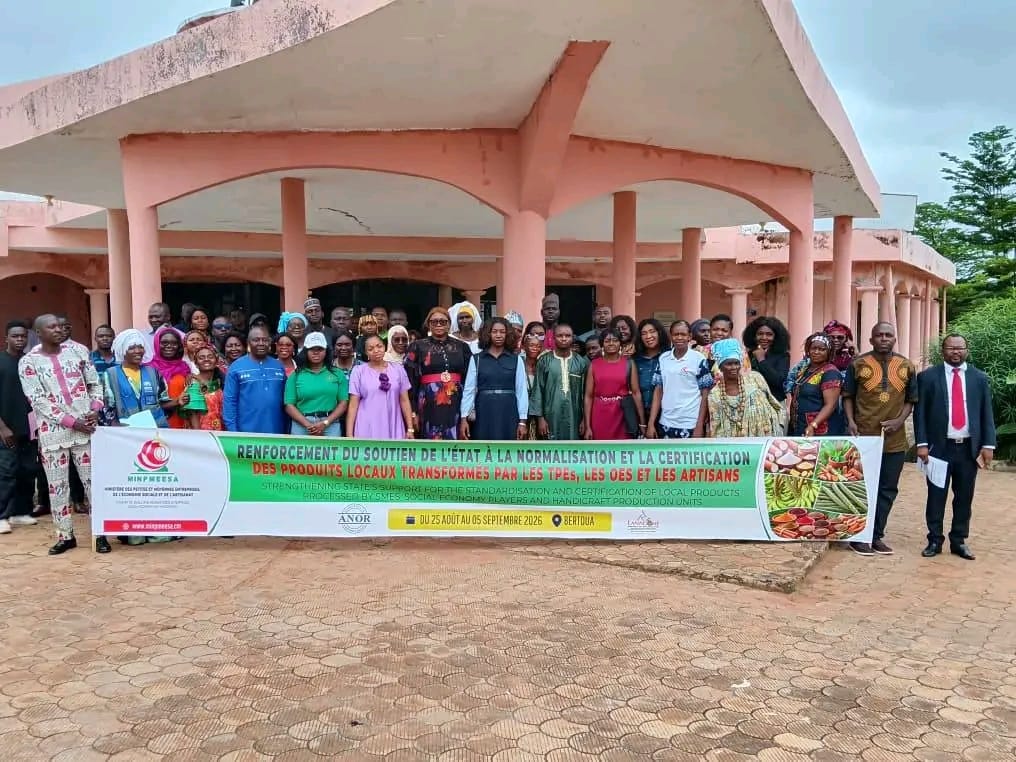
MINPMEESA: Bertoua Workshop Boosts Made in Cameroon Certification for Artisans
Summary
- MINPMEESA launched a workshop in Bertoua on August 25, 2026, to help very small enterprises and artisans in the East Region achieve product standardization.
- The program included practical training, on-site sample collection for microbiological, physico-chemical, and organoleptic analyses, and diagnostic visits by ANOR and LANACOME experts.
- The primary goal is to certify local products, making them competitive and exportable by using quality as a market 'passport'.
- This national strategy aims to professionalize and industrialize the sector, increasing consumer trust, boosting artisan income, and establishing the 'Made in Cameroon' brand globally.
MINPMEESA Drives Certification Efforts in Eastern Cameroon
Certified products foster greater consumer confidence, generate increased revenue for artisans, and represent a significant step towards establishing the 'Made in Cameroon' identity in both national and international markets.
The Ministry of Small and Medium-sized Enterprises, Social Economy and Handicrafts (MINPMEESA) initiated a significant program in Bertoua on August 25, 2026, aimed at bolstering the quality and market readiness of local products. This comprehensive workshop was specifically designed to assist very small enterprises (TPEs) and individual artisans within Cameroon's East Region in navigating the complexities of product standardization. The overarching goal was to equip these producers with the necessary tools and knowledge to achieve MINPMEESA Made in Cameroon certification, thereby enhancing their competitiveness.
Participants in this practical session included promoters of TPEs, representatives from various cooperatives, and artisans involved in product transformation. The program adopted a highly operational approach, commencing with in-depth awareness campaigns on the critical importance of standardization in today's markets. Following this, attendees received a step-by-step guide detailing the entire product certification process, ensuring a clear understanding of the requirements and procedures involved.
Rigorous Quality Control and Expert Oversight
A crucial component of the MINPMEESA Bertoua workshop involved immediate, on-site activities to assess product quality. Experts from the Agency for Standardization and Quality (ANOR) and the National Laboratory of Quality Control (LANACOME) played a pivotal role, conducting thorough evaluations. This included the collection of product samples directly from participants for comprehensive laboratory analyses. These tests encompassed microbiological, physico-chemical, and organoleptic assessments, ensuring a multi-faceted evaluation of product safety and characteristics.
Beyond laboratory testing, ANOR and LANACOME quality control specialists also meticulously reviewed product labeling to ensure compliance with established standards. Furthermore, these experts undertook diagnostic visits to the production units of the participating enterprises and artisans. This direct engagement allowed for a practical assessment of manufacturing processes and facilities, reinforcing the commitment to robust Cameroon product standardization measures.
Elevating the 'Made in Cameroon' Brand Globally
The initiative spearheaded by MINPMEESA extends beyond mere workshop activities; it represents a strategic national endeavor to leverage quality as a fundamental driver for economic development. The core objective is to transform local products into certified, competitive, and exportable goods, positioning quality as an essential "passport" for accessing broader markets. This focus on MINPMEESA Made in Cameroon certification, particularly as a pathway to Made in Cameroon export certification, is envisioned as a catalyst for professionalizing and industrializing the nation's small and medium-sized enterprise sector.
Ultimately, the widespread adoption of TPE artisan product certification is anticipated to yield multiple benefits. Certified products foster greater consumer confidence, generate increased revenue for artisans, and represent a significant step towards establishing the 'Made in Cameroon' identity in both national and international markets. This concerted push for quality and standardization is a significant stride towards firmly establishing the "Made in Cameroon" identity on both national and international stages, bolstering its reputation for excellence and reliability.
Practical Implications
Lawyers advising manufacturing or export clients in Cameroon, particularly SMEs and artisans, should anticipate increased regulatory focus on product certification and quality standards. Compliance officers must monitor evolving ANOR and LANACOME requirements to ensure products meet 'Made in Cameroon' export criteria.
Source
How does this affect you?
Get an AI analysis of this article grounded in your jurisdictions, practice areas, and any policy documents you've uploaded to Wansom.
Wansom is AI and can make mistakes.