
Minnesota Supreme Court: Anti-SLAPP Google Reviews Debate Heats Up
Summary
- The Minnesota Supreme Court is considering whether negative online business reviews qualify for heightened free-speech protections under the state's anti-SLAPP law.
- The case involves a one-star Google review posted by Robinet Productions LLC about Paragon Restorations LLC, following a commercial contract dispute.
- Lower courts dismissed the defamation claim but did not apply the anti-SLAPP statute, preventing Robinet from recovering legal fees.
- The core legal question is whether such a review constitutes a 'matter of public concern,' a requirement for anti-SLAPP protection.
- The court's decision will clarify the scope of free speech for consumer reviews and the applicability of anti-SLAPP protections in Minnesota.
Dispute Over Online Review Reaches High Court
The Minnesota Supreme Court's upcoming decision will have significant ramifications for the landscape of anti-SLAPP online reviews and defamation consumer reviews in Minnesota.
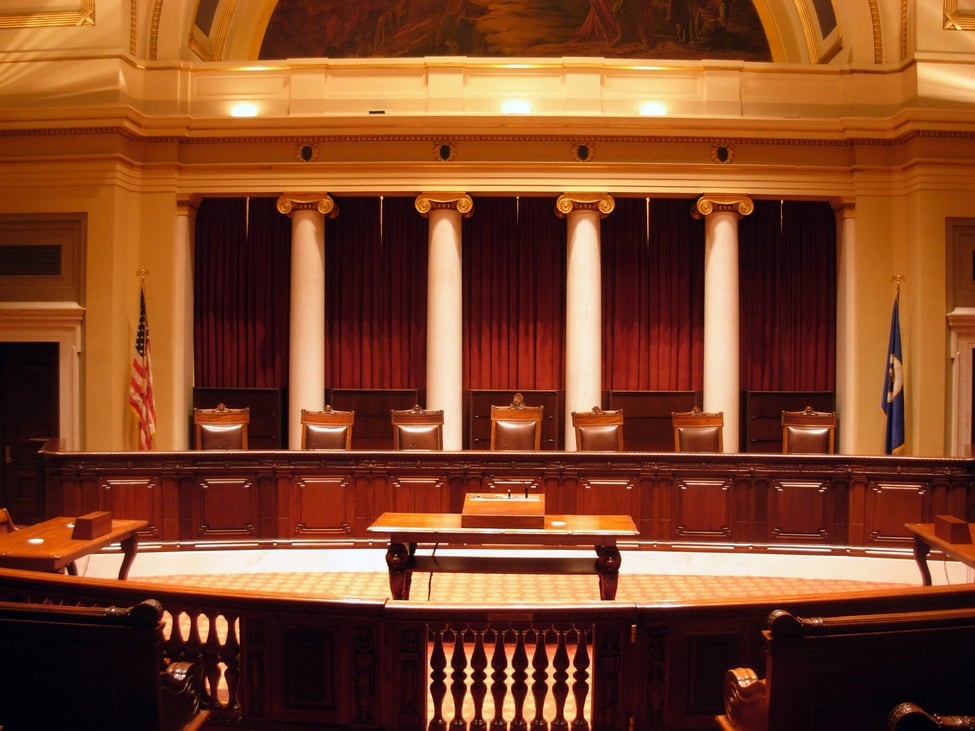
The Minnesota Supreme Court recently heard arguments concerning whether negative online business reviews, specifically those posted on platforms like Google, should receive heightened free-speech protections against defamation lawsuits. This pivotal case, which could significantly impact how defamation claims involving consumer feedback are handled, arises from a dispute between Robinet Productions LLC, a reviewer, and Paragon Restorations LLC, a contractor.
The conflict originated from a commercial contract that went awry. After Paragon Restorations declined to compensate Robinet Productions for promotional video services, Robinet's owner published a one-star Google review. This review asserted that payment was withheld and advised others to avoid engaging Paragon's services. In response, Paragon initiated a defamation lawsuit against Robinet, contending that the review was factually incorrect because Robinet had allegedly failed to fulfill its contractual duties. Although the underlying defamation claim was ultimately dismissed by a lower court, the critical question of whether the review qualifies for specific free speech protections remains for the state's highest judicial body to resolve.
The Anti-SLAPP Statute's Application
Robinet Productions sought to have Paragon's lawsuit dismissed under Minnesota’s Uniform Public Expression Protection Act, commonly known as an anti-SLAPP statute. This legislation is specifically designed to shield individuals from "strategic lawsuits against public participation," which are often described as baseless legal actions intended to suppress speech through the burden of litigation. A successful anti-SLAPP motion provides significant advantages to defendants, including an accelerated judicial timeline and the requirement for the plaintiff to cover the defendant's attorneys' fees and other litigation expenses.
Crucially, the anti-SLAPP act is not applicable to purely private disagreements; instead, it is reserved for matters deemed to be of "public concern." While the initial court dismissed Paragon's defamation claim—acknowledging the review's core assertion about denied payment was technically accurate—it did so without invoking the anti-SLAPP statute. This decision prevented Robinet from recovering its legal costs. Subsequently, the Minnesota Court of Appeals affirmed that Robinet's review did not constitute a matter of public concern, characterizing it instead as a personal grievance stemming from a private transaction. The Minnesota Supreme Court typically employs an established constitutional test, evaluating the content, form, and context of a statement, to determine if it addresses a matter of public concern for First Amendment defamation purposes, a standard that lower courts have used as a stringent filter for anti-SLAPP protection.
Competing Interpretations of Free Speech
Before the Minnesota Supreme Court, Robinet's attorney, Vince Reuter, argued that the current interpretation unduly burdens small business owners who often lack the financial resources and time necessary for protracted litigation. Reuter highlighted that Robinet's owner opted for an online review to caution others, rather than pursuing legal action, and characterized the Google review as an explicit warning about Paragon's alleged unprofessionalism and refusal to pay for services rendered. He contended that the existing framework, which subjects everyday consumer reviews to a system designed for high-stakes defamation, contradicts the legislature's intent to broaden and expand free speech protections for public commentary.
Conversely, Samuel Johnson, representing Paragon, cautioned the court against classifying all business reviews as matters of public concern. Johnson argued that such a broad interpretation would bypass necessary contextual analysis and unduly expand the anti-SLAPP act's intended scope. He suggested that granting all business ratings and reviews the highest level of First Amendment protection would infringe upon the court's prerogative to define constitutional safeguards. Johnson maintained that the sole purpose of Robinet's review was to express anger over unpaid services, rather than to contribute to a broader public discourse.
Broader Implications for Online Reviews
The Minnesota Supreme Court's upcoming decision will have significant ramifications for the landscape of anti-SLAPP online reviews and defamation consumer reviews in Minnesota. Clarifying whether negative business feedback constitutes a matter of public concern under the Minnesota Uniform Public Expression Protection Act will directly influence the extent of free speech business reviews protections available to individuals and small businesses. This ruling is poised to redefine the legal risks associated with posting critical online feedback and the strategic considerations for businesses responding to such reviews.
For lawyers in Minnesota, this decision will be crucial for advising clients on both defending against and pursuing defamation claims related to online content. It will shape how attorneys counsel clients regarding negative online feedback, impacting litigation strategies and the potential for recovering legal fees under anti-SLAPP provisions. The outcome will provide essential guidance on the boundaries of public concern anti-SLAPP, determining when online commentary moves beyond a private grievance to warrant heightened free speech protections.
Practical Implications
Lawyers in Minnesota should monitor this decision as it will clarify the applicability of anti-SLAPP protections to online business reviews, impacting how defamation claims are defended or pursued and the strategic advice given to clients regarding negative online feedback.
Source
How does this affect you?
Get an AI analysis of this article grounded in your jurisdictions, practice areas, and any policy documents you've uploaded to Wansom.
Wansom is AI and can make mistakes.