
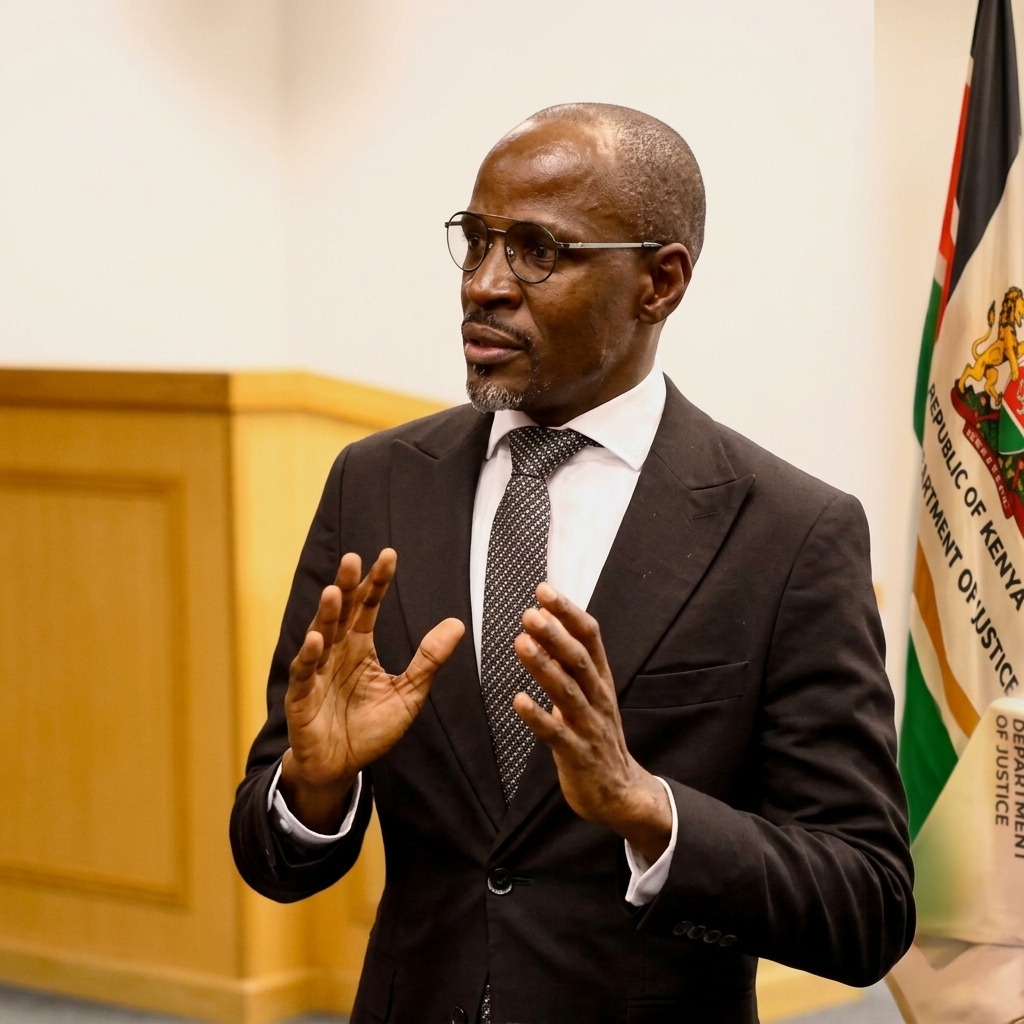
Namibia: Minister Immanuel Child Naming Debate Questions Parental Roles
Summary
- Justice and Labour Relations Minister Wise Immanuel publicly questioned the practice of mothers naming children.
- The Minister asked which culture permits a mother to name a child instead of the father during a cultural event.
- His remarks were made at the University of Namibia’s Ogongo campus in the Omusati region.
- The comments have sparked a significant public debate concerning parental roles in child naming.
- The Minister's inquiry could signal future policy discussions or legislative reviews regarding family law in Namibia.
Minister Immanuel Sparks Debate
This public inquiry from a high-ranking government official has quickly become a central point of the Minister Immanuel child naming debate Namibia, drawing widespread attention to deeply ingrained societal expectations and family structures.
Justice and Labour Relations Minister Wise Immanuel recently initiated a significant public discussion in Namibia regarding the established roles of parents in naming their children. During a cultural event hosted at the University of Namibia’s Ogongo campus, located within the Omusati region, Minister Immanuel directly questioned the prevailing custom that often sees mothers taking on the responsibility of naming their offspring. His remarks, delivered in a setting dedicated to exploring cultural practices, specifically challenged the traditional underpinnings of such a practice, prompting attendees to consider which cultural norms permit a mother to name a child instead of the father.
This public inquiry from a high-ranking government official has quickly become a central point of the Minister Immanuel child naming debate Namibia, drawing widespread attention to deeply ingrained societal expectations and family structures. The Minister's comments, made yesterday, have resonated across various segments of society, highlighting potential divergences between contemporary practices and historical or perceived cultural mandates concerning parental authority in nomenclature. The nature of his questioning suggests a deeper contemplation of gender roles within family units and their manifestation in significant life events like child naming.
Legal and Cultural Context
The intervention by Minister Wise Immanuel, a key figure in Namibia's justice system, carries particular weight given his portfolio, which encompasses aspects of family law and societal norms. While the Minister's statements were framed as a cultural inquiry, they inevitably touch upon the broader landscape of parental rights Namibia and the legal recognition of family structures. Child naming conventions in Namibia, like in many nations, are often a blend of customary practices and statutory regulations, with cultural practices child naming Namibia varying significantly across different communities.
Such comments from a Justice Minister can signal a potential interest in reviewing or clarifying the legal framework surrounding family matters, even if not explicitly stated as a policy initiative. The public nature of his query invites a re-examination of how traditional roles are understood and whether current practices align with or diverge from these historical perspectives. This dialogue is crucial for understanding the evolving interplay between cultural heritage and modern legal interpretations of family responsibilities.
Why It Matters
The public questioning by Minister Immanuel holds significant implications for future policy discussions and potential legislative reviews concerning family law in Namibia. When a Justice Minister makes such pointed Wise Immanuel family law comments, it often indicates an underlying consideration of how legal frameworks interact with societal customs. This could potentially lead to calls for greater clarity or even reform regarding the Namibia child naming law, ensuring that legal provisions adequately reflect or address prevailing cultural expectations and parental rights.
For legal professionals, particularly those specializing in family law, this development signals a need to closely monitor any proposed reforms or shifts in legal interpretation that might arise from this debate. The Minister Immanuel child naming debate Namibia could serve as a catalyst for broader discussions on parental responsibilities, gender equality within family structures, and the codification of customary laws. The outcome of this public discourse may influence how parental rights are understood and exercised in the future, making it a critical area for legal observation.
Practical Implications
This public statement by a Justice Minister signals potential future policy discussions or legislative reviews regarding parental rights and child naming conventions in Namibia. Lawyers in family law should monitor for proposed reforms or shifts in legal interpretation.
Source
How does this affect you?
Get an AI analysis of this article grounded in your jurisdictions, practice areas, and any policy documents you've uploaded to Wansom.
Finish Reading the Full Story and the Expert Analysis.
Get the latest legal & regulatory intelligence in Namibia
Wansom is AI and can make mistakes.