
Minerals Under Occupation: How M23 and Rwanda's Smuggling Networks Threaten Congo's Clean-Sourcing Drive
Summary
Pillage in the east: Amnesty International (21 September 2026) documented 18 miners killed, forced labour and torture by M23 at Rubaya (coltan) and Lomera (gold), and the trafficking of minerals to Rwanda, which it found likely amounts to the war crime of pillage. Amnesty urges a halt to coltan and gold purchases from Rwanda.
The re-export pipeline: UN Group of Experts reports from 2024 to 2026 document Congolese coltan smuggled to Rwanda and mixed with Rwandan output, M23 taxing about 120 tonnes a month for at least US$800,000, Rwandan military support for M23, and named Rwandan buyers. Rwanda denies supporting M23 or profiting from Congolese minerals.
A new mineral under occupation: a lithium operation reportedly appeared at Kalambairo near Rubaya on 2 September, with first loads reportedly moving towards Rwanda.
The EU–Rwanda memorandum: signed in February 2024. The European Parliament voted 443–4 in February 2025 to call for its suspension, but the memorandum was not suspended.
The front line: army airstrikes hit M23 positions on the Masisi–Walikale front on 8 September as fighting strained the Doha peace track.
Enforcement in the south: army-backed intruders resumed illegal extraction at ERG's Metalkol site from 21 August, testing President Tshisekedi's July order to end the militarisation of mines.
For buyers: pillage liability, sanctions exposure and conflict-minerals rules make Rwandan-origin 3TG a high-risk category that requires evidence well beyond certificates of origin.
In the East: M23, Rubaya and the War Crime of Pillage
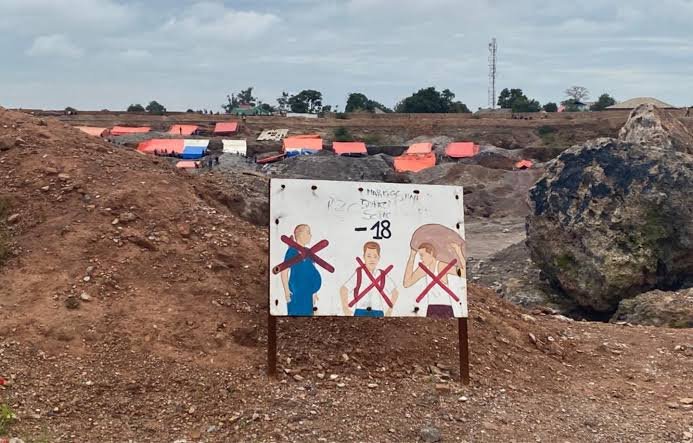
Rubaya. The Rubaya mining complex in Masisi territory, North Kivu, is estimated to produce about 15% of the world's coltan, the ore from which tantalum, a metal essential to electronics, is refined. The AFC/M23 rebellion has controlled Rubaya since April 2024. Mining is largely artisanal, on unstable hillsides: a landslide in January 2026 and a collapse in March 2026 were each reported to have killed more than 200 people.
A new mineral. On 2 September 2026, Rwandan outlet KT Press reported that a new lithium mining operation had emerged at Kalambairo, a village near Rubaya in M23-held territory, and that it had reportedly begun moving its first loads towards the Rwandan border. The scale of the operation, the quality of the ore and the size of any resource remain unclear. The appearance of lithium extraction adds a battery mineral to the portfolio of an area already central to the global tantalum supply.
Amnesty's findings (21 September 2026). In a briefing titled "We didn't come to play": M23 abuses at artisanal mines and the trafficking of gold and coltan to Rwanda, Amnesty International reported on two sites: the coltan mine near Rubaya and the Lomera gold mine in South Kivu.
Element | Amnesty's findings |
|---|---|
Evidence base | 26 interviews covering January 2025 to March 2026 |
Killings | 18 artisanal miners killed, including 10 beaten to death |
Forced labour | Miners forced to work underground for more than a week at a time at some coltan sites |
Other abuses | Torture and ill-treatment (reported by 16 interviewees), arbitrary detention, forced recruitment |
Trafficking | Evidence that gold was trafficked out of M23-held areas into Rwanda through established smuggling routes; coltan trafficking also reported |
Rwandans present | Testimonies indicate Rwandans were present at Rubaya and Lomera, some working alongside M23 fighters |
Legal assessment | The violations may amount to war crimes; the plunder of gold and coltan likely amounts to the war crime of pillage |
Amnesty called on governments and companies to stop buying coltan and gold from Rwanda until Rwanda's government shows that trafficked Congolese material no longer enters supply chains. It also urged the US and EU member states not to sign mining agreements involving Rubaya or other M23-held mines without full access for independent monitors. M23 and the Rwandan authorities did not respond to Amnesty's requests for comment. Rwanda has previously denied supporting M23 or profiting from Congo's minerals.
On the front line. Fighting continued through September despite the Doha peace track. On the evening of 8 September, Congolese army aircraft struck AFC/M23 positions at Malemo in Masisi and Luola in Walikale, according to local sources cited by Actualité.cd, after the rebels reinforced the front. Clashes with Wazalendo militias continued around Rubaya, Ngungu and the road towards Pinga, and the army accused M23 and Rwanda of violating ceasefire commitments.
Rwanda and the Re-Export Question
The documented pattern. Successive reports by the UN Group of Experts, the body mandated by the UN Security Council to monitor the conflict, have documented that coltan and gold mined in eastern Congo, including in M23-held areas, are smuggled into Rwanda, mixed with Rwandan production and exported as Rwandan-origin minerals to smelters and refiners abroad. As a result, minerals from Congo's soil, some of them extracted under abusive conditions in a war zone, enter global supply chains with Rwandan paperwork.
What the UN Group of Experts has reported:
Report | Key findings |
|---|---|
December 2024 | After seizing Rubaya in April 2024, M23 set up a parallel administration, created a monopoly on coltan exports to Rwanda from the nearby Bibatama area, and taxed about 120 tonnes of coltan a month, earning at least US$800,000 a month. Congolese output was being mixed with Rwandan production |
July 2025 | Illegal mining in M23 areas and smuggling to Rwanda had reached "unprecedented levels". Coltan from Rubaya was mixed with Rwandan-origin production and exported downstream, and a Rwandan company, Boss Mining Solution, was named as buying smuggled minerals |
June 2026 (final report, S/2026/466) | Traced Rubaya minerals along rebel-controlled routes into Rwanda, describing Kigali-based buyers, approved transporters and tax invoices settled after delivery, and documented Rwandan military support for M23 |
Supporting indicators. Other observers point in the same direction:
Former UN investigator Jason Stearns has said Rwanda's mineral exports exceeded US$1 billion a year, roughly double two years earlier, with "a fair chunk" coming from Congo.
Rwanda's central bank stopped publishing export statistics in May 2024, shortly after M23 took Rubaya.
Mining experts consulted by Reuters said Rwanda exports far more coltan than it can plausibly produce.
Rwanda's position. Rwanda denies supporting M23 and denies profiting from Congolese minerals. Its officials have rejected claims that M23 traffics Congolese minerals, and a government spokesperson has said UN reports misrepresent Rwanda's longstanding security concerns about armed groups hostile to it operating in eastern Congo. Rwanda did not respond to Amnesty's requests for comment on its September report.
What this means for buyers. The UN's findings document the routes, the actors and the practice of mixing Congolese minerals with Rwandan production. They do not mean that every Rwandan shipment is Congolese. They mean that no Rwandan-origin coltan or gold can be presumed conflict-free on the strength of a Rwandan certificate alone.
The EU–Rwanda Minerals Memorandum: Partnership or "Blood Minerals" Channel?
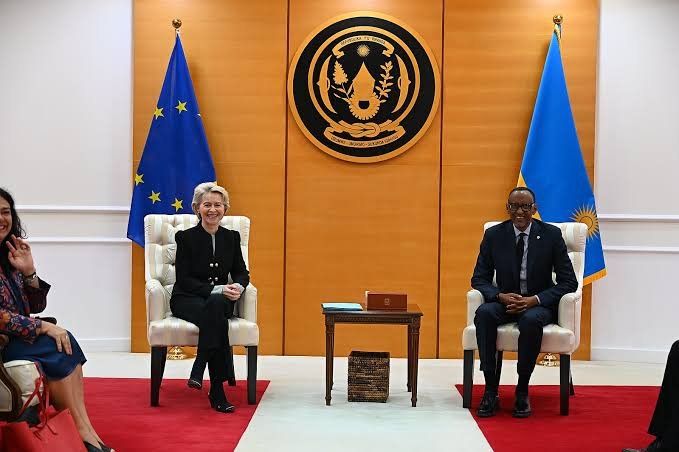
The agreement. On 19 February 2024, the European Union and Rwanda signed a Memorandum of Understanding on Sustainable Raw Materials Value Chains. It is part of the EU's strategy to diversify supplies of critical raw materials, including tantalum, tin, tungsten and gold, and to support responsible sourcing. It also provides for measures to intercept smuggled minerals and return them to their country of origin.
Why it is contested. Congo condemned the memorandum from the start, arguing that it rewards a country that exports minerals originating in Congolese territory and encourages further plunder of the east. Members of the European Parliament put the criticism in stark terms: in a written question, a group of Green MEPs argued that the memorandum's own anti-smuggling provisions amounted to implicit recognition that "blood minerals" from Congo could reach the EU via Rwanda.
The European Parliament's position. On 13 February 2025, the European Parliament adopted a resolution, by 443 votes to 4 with 48 abstentions, that:
condemned the occupation of Goma and other areas of eastern Congo by M23 and Rwandan defence forces as a breach of Congo's sovereignty;
regretted the EU's failure to pressure Rwanda to end its support for M23; and
urged the Commission and Council to immediately suspend the memorandum until Rwanda ceases all interference in Congo, including exporting minerals mined in M23-controlled areas.
The resolution was non-binding. The Commission and Council did not suspend the memorandum in 2025, a choice Amnesty International criticised as putting "profits before Congolese lives". The EU did, however, impose sanctions in 2025 that included the head of Rwanda's mines regulator, cited for his role in the exploitation of conflict minerals and the import of gold from M23-held areas.
Why it matters now. Amnesty's September 2026 findings, which link Rwanda directly to the trafficking of gold and coltan from M23-held mines, renew the pressure. Its call to stop buying coltan and gold from Rwanda, and to refuse mining agreements involving M23-held sites, goes to the heart of the memorandum. For Brussels, the question is whether a framework designed to make Rwandan supply chains more responsible can be credible when the UN and leading human rights organisations report that Congolese conflict minerals are being exported as Rwandan.
Rwanda's view. Rwanda presents itself as a legitimate mineral producer and processing hub, and rejects the findings that it exploits Congolese minerals. It has not produced independent evidence that would rebut the UN's documentation of smuggling routes, buyers and mixing.
A Second Front: Enforcing Order in the Copper Heartland
The site. Metalkol, a subsidiary of Eurasian Resources Group (ERG) near Kolwezi in Lualaba province, holds rights to reprocess more than 100 million tonnes of historic mine tailings. It is one of Congo's biggest cobalt suppliers; only operations owned by CMOC and Glencore export more.
What happened:
Date | Development |
|---|---|
February 2026 | A local company, Société Coopérative Minière Hosanna, protected by Congolese soldiers, takes over a key section of Metalkol's concession, claiming government authorisation to clean up alleged riverbed pollution |
Late February 2026 | Metalkol protests in writing to the Interior and Mines ministers; the Interior Minister later says his ministry gave Hosanna no permission |
May 2026 | After Bloomberg reports the occupation, the armed forces clear the site |
July 2026 | President Félix Tshisekedi orders ministers to "definitively end all forms of illegal militarization of mining sites", warning it harms perceptions of resource governance |
21 August 2026 | A new incursion begins, involving "armed men in uniform and groups of miners operating without authorisation", according to ERG |
9 September 2026 | ERG goes public: about 700 tonnes of tailings a day are being removed with excavators and trucks working around the clock, and Metalkol cannot reach the area because of the military presence |
The stakes. ERG estimates the intrusions could cut Metalkol's operating life from about nine years to three, putting roughly US$10 billion of future revenue at risk at current prices. The General Inspectorate of Mines said the government had been informed and was working on a lasting solution.
Why it matters. The Metalkol case is a domestic enforcement problem, different in kind from the occupation of the east. Kinshasa has acted against it before, clearing the site in May, and the President has ordered an end to the militarisation of mines. But the incursion resumed weeks later. For Congo's clean-sourcing drive to be credible in the south, the July order has to be enforced against every unit and company involved, so buyers can rely on the provenance of material leaving the Copperbelt.
The Legal Framework: Pillage, Sanctions and Due Diligence
1. Pillage as a war crime
Pillage, the unlawful appropriation of property during armed conflict, is a war crime under international humanitarian law and under the Rome Statute of the International Criminal Court, in both international and non-international armed conflicts. When an armed group takes minerals from a territory it controls by force, without the owner's consent, the extraction and sale can constitute pillage. The legal significance for business is that liability does not stop at the armed group. In several jurisdictions, individuals and companies that knowingly acquire or trade pillaged resources can face criminal investigation as accomplices. That is why Amnesty's characterisation matters for buyers downstream.
2. Sanctions
Several sanctions regimes are relevant:
UN sanctions on Congo target individuals and entities that support armed groups through the illicit exploitation or trade of natural resources.
EU sanctions adopted in 2025 included the head of Rwanda's mines regulator, cited for conflict-mineral exploitation and gold imports from M23 areas.
US sanctions have targeted Rwandan and M23 figures linked to the conflict.
Transactions with listed persons, or entities they own or control, can breach sanctions law outright, regardless of due-diligence efforts.
3. Supply-chain due diligence
Framework | Scope | What it requires |
|---|---|---|
OECD Due Diligence Guidance for responsible mineral supply chains | All minerals from conflict-affected and high-risk areas | A five-step process to identify, assess, mitigate and report risks |
EU Conflict Minerals Regulation (2017/821) | EU importers of tin, tantalum, tungsten and gold (3TG) above set thresholds | Due diligence aligned with the OECD Guidance, third-party audits and reporting |
US Dodd-Frank Act, Section 1502 | SEC-reporting companies using 3TG | Inquiry into whether 3TG originated in Congo or an adjoining country, including Rwanda, and disclosure |
Industry schemes (smelter audits; gold refiner standards) | Smelters and refiners | Audits of sourcing practices, with removal from conformant lists for failures |
The weak point. Most of these regimes rely on documented origin and on upstream traceability schemes. The UN's findings that Congolese coltan is mixed with Rwandan production, combined with Rwanda's suspension of export statistics, go directly to that weakness. A Rwandan certificate of origin is evidence, but in today's risk environment it is not proof that material is conflict-free.
4. Congo's own law and the copper-cobalt sector
In the south, the issue is different but connected. The intrusions at Metalkol involve uniformed soldiers protecting unauthorised extraction on a licensed concession, which is a breach of Congolese mining law and of the President's own instruction. Copper and cobalt are not 3TG minerals, but they fall under the OECD Guidance and under buyers' responsible-sourcing standards, which flag security-force involvement in mining as a red flag.
What It Means for Each Stakeholder
Buyers of tantalum, tin and gold routed through Rwanda
The risk is rising. Amnesty's findings, the UN's evidence of mixing, and the call to stop purchases from Rwanda all increase legal, sanctions and reputational exposure. What to do: treat Rwandan-origin 3TG as high-risk. Go beyond certificates to mine-of-origin evidence, mass-balance checks against plausible Rwandan production, and independent audits. Screen every counterparty against UN, EU and US sanctions lists. Document decisions to continue, suspend or exit relationships, because regulators and courts will ask.
Smelters and refiners
Smelters that process tantalum or gold sourced via Rwanda face pressure from audit schemes and customers. Expect enhanced audits, possible removal from conformant lists and demands for supplier disengagement plans.
Electronics and automotive manufacturers
Tantalum capacitors and gold contacts in electronics can trace back to Rubaya and Lomera. Companies filing conflict-minerals disclosures, or subject to the EU regulation, should reassess risk in their smelter lists and prepare to explain their position publicly.
Copper and cobalt operators in the Copperbelt
The ERG case shows that security-force involvement in illegal extraction can occur even on major concessions. Operators should document incidents, escalate formally to the authorities, and keep evidence that material leaving their operations comes only from authorised extraction. That protects both their licence and their buyers.
Buyers of Congolese copper and cobalt
Congo's clean-sourcing pitch depends on enforcement. Buyers should ask suppliers about security incidents, the use of public security forces, and the separation of authorised and unauthorised material, as the OECD Guidance expects.
The EU and member states
The Commission faces renewed pressure to review the Rwanda memorandum in light of Amnesty's findings and the UN's 2026 report. Options include suspension, conditionality tied to independent monitoring, or enhanced traceability requirements.
The US and its minerals partnership with Congo
Amnesty explicitly urged the US not to sign mining agreements involving M23-held mines without independent oversight. As Washington pursues critical minerals deals in the region, transparency over which assets are included will be scrutinised.
Rwanda
Rwanda faces growing reputational and commercial risk to its mineral exports. Independent verification of production capacity, publication of export data, and joining international transparency initiatives would be the minimum steps needed to answer the UN's findings.
Congolese government
The government's credibility as a clean supplier depends on stopping security forces from protecting illegal extraction in the south and on regaining control of the east. The President's July order has to be enforced to matter.
Lawyers and compliance advisers
The work includes enhanced due diligence on 3TG supply chains, sanctions screening, advice on exposure to complicity in pillage, conflict-minerals disclosure strategy, and incident documentation for operators facing illegal incursions.
Key Dates
Date | Event |
|---|---|
19 February 2024 | EU–Rwanda Memorandum of Understanding on Sustainable Raw Materials Value Chains signed |
April 2024 | M23 seizes Rubaya |
13 February 2025 | European Parliament calls for suspension of the EU–Rwanda memorandum (443–4–48) |
June 2026 | UN Group of Experts final report traces Rubaya minerals into Rwanda |
July 2026 | President Tshisekedi orders an end to illegal militarisation of mining sites |
21 August 2026 | New army-backed incursion begins at ERG's Metalkol site |
2 September 2026 | New lithium operation reported at Kalambairo near Rubaya |
8 September 2026 | Army airstrikes on M23 positions at Malemo (Masisi) and Luola (Walikale), per Actualité.cd |
9 September 2026 | ERG makes the Metalkol intrusion public |
21 September 2026 | Amnesty International publishes its report on M23 abuses and trafficking to Rwanda |
What to Watch
Milestone | Why it matters |
|---|---|
Responses from Rwanda and M23 to Amnesty | Whether the findings are answered with verifiable evidence or met with denial |
Buyer and smelter decisions on Rwandan 3TG | Whether audit schemes and manufacturers restrict Rwandan-origin material |
EU review of the Rwanda memorandum | Whether Brussels suspends it, adds conditions or maintains it |
Government action at the Metalkol site | Whether the President's July order is enforced |
The Doha and Washington peace tracks | Whether a settlement changes control of Rubaya and other mines |
New sanctions designations | Targeting of mineral traders, transporters or refiners linked to M23 areas |
Frequently Asked Questions
What did Amnesty International find? In a 21 September 2026 report, Amnesty said M23 fighters killed, tortured, detained and forced artisanal miners to work at the Rubaya coltan and Lomera gold mines, and that gold and coltan were trafficked to Rwanda. It said the plunder likely amounts to the war crime of pillage.
Does Rwanda export minerals mined in Congo? Yes, according to the UN Group of Experts. Its reports document coltan from M23-held Rubaya being smuggled to Rwanda and mixed with Rwandan production before export, and name at least one Rwandan buyer. Amnesty International's September 2026 report documents gold and coltan trafficking from M23-held mines to Rwanda. Rwanda denies supporting M23 or profiting from Congolese minerals.
What is the EU–Rwanda minerals memorandum? A February 2024 agreement on sustainable raw materials value chains. The European Parliament called for its suspension in February 2025, but the resolution was non-binding and the memorandum was not suspended that year.
What happened at ERG's Metalkol site? Army-backed intruders resumed illegal extraction from 21 August 2026, removing about 700 tonnes of tailings a day, despite a July presidential order to end the militarisation of mines.
What should buyers of tantalum and gold do? Treat Rwandan-origin material as high-risk, verify mine of origin beyond certificates, screen counterparties against sanctions lists, and follow the OECD Due Diligence Guidance and applicable conflict-minerals rules.
Citations
- 1.• DRC: M23 fighters abused miners and trafficked gold and coltan to Rwanda, Amnesty International (21 September 2026)
- 2.• Amnesty: M23 rebels committed war-crime abuses against DRC miners, BusinessDay (21 September 2026)
- 3.• Amnesty accuses M23 rebels of killings and abuses at Congo mines, Africanews (21 September 2026)
- 4.• Congo Cobalt Site Sees Return of Army-Backed Intruders, ERG Says, Bloomberg (9 September 2026)
- 5.• Illegal miners return to Eurasian Resources' Congo cobalt site, Miningmx (9 September 2026)
- 6.• New Lithium Mine Emerges in M23-Held Rubaya, KT Press (2 September 2026)
- 7.• DR Congo's Army Launches Airstrikes on M23 at the Masisi-Walikale Frontier, The Rio Times (citing Actualité.cd)
- 8.• Congo War Security Review, Critical Threats Project
- 9.• Rubaya: Ownership, Conflict and the Global Tantalum Trade, SMM (citing UN Group of Experts S/2026/466)
- 10.• Major Rwandan coltan exporter bought smuggled Congolese minerals, UN report says, Reuters via Yahoo News (July 2025)
- 11.• Congo rebel gains to boost illicit mineral trade through Rwanda, analysts say, Reuters via Mining Weekly (January 2025)
- 12.• MEPs want to suspend EU-Rwanda deal on critical raw materials, European Parliament (13 February 2025)
- 13.• Embargo on minerals labelled as originating from Rwanda, European Parliament written question P-000489/2025
- 14.• The EU's Rwanda raw materials deal — profits before Congolese lives, Amnesty International via EUobserver
Finish Reading the Full Story and Expert Analysis.
Get the latest legal & regulatory intelligence in DR Congo
Wansom is AI and can make mistakes.