
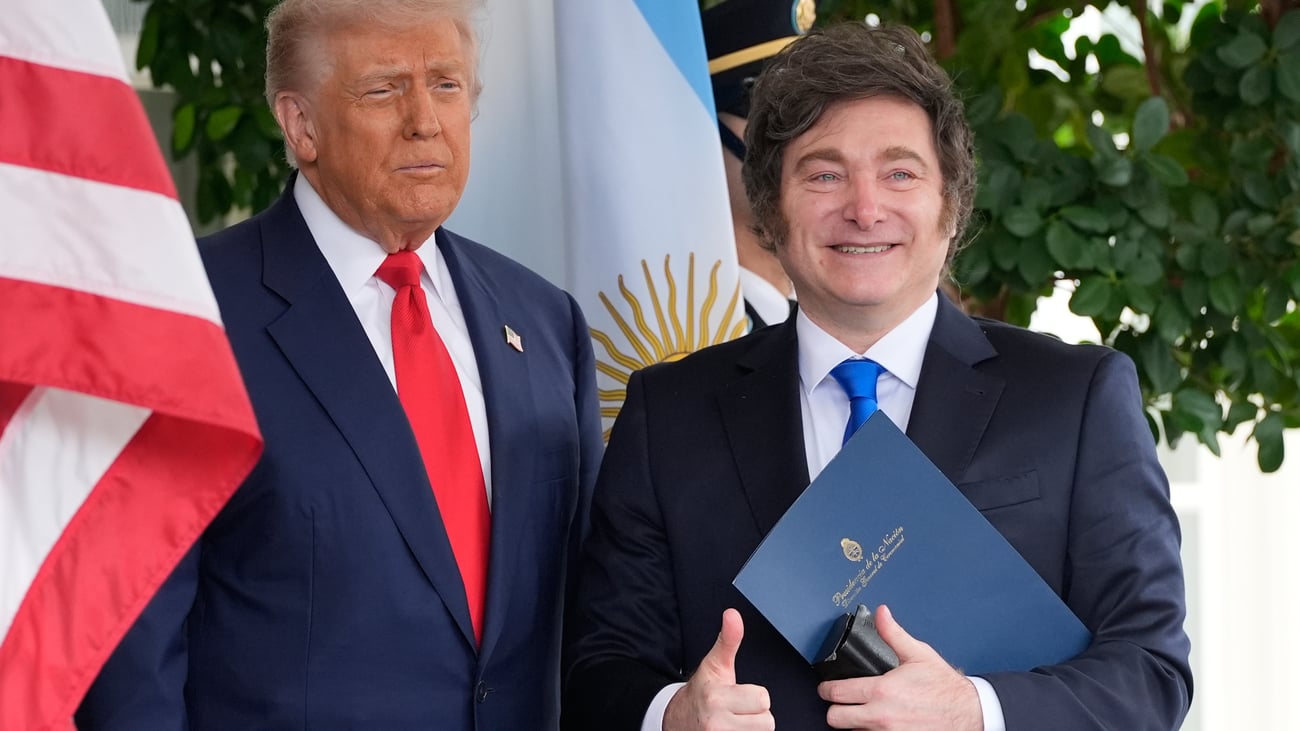
Argentina Milei: New Security Legislation Advances Amid Economic Crisis
Summary
- President Milei is shifting focus to national security and anti-terrorism, preparing new legislation amid rising poverty and declining approval.
- Argentina's poverty rate has jumped to 32.2%, and the country-risk index is at a six-month high, while Milei's approval rating has fallen to its lowest point since 2023.
- Milei claims his government faced "seven coup attempts" and deported "20,000 terrorists since February," statements questioned by critics given Argentina's low political violence.
- The government is strengthening security ties with former U.S. President Donald Trump's circle and developing new security legislation.
- Milei's economic policies, including spending cuts and reduced public funding, have led to decreased purchasing power and a "clear recession," according to experts.
Shifting Focus Amid Economic Strain
President Milei is increasingly emphasizing national security and anti-terrorism measures as his administration grapples with a deepening economic crisis and declining public approval.
Argentina's President Javier Milei is increasingly emphasizing national security and anti-terrorism measures as his administration grapples with a deepening economic crisis and declining public approval. This strategic pivot comes as the country's poverty rate has surged to 32.2%, a significant increase since Milei took office in 2023. Concurrently, the JPMorgan country-risk index recently reached its highest point in six months, signaling heightened financial market concerns regarding Argentina's economic trajectory and governmental policies.
Public confidence in President Milei has simultaneously fallen to its lowest level since he assumed office, according to a survey by Torcuato Di Tella University. A separate poll conducted by Zuban Córdoba indicated that over 60% of respondents hold a negative view of the president. Rather than introducing new initiatives to address these deteriorating economic indicators or to bolster voter confidence, Milei's government has instead focused on strengthening security ties with former U.S. President Donald Trump's circle and has presented new security legislation to Congress and enacted related measures by decree.
This shift in focus occurs against a backdrop of severe economic measures implemented by Milei, including sharp reductions in government spending, a push for foreign financing, and significant cuts to public agency funding across health, education, and social security programs. While industries like mining and oil have attracted investment, many other businesses have struggled amidst deregulation and the liberalization of imports, further contributing to the challenging economic environment.
Security Rhetoric and Legislative Initiatives
President Milei has adopted a strong anti-terrorism rhetoric, echoing themes previously used by the Trump administration. In a recent television interview, when confronted with official statistics confirming the rise in poverty, Milei asserted that his government had faced "seven coup attempts" and claimed to have deported "20,000 terrorists since February." These statements have drawn considerable attention within Argentina, a nation that has experienced minimal political violence throughout its recent democratic history.
Critics have questioned whether this heightened emphasis on security and the development of *Argentina Milei new security legislation* is intended to divert public attention from the country's pressing economic challenges. Benjamin Gedan, who directs the Latin America Program at the Stimson Center and previously served as South America director on the U.S. National Security Council staff, noted that Argentina's organized crime issues are not comparable to those in countries like Colombia or Mexico. He also highlighted that despite past incidents of Iranian terrorism, Argentine voters generally prioritize healthcare over concerns about groups such as Hezbollah.
As the government prepares this *Argentina national security law*, the *Milei anti-terrorism rhetoric* forms a key part of its public justification. The proposed legislation, which has been presented to Congress, is expected to introduce new provisions related to national security, potentially impacting various sectors and requiring close monitoring by legal and compliance professionals with interests in the region.
Broader Implications for Argentina's Future
The current economic policies have led to a significant decline in purchasing power for many Argentines, with some workers transitioning from formal to informal employment. Official statistics from Argentina’s INDEC agency confirm that nearly one-third of the population is living in poverty, representing a considerable setback for an administration that campaigned on radical economic restructuring. Despite these figures, Milei and his senior officials have largely dismissed criticism of their policies, steadfastly defending the government's record.
Economists and analysts acknowledge that while the administration could still implement measures to address some of the nation's economic problems, the approach taken thus far has been described as highly dogmatic. Guido Zack, an economic policy expert and director of Fundar’s Economy area, stated that Argentina is now in a "clear recession," characterized by declining economic activity and visible effects on financial markets. He also noted that some of the adopted measures are complicating the country's path forward, a reality Milei denies.
With the 2027 presidential election still more than a year away, the evolving political landscape and the government's focus on *Argentina economic crisis security* carry significant implications. Milei's close relationship with Trump and his efforts to reshape Argentina’s economy and foreign policy mean that the outcome of these developments could extend beyond the country's borders, influencing regional dynamics and international *Argentina political risk assessment* for investors and businesses, especially given the strengthening *Milei Trump security ties*.
Practical Implications
Lawyers and compliance officers with interests in Argentina should monitor the development of new security legislation under President Milei, as it could introduce new compliance obligations, reporting requirements, or impact foreign investment and business operations, particularly concerning anti-terrorism or national security provisions.
Source
How does this affect you?
Get an AI analysis of this article grounded in your jurisdictions, practice areas, and any policy documents you've uploaded to Wansom.
Finish Reading the Full Story and the Expert Analysis.
Get the latest legal & regulatory intelligence in United States
Wansom is AI and can make mistakes.